
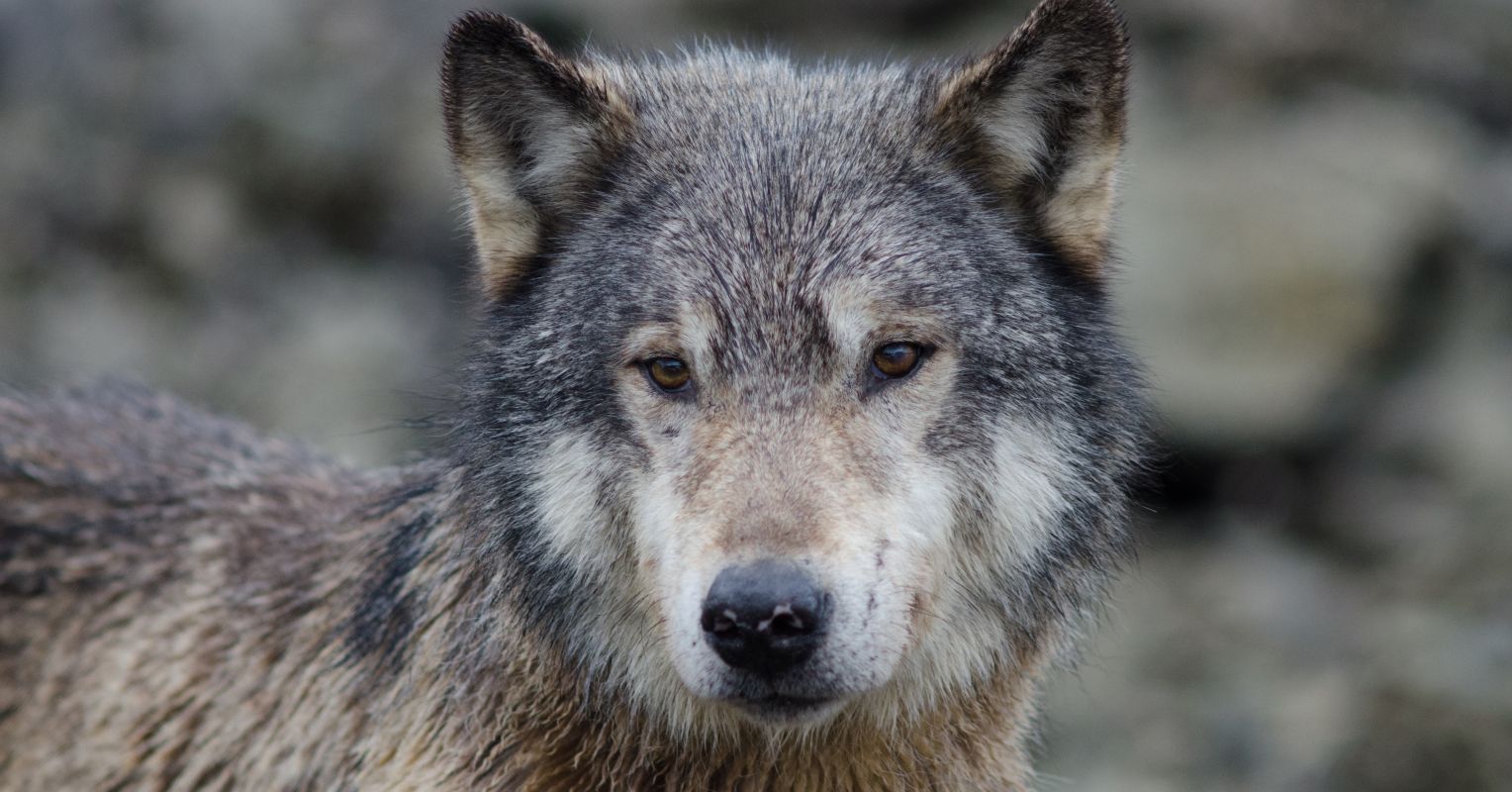
We now know that a wide variety of animals use tools, and some surprises are among them.1 Examples involving invertebrates, reptiles, fish, birds, and mammals show different levels of sophistication and complexity, and a recent example of highly intelligent wild wolves using a tool expands the biodiversity of such use to a wider array of nonhumans. Domestic dogs, who evolved from a common wolf ancestor, also use tools; it’s not surprising to learn that their wild relatives do as well. While the researchers didn’t expect to see tool behavior because other researchers and non-researchers who had spent countless hours watching wild wolves hadn’t reported or filmed anything like it, we now know wolves are genuine members of the “nonhuman tool behavior arena.” When Jane Goodall first reported a wild chimpanzee using a tool, there was no shortage of skeptics who questioned her observations. They were silenced when she showed them films of David Greybeard engaging in tool behavior. Today, we have filmed evidence of wild wolves.
Some months ago, Drs. Kyle Artelle and Paul Paquet contacted me about their observations of wild wolves figuring out how to use a rope to pull a submerged trap containing crabs through water. I encouraged them to write up their observations for publication in a professional journal. The resulting open-access scientific report, accompanied by videos published in the journal Ecology and Evolution titled “Potential Tool Use by Wolves (Canis lupus): Crab Trap Pulling in Haíɫzaqv Nation Territory,” is a most welcome addition to the literature on animal tool behavior. Future research will answer questions about whether other wolves also learn to use a rope and whether this behavior becomes culturally transmitted within this population.2 It’s known that other animals display cultural transmission of tool use within local populations. Here’s what Kyle and Paul had to say about their seminal filmed observations.
Marc Bekoff: Why did you write “Potential Tool Use by Wolves (Canis lupus): Crab Trap Pulling in Haíɫzaqv Nation Territory?”
Kyle Artelle/Paul Paquet: This serendipitous finding was made possible by the Haíɫzaqv Nation’s ongoing work in their territory, which we are fortunate to be a part of. European green crab traps used in their monitoring and control program were continuously being damaged, but the perpetrator remained unknown. Some of the traps were set in extremely deep water, never exposed during low tides. This led us to wonder if marine mammals were diving down to damage them.
We happened to be out in the field for related green crab research, and we had remote cameras. We use them as part of our broader Haíɫzaqv Wolf and Biodiversity Project. We decided to set up the cameras near traps, hoping to catch a glimpse of the culprit. We thought we might see a seal swimming nearby, or an otter investigating traps at low tide. A week later, we checked the cameras and discovered that just a day after setting them up, we had captured an interaction. It’s not surprising that wolves are highly intelligent, but we had never seen this behaviour before, and it was truly remarkable. The video speaks for itself; we felt compelled to share it (Figure 1).
MB: What are some of the topics you consider, and what are some of your major messages?
KA/PP: In the paper itself, we discuss the behaviour in the context of what has been observed in other species, including other canids. We also discuss some questions this raises for wolves themselves. For example, we wonder if wolves elsewhere experiment with similar kinds of behaviours, but given how elusive wild wolves are, their problem-solving skills are rarely observed. Their lives are largely beyond our gaze, making it challenging to capture such instances.
Conversely, we speculate that wolves here are more able to express their full suite of behaviours because this is one of the few places in the world where wolves are not subject to persistent persecution from humans through hunting, trapping, or culling. Perhaps elsewhere, wolves are too preoccupied with looking over their shoulders.
More broadly, it raises questions about what else we have yet to learn from these wolves and those around the world, if we were to take the time and frankly have the humility to recognize we have probably barely scratched the surface on what they might have to teach us.
MB: How does your work differ from others who are concerned with some of the same general topics?
KA/PP: We would never claim that others don’t take parallel approaches, but this particular project is rooted in place. We did not start with the question: “Where can we find a site to study wolves?” We began with the opposite, noting, “There is something very special about the wolves here; let’s learn more!” It’s very place-based. The project grows organically, with each new piece of information we learn from these wolves inspiring the next step. As this particular finding demonstrates, our ability to conduct this research would not exist without the Nation’s stewardship. Were it not for the Nation’s green crab program (which itself is really moving the needle on effective stewardship), we would not have been out doing the field work and would not have found the damaged traps.
MB: Are you hopeful that, as people learn more about tool use, they will come to understand that many different animals display this cognitive capacity?
KA/PP: Absolutely. We’ve seen in other species that observations of tool use have motivated people to delve deeper into those species, often leading to greater understanding, compassion, and care. Jane Goodall’s observation of tool use in chimpanzees is a famous example that prompted many people to rethink our relationship with this species, and the animal world more broadly. For many, this realization sparked the idea that we might not be so different from the other species with whom we share our captivating world. As we continue to learn about tool use or other clever behaviours in other species, it can raise the same level of curiosity and respect for them. Just as in our own species, the ability to use tools is only a small part of the full repertoire of behaviours and cognitive abilities we have. Hopefully, observing it in others helps ignite curiosity about what else these other species might teach us.