
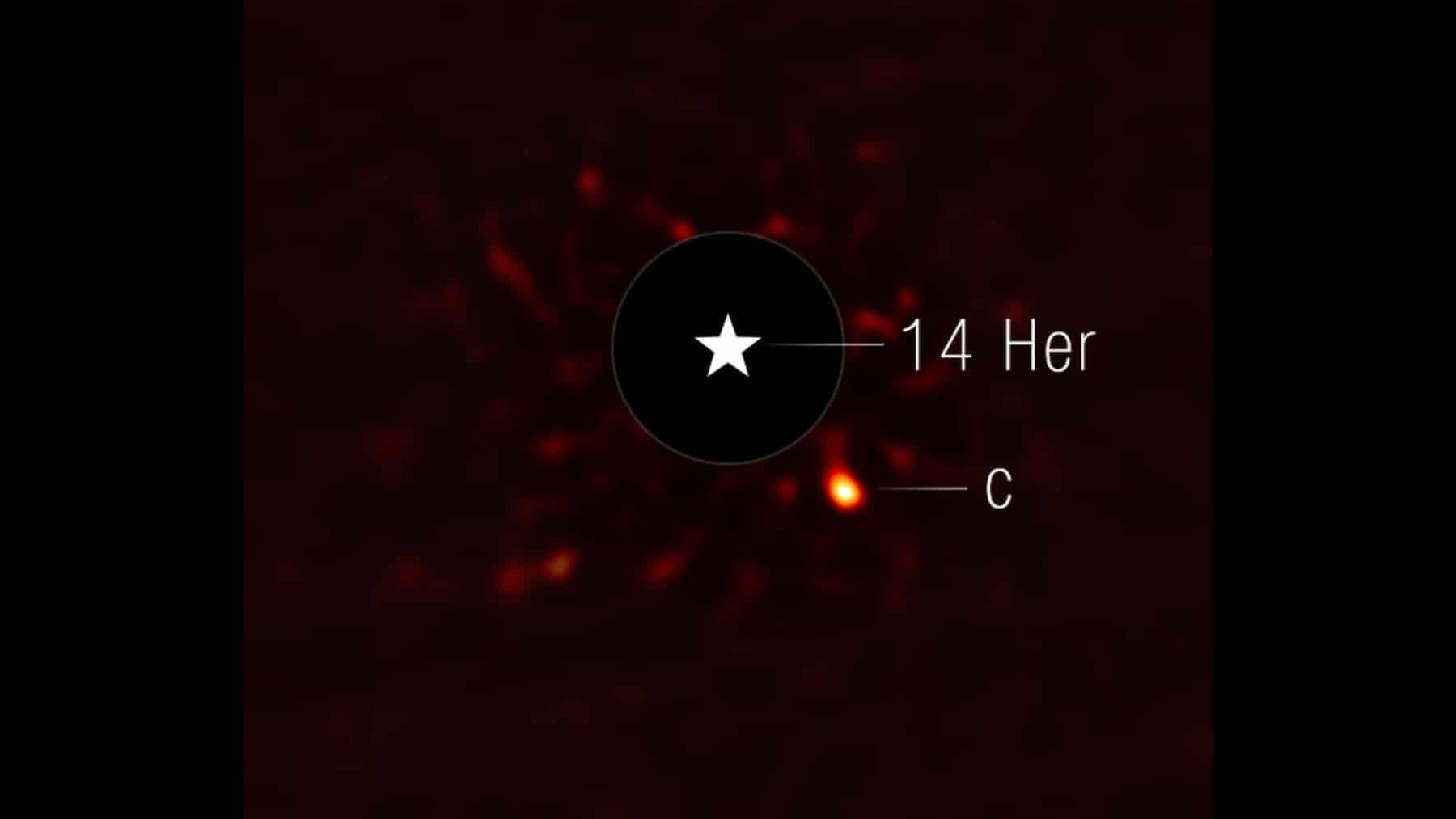
Whoever thought that a planet could disintegrate and vanish as if it never existed in the first place? NASA has discovered that a red planet is “weeping” as it nears its last days of existence. The disconcerting images captured by scientists unveil a scene that is difficult to fathom, as the planet appears to be disappearing quickly at a rapid rate. An interesting thought to be had is, could Earth disintegrate like this someday?
Breaking down the methods used by NASA to identify a planet disintegrating at record speed
NASA has developed a reputation for adopting a meticulous approach and being intentional while making discoveries about space and other planets. In this instance, scientists from the Massachusetts Institute of Technology (MIT) spearheaded the research that led to the discovery of a red planet that appears to be “crying.”
With the remarkable technological innovation in the contemporary world, NASA now has an abundance of resources to rely on as it conducts its research. The MIT used the Transiting Exoplanet Survey Satellite (TESS), which is part of their primary mission of regularly observing the stars nearest to the Earth.
According to NASA, the crying red planet is a tightly orbiting rocky planet trailing a lengthy tail of debris up to 9km long. In technical terms, scientists have tagged the planet BD+05 4868 Ab.
An analysis of NASA’s findings and the conclusion of a red planet disintegrating
Considering the images captured by NASA, it’s a fair comparison to “weeping.” The planet, situated some 140 light-years away from Earth, is said to be deteriorating at an unbelievably fast pace. To be exact, scientists state that for every orbit, the planet is shedding a mass equivalent to Mount Everest. This is a massive amount, especially considering that it orbits every 30.5 hours.
Interestingly, researchers state that they were fortunate enough to discover the object before it completely disappeared, especially taking into account just how quickly it is melting away.
What is causing the red planet to disintegrate at record speed, and can this be stopped?
Scientists revealed that we are part of a pivotal moment in history as we watch a world vanishing. Instinctively, one begins to wonder whether a time will come when Earth rapidly disintegrates in the same way.
In the case of the red planet, its proximity to the star means that an immense amount of heat is directly causing it to melt, evaporate, and emit vapour and dust, which proceeds to condense and create a tail as it orbits. Researchers estimate that it is burning at an estimated rate of 1,600 degrees Celsius (2,912 degrees Fahrenheit), causing the minerals on its surface to escape into space. Ultimately, scientists believe the planet will be non-existent between 1 and 2 million years from now.
The red planet is crying: What are the implications of NASA’s discovery for Earth?
When NASA discovered the orbiting rocky planet, it was interesting for scientists to witness what a planet fading away looks like. It is imperative to note that NASA has found other “crying” planets in the past, suffering the same fate as this one. Nevertheless, the case of the rocky planet is the most rapid example ever discovered, and it may vanish faster than any of the others NASA has observed.
The disappearing rocky planet provides an opportunity for scientists to enhance their knowledge by analysing all the minerals that are escaping into space as it melts away. The shocking images captured by NASA reveal a small, rocky planet disappearing and seeking help to no avail. All that human beings can do is learn from the planet’s imminent disappearance to preserve our own planet Earth.