
The comfort of tradition makes it easy to fall back on what we’ve always done. In the world of GAA coaching, there was a gradual progression, but one canary in the coalmine advocated for a complete rethink. For many, it started with Paul Kinnerk.
The former Limerick football and six-time All-Ireland winning-coach evaluated the entire framework of the practice in his doctoral thesis, ‘Coaching Pedagogy in Intercounty Gaelic Football.’
“The field of sports coaching has been described as ill-defined and under-theorised, with no conceptual framework to adequately deal with the complex reality of coaching,” he wrote.
This study investigated the impact of a Game-Based Approach (GBA) in Gaelic football. Essentially, it was about teaching players through the game itself, rather than through endless drills or isolated skills.
In the GAA, coaching can be a bit like the tax system. The majority engage with it in some form; only a few had the interest to truly understand and discuss it. Those days, though, are fading. Coaching education is booming, with huge interest in everything from from local club sessions to academic courses.
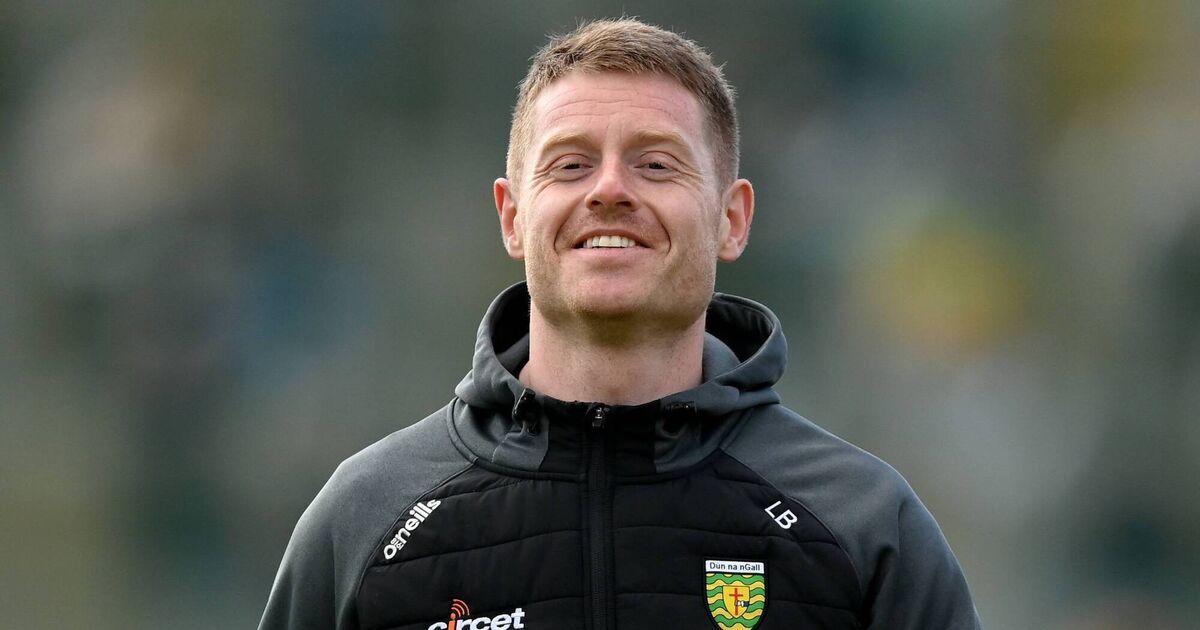
“When covid hit, I did an awful lot of research,” says Donegal native Luke Barrett.
“I read Paul Kinnerk’s piece and still remember the feeling after that. It’s not that it necessarily changed the way I was coaching, it created an understanding of what game-based coaching actually was.”
Barrett has been invested in teams since he was a teenager. He managed the Donegal minors, was part of Jim McGuinness’s coaching group this year and coached Loughmacrory St Teresa’s, who won their first Tyrone county final a few weeks ago.
“Most of us, you coach the way you were coached. Do you know what I mean? For me, it was drills and skills, very linear in nature. You do drill, drill, a small-sided game moving into a big game. That linear nature of football. That is how it was done and I still see a lot of coaches would still use that template today.”
He threw himself into the world of coach education. The GAA’s own programme, S&C courses, an MSc in Applied Sports Coaching. And more. His first publication examined developing skill within the context of a Game-Based Approach.
“One of the things that was very apparent when I was doing my research was that coaches still start from a drill. When there is a drill, a coach can control the intensity, but also, to the outside world, it looks good. Even if it actually has very little relevance to the game. Players don’t get better at doing something that is going to translate to the game.
“I don’t see the need to do fancy things that have absolutely no relevance to a football game. You go to a pitch where you see a coach with loads of cones, he has got all these moves and everything runs in tandem. It looks brilliant, but it has no relevance to the actual chaotic and messy environment of the game.
“That would be something that I would have taken with me in terms of my core beliefs, in terms of simplistic, very high-intensity decision-making training, whereby it is all about the players and fundamentally making players better. That is my north star. My guiding star.”
This is the modern order now. Kerry’s All-Ireland winning coach is Cian O’Neill, who is also the head of the Department of Sport, Leisure, and Childhood Studies at MTU. Barrett is currently doing the MSc in Skill Acquisition for Sport at the same college. The Limerick footballers have a designated Skill Acquisition coach on their ticket, Evan Talty.
“Look at GAA teams now. Sports psychologists, S&C coaches, performance analysts, all often holders of high degrees of education. But then you look at your coaching team, and it doesn’t necessarily translate. I was looking at it from a point of view.”
What does a GBA session look like? Take something as simple as a warm-up. Barrett will break the squad into two teams in a circle, doing various skills at high intensity. The constraint could be that they can only pass to their team. With Loughmacrory, it became second nature that their warm-up could be anything. They could not predict it. They adapt to it.
That is the crux of the thing. Gaelic football is organised chaos. The methodology can only account for so much of the madness. That means getting comfortable with training looking messy.
“It’s never a game of perfect. If you’re getting into a session where you’re demanding perfection, it is very difficult to get perfection and what you’ll find as well is that the harder we would say maybe push the players in terms of intensity, at the very start, the more the whole thing is likely to break down.”
Underpinning all of this is a drive to improve. A quiet obsession is taking hold across the country.
“Some clubs and counties really latch on to it. There are going to be clubs and counties that might be a bit slower to latch on to it, but I do see it only going one way. The thirst for knowledge from players is staggering to me, the level of information that they demand, the professionalism that they want to work with, it really is huge. If you can’t provide that players will soon realise you haven’t been putting in the work or you don’t know what you’re talking about. Coaches will continue to upskill because ultimately, I always say this, coaching is one of the most selfless acts you can do. You’re basically dedicating your time and you’re dedicating resources to better yourself, but the reason you’re bettering yourself is to better others.
“I know there is talk about (banning) outside managers and coaches in the GAA. I don’t think that is going to be a runner. There are coaches out there who want to coach and just want to get involved in teams. They don’t all have an opportunity to coach their own clubs. They want to keep getting better. This is going one way.”