

NASA’s OSIRIS-APEX spacecraft has captured breathtaking images of Earth as it passed by the planet on September 23, 2025, using a gravity-assist maneuver to speed its journey toward Apophis, a notorious asteroid. These stunning photos mark a key milestone for the mission, confirming that the spacecraft is healthy and on course for its 2029 encounter with the asteroid, which has long been a subject of scientific interest.
OSIRIS-APEX is the follow-up phase to NASA’s OSIRIS-REx mission, which returned samples from the asteroid Bennu in 2023. This new mission is focused on Apophis, a stony, metal-rich asteroid. Once thought to pose a significant risk to Earth, Apophis is now considered an excellent opportunity to learn about asteroid behavior, especially in relation to how such bodies respond to planetary forces.
OSIRIS-APEX: A New Phase in Asteroid Exploration
According to a statement from NASA, OSIRIS-APEX mission follows the success of OSIRIS-REx, which returned samples from the asteroid Bennu in 2023. OSIRIS-APEX’s primary goal is to study Apophis, a near-Earth asteroid that offers a sharp contrast to Bennu’s carbon-rich composition. Apophis, composed of stony metal-rich material, has been closely monitored since its discovery.
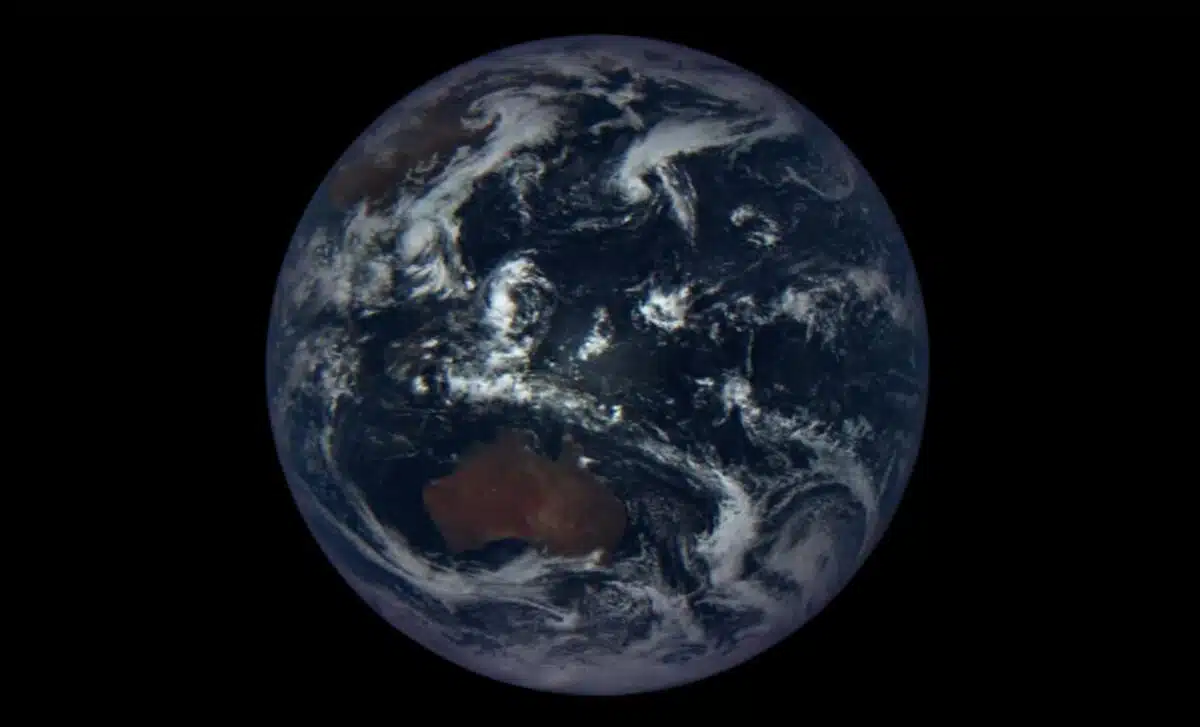 This view of Earth was captured approximately nine hours after OSIRIS-APEX’s closest approach to the planet. Credit: NASA/Goddard/University of Arizona
Once considered a potential threat due to its projected path, scientists now view Apophis as an opportunity to learn more about the formation and behavior of asteroids. According to mission planners, OSIRIS-APEX will be the first mission to document how an asteroid responds to a close pass by Earth’s gravity, set to occur in 2029.
The Flyby: A Crucial Maneuver to Boost the Mission
The September 2025 flyby of Earth was a critical maneuver for OSIRIS-APEX. The spacecraft used Earth’s gravity to boost its speed and change its course toward Apophis. This gravity-assist technique is common in deep-space missions to conserve fuel and improve trajectory efficiency.
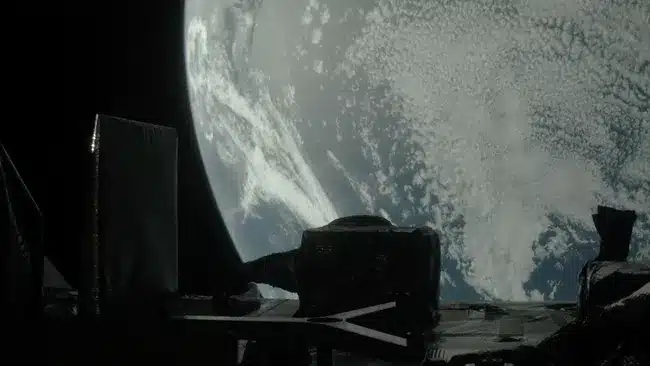 To ensure the safe storage of the asteroid sample during OSIRIS-APEX’s primary mission, StowCam captures both still images and video footage. Credit: NASA/Goddard/University of Arizona/Lockheed Martin
OSIRIS-APEX passed just 2,136 miles above Earth during the flyby, providing incredible views of the planet. This was also an important moment for the mission, confirming that the spacecraft’s instruments, including its MapCam and StowCam, are fully operational. These instruments, which captured high-resolution images, will be crucial for studying Apophis in detail once the spacecraft arrives at the asteroid.
“When it was first discovered in 2004, there was concern that it would impact the Earth in 2029 during its close approach. That risk was retired after subsequent observations”, explained Planetary sciences assistant professor, Dani DellaGiustina. “But it will be the closest an asteroid of this size has gotten in the 50 or so years asteroids have been closely tracked, or for the next 100 years of asteroids we have discovered so far.”
What’s Ahead: Studying Apophis in 2029
In 2029, OSIRIS-APEX will approach Apophis and begin its detailed study of the asteroid. Based on a report published by the University of Arizona, the spacecraft will spend about 18 months mapping the asteroid’s surface and studying its composition. The spacecraft will also capture high-resolution images of Apophis and investigate how the asteroid reacts to the gravitational pull of Earth.
One of the mission’s most exciting goals is to hover just above the asteroid’s surface and fire its thrusters downward to stir up dust, revealing fresh material that has been hidden beneath the surface. These findings will help scientists better understand the history of asteroids and their role in the solar system’s formation.