
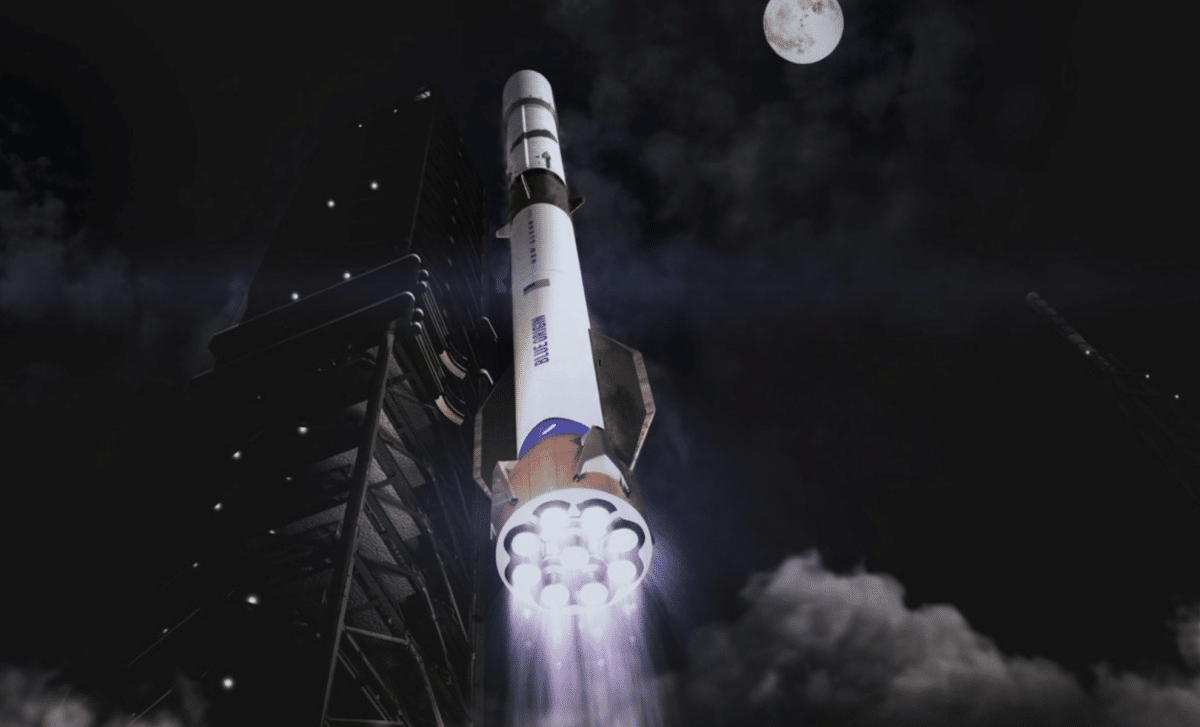
Blue Origin, a leading private space company, has made significant strides in its ambitious plans for lunar and deep space exploration. Fresh off the success of its NG-2 mission, Blue Origin has unveiled exciting new technologies and upgrades, including a robotic lunar lander and the powerful New Glenn rocket.
Blue Origin’s Bold Leap into Lunar Exploration: The New Blue Moon Mk1 Lander
Blue Origin’s latest announcement, as revealed in their recent update on NASASpaceFlight (NSF), introduces the Blue Moon Mk1, a robotic lander set to launch in 2026. This lander will play a pivotal role in NASA’s long-term lunar exploration plans, particularly for Artemis missions. Designed to carry over 3,000 kg of cargo to the Moon’s surface, it is equipped with cutting-edge technologies, including the BE-7 engine capable of throttling and generating up to 44,000 N of thrust. The Mk1 is specifically intended for uncrewed missions and will demonstrate key technologies that will be critical for crewed missions in the future.
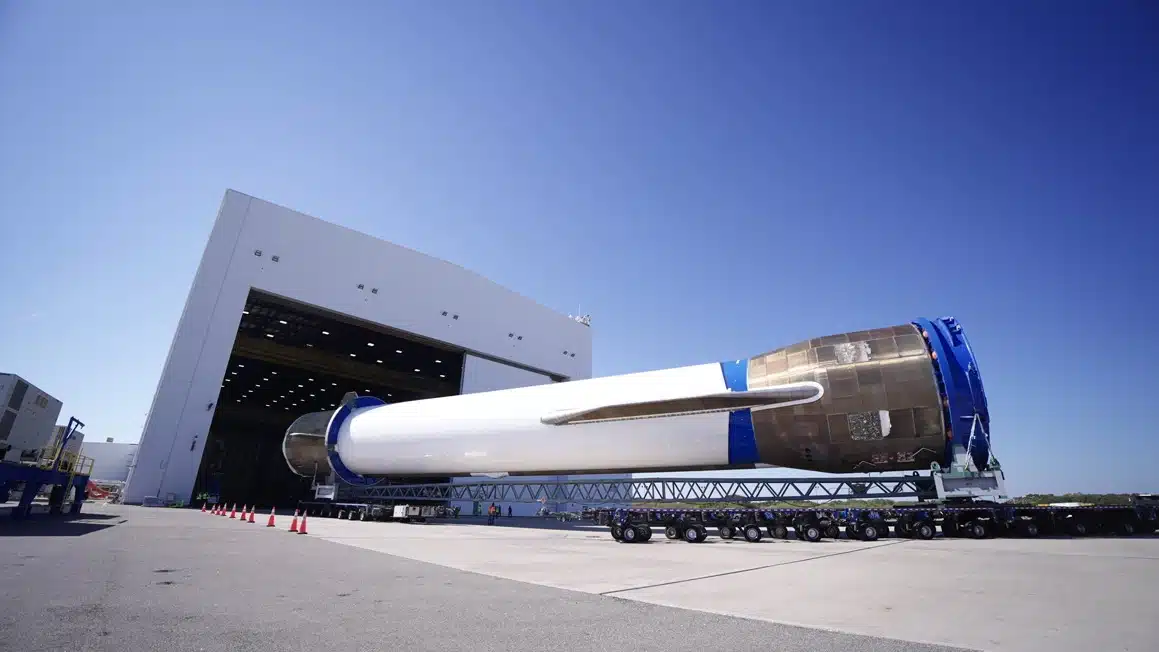 GS1 “Never Tell Me the Odds” being wheeled into the integration hangar at LC-36. (Credit: Blue Origin)
The first mission will target Shackleton Crater on the Moon’s south pole—an area of immense interest due to its potential water ice deposits. This mission will test various systems, including propulsion and avionics, and provide crucial data for future lunar endeavors. With Blue Origin aiming for precision landings within 100 meters of the target, the Mk1 will serve as a cornerstone for its Moon missions, leading to the crewed Blue Moon Mk2 lander.
New Glenn 9×4: Blue Origin’s Ultimate Upgrade to Conquer New Frontiers
While the Blue Moon Mk1 is set to steal the limelight in the near future, another groundbreaking project is the New Glenn 9×4 rocket. This rocket, slated for its first flight as early as 2027, promises to be a game-changer in the heavy-lift launch vehicle market. With nine BE-4 engines on its first stage and four BE-3U engines on the second stage, the New Glenn 9×4 will dramatically increase payload capacity, offering the ability to send more than 70,000 kg to low-Earth orbit—surpassing its predecessor, the 7×2 version, which only carried 45,000 kg.
The new rocket will also feature an 8.7-meter-wide fairing, designed to accommodate larger payloads. While it’s expected to work alongside the existing 7×2 version, the New Glenn 9×4 will cater to missions requiring larger payloads and greater precision. The NASASpaceFlight article underscores that Blue Origin is working tirelessly to refine this new rocket, with plans for more frequent launches and increased cadence in the coming years.
The Power of the Blue Ring: A New Spacecraft for Tracking and Surveillance
Among Blue Origin’s most intriguing new developments is the Blue Ring spacecraft, which promises to enhance space domain awareness. Initially developed for the U.S. Space Force, the Caracal optical payload aboard Blue Ring will be designed to track and image other spacecraft in orbit. This will play a vital role in ensuring safety and security in Earth’s orbit, especially as satellite traffic becomes more congested. Blue Ring will also carry the Owl sensor from Scout Space, another tool for optical tracking and autonomous decision-making.
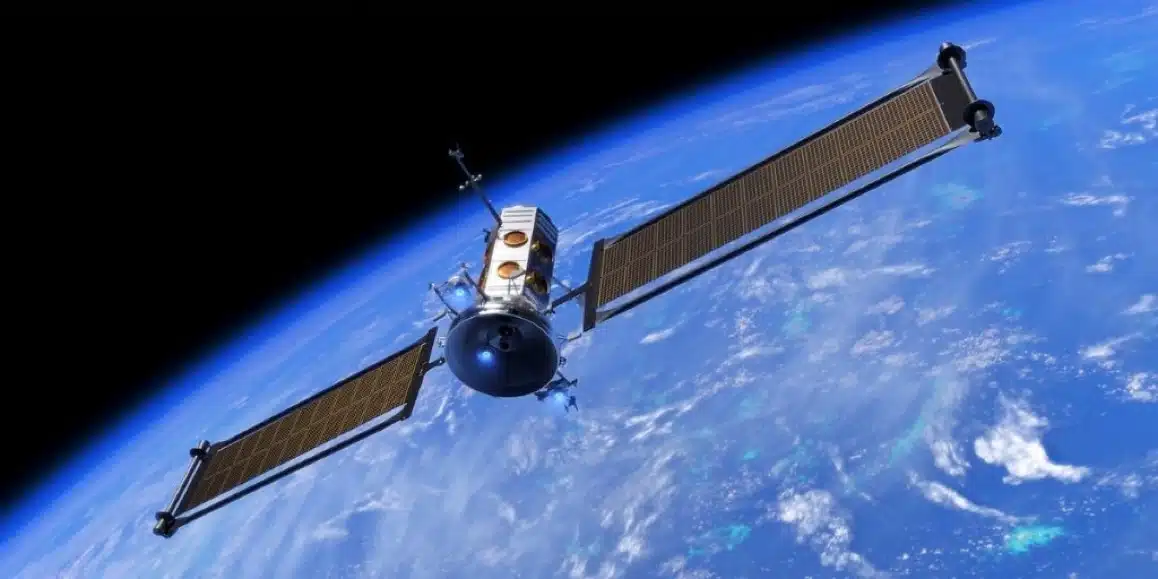 Artist’s Impression of the Blue Ring Spacecraft (Credit: Blue Origin)
Blue Origin’s Blue Ring will be able to carry over 4,000 kg of payloads and is equipped with both chemical and electric propulsion capabilities. This versatile spacecraft will be suitable for a variety of missions, including Earth orbit, cislunar, and planetary missions, including their Mars Telecommunications Orbiter proposal.
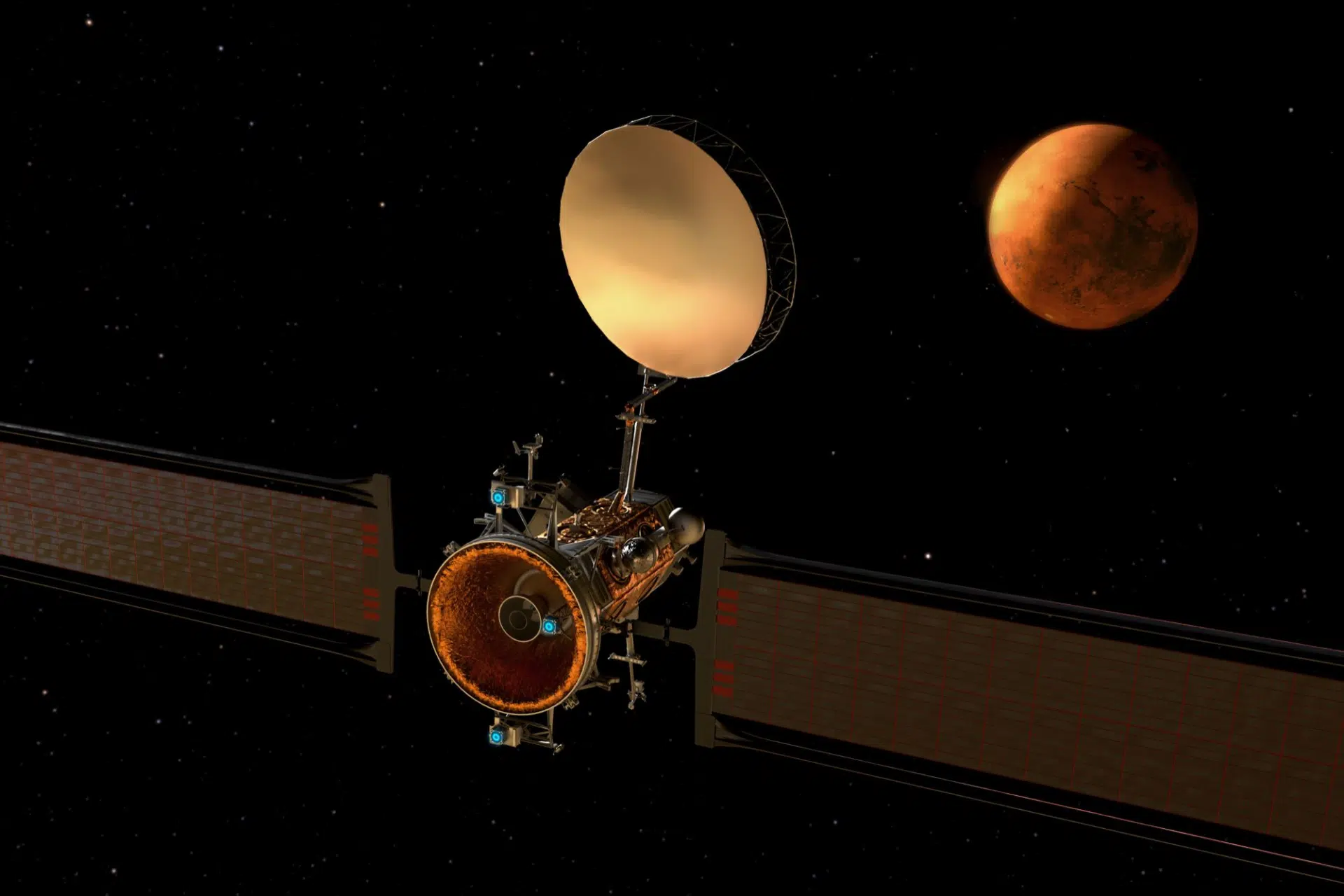 Artist’s Impression of Blue Origin’s Mars Telecommunications Orbiter proposal. (Credit: Blue Origin)
How the Aerobrake Will Revolutionize Spacecraft Design for Mars Missions
One of the more under-the-radar but equally transformative technologies introduced by Blue Origin is its deployable aerobrake. This technology, designed to slow spacecraft by utilizing a planet’s atmosphere, could have profound implications for future Mars missions. Unlike traditional aeroshells, this aerobrake can handle spacecraft up to 9,000 kg, offering a much higher mass capacity.
The aerobrake will work by creating drag in a planetary atmosphere, significantly reducing the need for fuel during orbit insertion. This not only reduces mission costs but also opens up the possibility for more complex and ambitious missions to Mars and other planets. This cutting-edge device could be key to reducing the reliance on conventional propulsion systems and changing the landscape of interplanetary travel.