
On Thanksgiving Day (Nov. 27), a Russian Soyuz rocket launched three astronauts toward the International Space Station from Baikonur Cosmodrome in Kazakhstan.
Everything seemed to go well. After all, the Soyuz MS-28 spacecraft carrying that trio — NASA astronaut Chris Williams and cosmonauts Sergey Kud-Sverchkov and Sergei Mikaev — docked with the orbiting lab safely that same day as planned.
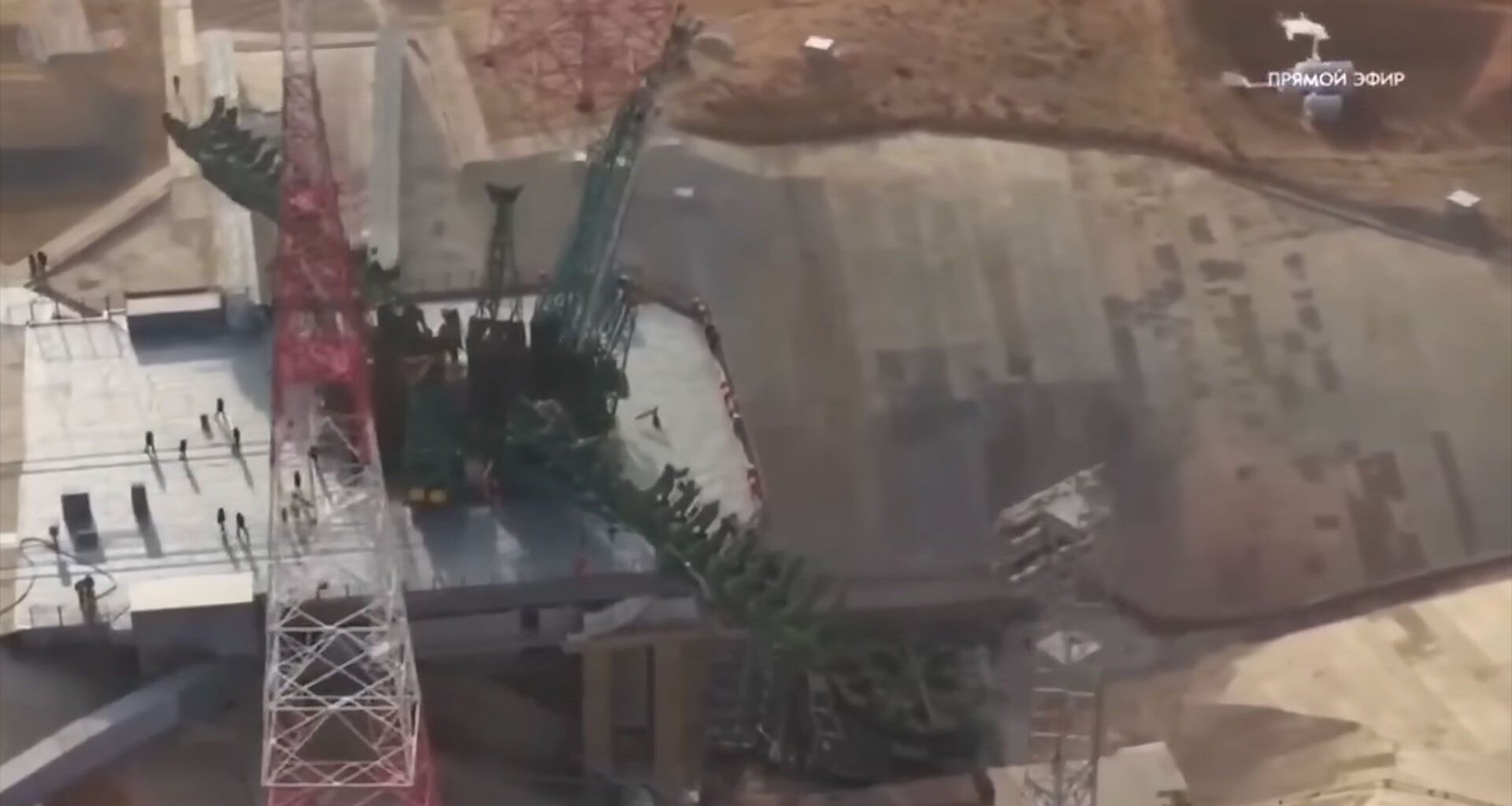
But it turns out that there was an unusual amount of “blast” in the Soyuz’s blastoff, considering the impact on the pad at Baikonur — Russia’s only active pad that hosts crewed liftoffs to the International Space Station (ISS).
You may like
During routine post-launch inspections, “damage to several launch pad components was identified,” officials with Russia’s space agency Roscosmos said in a statement.
“The launch pad’s condition is currently being assessed,” they said, adding that “all necessary spare components are available for repair, and the damage will be repaired shortly.”
Blast effects
Other voices are chiming in regarding the pad blast’s effects and what comes next.
One of those is Brian Harvey, an expert on the global capability to gain access to space and author, along with Gurbir Singh, of “The Atlas of Space Rocket Launch Sites” (DOM Publishers, 2022).
“From what we know, a combination of vibration and heat from the ascending rocket, coupled with some roller pins on the bottom of the service tower not installed properly — or at all — caused it to topple,” Harvey said, adding that his appraisal is unofficial.
“The incident is possibly an unusual slip in quality control, common years ago, but not since,” he told Space.com.
“The event happened some seconds after the rocket was well clear of the pad, so the crew was not in danger,” Harvey added. “It was the service cabin, retracted 45 minutes before launch, not either of the two umbilicals at T-33 seconds and T-12 seconds, respectively.”
You may like
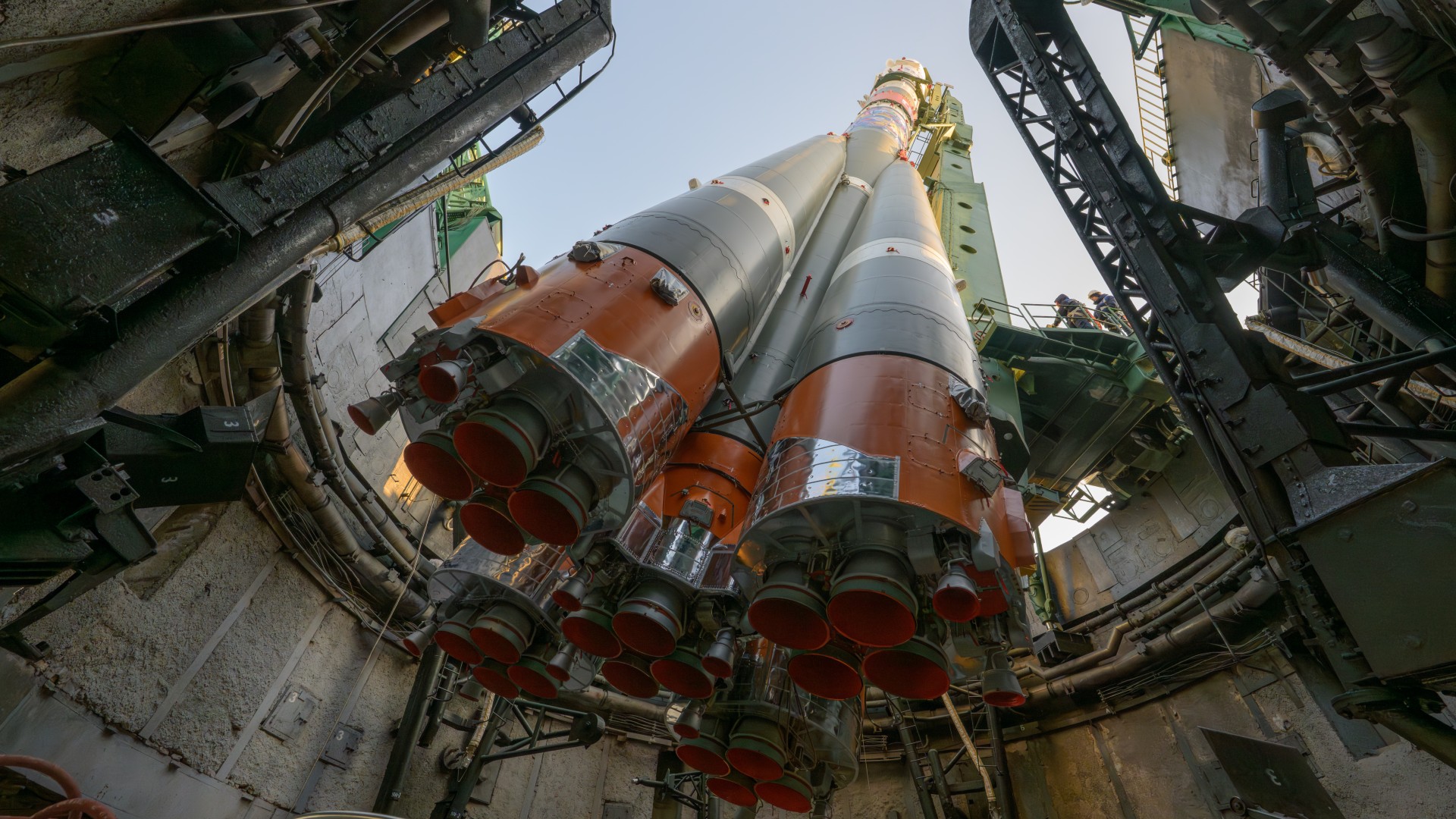
The Soyuz rocket was raised vertical, Monday, Nov. 24, 2025, at site 31 launch pad of the Baikonur Cosmodrome in Kazakhstan. Expedition 74 departed Earth on Nov. 27 for the International Space Station, leaving behind a damaged launch pad. (Image credit: NASA/Bill Ingalls)Scavenge parts?
Harvey thinks that technicians will scavenge parts from another pad at Baikonur and the four at Russia’s Plesetsk Cosmodrome, a high-latitude launch center located in Arkhangelsk Oblast.
And, depending on the compatibility of service towers, Russia may also have the option of flying from Vostochny Cosmodrome in Siberia (though this may not be technically viable), he noted. Vostochny and Baikonur lie at similar latitudes, and it would be relatively easy to move equipment between the two sites by rail. But nobody on the Russian side has publicly mentioned this as a possibility as yet, Harvey pointed out.
He said it has been reported that something like this happened in December 1966, and it took until June 1967 to fix. “But that was without the pressure of piloted missions, so my guess is more like three months,” Harvey said.
Crisis headlines
Roscosmos has said that the aim is to be back in business at Baikonur by the end of March, “and there is no reason why this should not be the case,” Harvey said. “So it’s unwelcome, but not a crisis meriting some of the ‘Russia out of manned spaceflight’ headlines.”
The next crew handover aboard the ISS is not until July of next year. And the next scheduled astronaut mission to the station won’t launch from Baikonur: SpaceX’s Crew-12 flight is up next, with a targeted mid-February liftoff from Florida’s Space Coast.
Meanwhile, cargo ships launched from the U.S. should be able to pick up most of the slack resulting from the Baikonur pad damage. However, the incident does mean that the next Russian Progress supply ship delivery, which had been due in about three weeks, will be delayed.
“So, no Christmas presents,” Harvey said.
Safe operations
How does NASA view the incident?
“NASA is aware Roscosmos is inspecting Launch Pad 6 at Site 31 following launch of the Soyuz MS-28 on November 27 from the Baikonur Cosmodrome in Kazakhstan,” said Joshua Finch, a NASA spokesperson.
“NASA coordinates closely with its international partners, including Roscosmos, for the safe operations of the International Space Station and its crew members,” Finch told Space.com.
He referred questions about the launch site to Roscosmos. Space.com has reached out to the Russian agency but has not yet received a response.
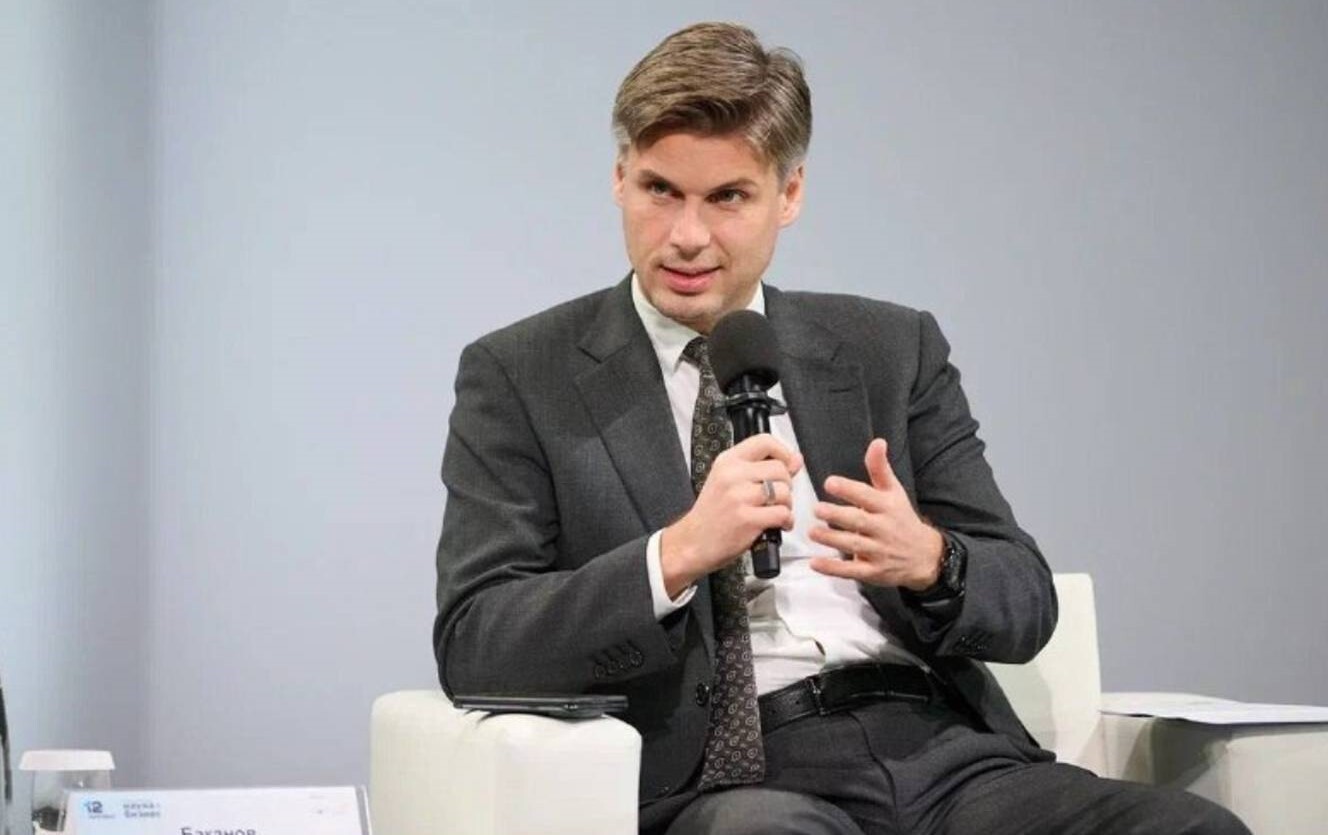
In the hot seat? Dmitry Bakanov, head of Roscosmos. (Image credit: Roscosmos)The end of Baikonur?
Meanwhile, Scott Manley, a noted YouTube space communicator, has offered his view.
“Some people are saying that this could be the end of Baikonur as a Russian launch site. Well, I think that is overly dramatic,” Manley said in a video about the incident.
“I think they have to keep this going for the next few years at least, but it could definitely be the beginning of the end. We’ll see what happens in the next few weeks or months,” he added.
So the true implications of the leftover blast marks on Russian rocketry are still to come.What happens next likely sits on the shoulders of Dmitry Bakanov, director general of Roscosmos. We’ll just have to wait and see…