
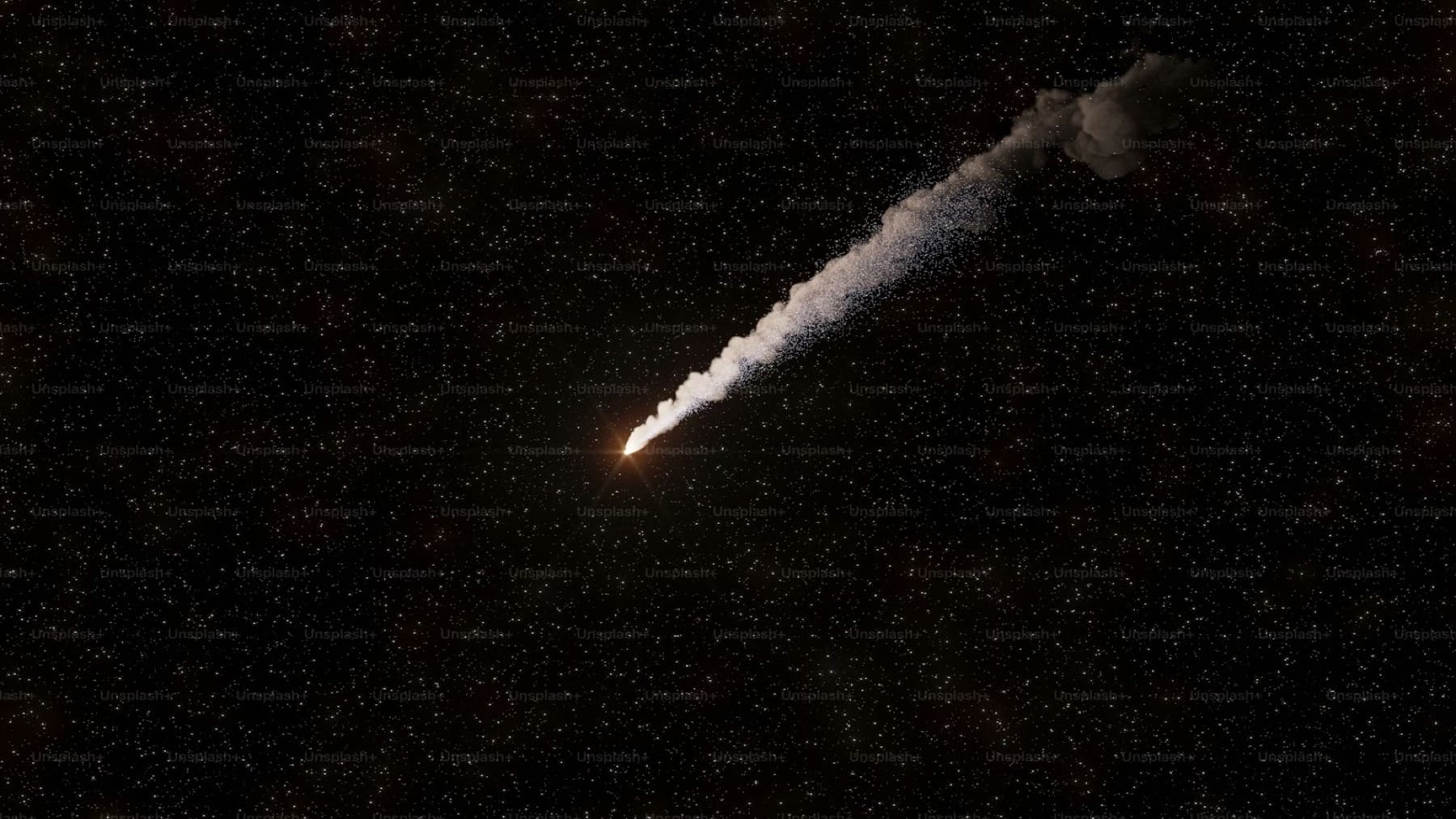
Asteroids are one of the most frequent wanderers of our galactic neighborhood. These objects have been observed to move silently across millions of miles. Although these objects may appear harmless, decades of astronomy have shown us otherwise. Their quiet wander through space has potential risks, and this year, Earth escaped its trouble.
Scientists discover the passing of a near-Earth asteroid
For decades, asteroids have been studied whenever they approach our planet. Agencies often conduct frequent mapping throughout our galaxy, such as NASA and the European Space Agency (ESA). These agencies are capable of analyzing every object that moves towards our planet, tracking their various orbits as they draw closer.
Now, although some of these objects are closer without any potential risks, others have preferred the road towards danger. However, these objects, asteroid rocks, do not act alone. They are usually regulated by interplanetary gravity from our Sun and other planets. Due to this influence, along with their varying sizes, asteroids can sometimes be difficult to track.
This is why, every year, astronomers strive to top their expertise with advanced ground-based telescopes. And every year, more than a thousand asteroid objects are discovered. Through these decades of studying, asteroids have become predictable objects in space. However, a recent discovery has shattered this confident belief.
ESA discovers near-miss impact with asteroid 2025 TF
A team of researchers from the European Space Agency (ESA) discovered an asteroid in the early hours of October 1. This asteroid was not observed through its initial trajectory; instead, it was observed when ESA ran through its data shortly after the incident. It was spotted by ESA’s Catalina Sky Survey.
Scientists on the team included T. Santana-Ros, M. Micheli, and others. They made this discovery using the Las Cumbres Observatory telescope in Siding Spring, Australia, like this unprecedented asteroid discovery, serving as the future of mankind. Asteroid 2025 TF is only about 3 to 6 feet wide, and it was found to come within 1.3 AU (astronomical unit).
During ESA’s post-monitoring, they discovered this asteroid to come as close as 428 ± 7 km over Antarctica’s surface. That is approximately at the same altitude as the International Space Station. What makes this most notable is that, compared to other asteroids, 2025 TF was not discovered until its passing through our Southern Hemisphere.
ESAs’ encounter with the 2025 TF highlights a major limitation
Following the discovery, research analysts were able to pinpoint major reasons why Asteroid 2025 was difficult to monitor prior to. For example, the size of it. Whenever asteroids come in such a size, it is difficult for them to reflect light from the Sun. Therefore, they could appear invincible for telescopes to observe them throughout their orbit.
Why does this event change future asteroid monitoring?
Since scientists discovered the near miss of Asteroid 2025 TF, they have begun re-evaluating monitors and detection models in space. Many measures are now put in place to refine surveys of wandering asteroids. The goal is not to prevent potential impact, but instead, to improve the sighting of danger before it arrives.
In that spirit, scientists are now building advanced telescopes with high gravity sensors and resolutions. The event of 2025 TF emphasizes the need for tools like this that can survey beyond Earth, but the entirety of our solar system. This is because the solar system is constantly evolving.
Asteroid 2025 is a tremendous event for Earth on several levels. It tells a tale of what could’ve happened. However, to prevent such unpredictable events from recurring, such as this powerful asteroid escaping NASA with imminent impact. Scientists are already building satellite tools that could monitor risky asteroid ages before they make their way towards our planet.