

Consultant says children at highest risk from the unproven home remedyAlex Hickey and Jane Kirby Press Association Health Editor
13:14, 05 Dec 2025Updated 13:14, 05 Dec 2025
 Morriston Hospital plastic surgeon Jeremy Yarrow(Image: Swansea Bay Health Board)
A surgeon has issued a stark warning about burns resulting from steam inhalation used to treat coughs and colds.
Jeremy Yarrow, a consultant surgeon at the NHS Welsh Centre for Burns and Plastic Surgery at Morriston Hospital in Swansea, said he and his colleagues encounter far too many children and adults each winter suffering burns from boiled water used to create steam for respiratory complaints.
He explained the method poses significant dangers as bowls of scalding water can overturn without warning, inflicting severe injuries to the face, chest, abdomen and legs.
The consequences sometimes necessitate prolonged treatment or surgical intervention, with youngsters being especially at risk.
Join the North Wales Live WhatsApp community group where you can get the latest stories delivered straight to your phone
“Every year, we at the Welsh Burns Centre unfortunately see too many children and adults with burns sustained from boiling water linked to inhaling steam,” he said.
“Many of the injuries have required admission to hospital and some have gone on to require surgery and skin grafting.
“The injuries I see can often involve burns around the thighs, lower abdomen and genital areas, with children at a much higher risk due to their thinner skin and lack of awareness of the danger.
“Unfortunately, these injuries have the potential to be truly life-changing and can cause lifelong disfigurement and scarring.”
 ‘Good Health Starts…’ has launched this week(Image: Getty)
Mr Yarrow said employing steam inhalation to remedy ailments lacks proven effectiveness and encouraged people to pursue safer alternatives. A Cochrane medical review into the practice also found no clear benefits for using steam inhalation for treating such illnesses.
Mr Yarrow stated: “Although inhaling steam is sometimes thought to be useful as a remedy for common colds and chest infections, evidence of the effectiveness is weak and theories that the steam loosens mucus, opens nasal passages or slows the replication of viruses are just unproven.
“I urge the public to not use inhaling steam as a remedy for the treatment of illnesses such as the common cold and respiratory infections but instead use over-the-counter remedies or those prescribed to them.”
He advised people to act swiftly if they do get burned.
“Should the worst happen and a burn injury occur, quick action can reduce the potential for long-term injury or scarring,” he said.
“Remembering the ‘3Cs’ in such an event can make all the difference.
“They are: cool the burn with running cold tap water for 20 minutes and remove all clothing and jewellery (unless it is melted or firmly stuck to the wound), call for help – 999, 111 or your GP for advice, and cover loosely with clingfilm or a sterile, non-fluffy dressing.”
People are also being reminded to take care when using hot water bottles as they can also lead to burns and scalds.
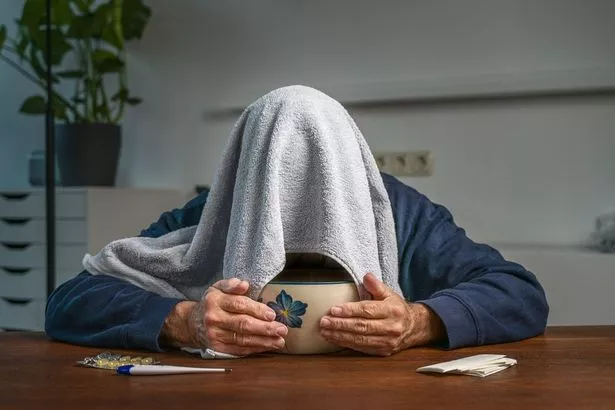 Someone with a cold over a bowl of steam
Janine Evans, an advanced practitioner occupational therapist at the Morriston centre, warned: “Despite safety warnings over the last few years, we are continuing to see a rise in hot water bottle scald injuries every year.
“There are, however, a few simple steps that can prevent painful injuries.
“Always check the manufacturing date stamped on your hot water bottle – the year of manufacture will be in the centre of the date daisy found on the neck or collar.
“If it’s more than two years old, replace it – even if it looks fine. The rubber perishes over time.
“And never used freshly boiled water – always allow it to cool for at least five minutes before filling your hot water bottle.”
Sign up for the North Wales Live newsletter sent twice daily to your inbox