
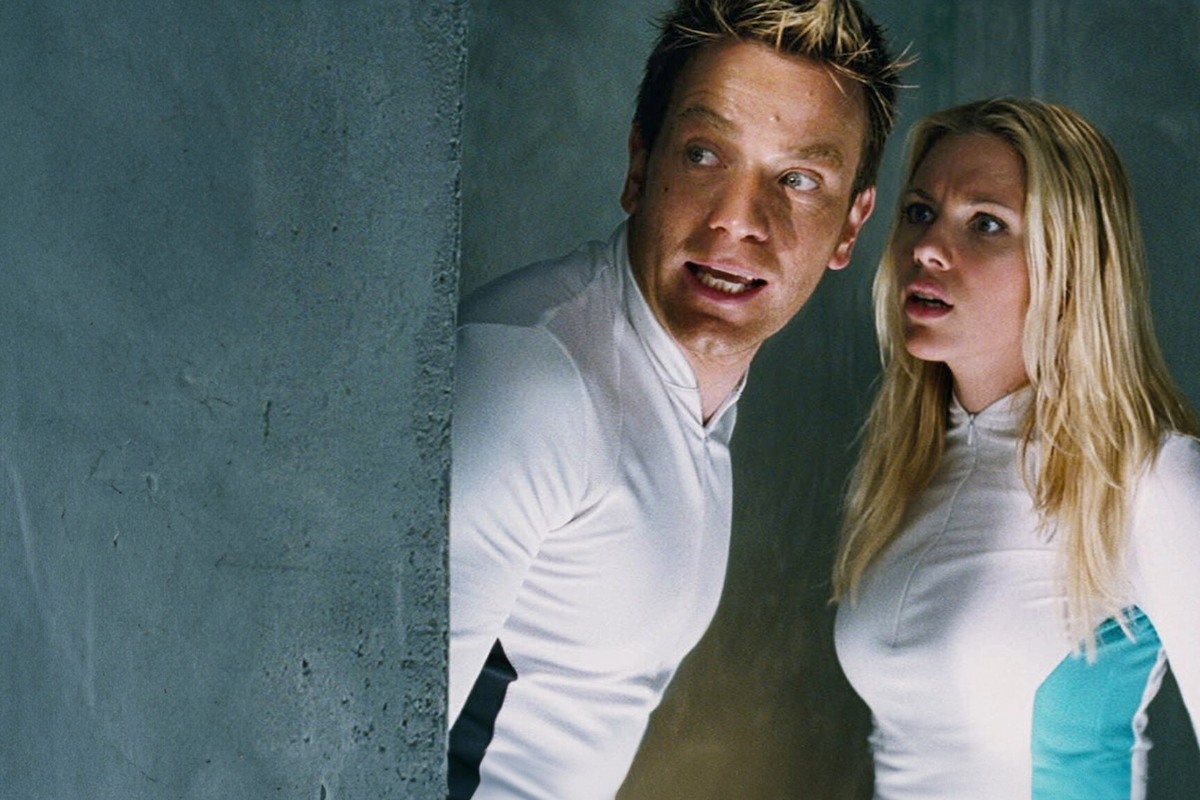
What happens when a trailer gives away the only secret worth keeping? Twenty years on, the sci-fi misfire it created still haunts the studio and shapes how films are sold.
Few trailers are remembered more for what they gave away than for what they sold. In 2005, Michael Bay’s The Island, starring Ewan McGregor and Scarlett Johansson, arrived with a glossy preview that flat-out revealed the colony’s secret: its residents are clones bred for organ harvesting. The fallout showed at the box office, where the film’s ambitious premise and star power couldn’t push it beyond 162 million worldwide on a 126 million budget. Two decades later, its cult afterlife and presence on HBO Max turn that marketing misstep into a case study in how promotion can shape, and sometimes sabotage, an audience’s first encounter with a story.
A trailer that gave away too much
It has been 20 years since Michael Bay released The Island, a sci-fi film with a starry cast, a dystopian hook, and a twist meant to keep viewers on edge. For countless moviegoers, the mystery collapsed before they reached the theater, because the promotional trailer revealed the very secret that defined the narrative.
A dystopian paradise… or nightmare?
Inside a tightly controlled facility, The Island follows Lincoln Six-Echo (Ewan McGregor) and Jordan Two-Delta (Scarlett Johansson), whose lives revolve around the dream of reaching a supposed utopia for the chosen few. The story pivots when the truth emerges: the residents are clones created for organ harvesting.
The problem is that this reveal was already laid out in the marketing. Steve Buscemi’s character, McCord, who articulates the residents’ grim purpose, was prominently featured in the campaign, undercutting the film’s mystery-driven appeal.
A marketing misfire with lasting consequences
When The Island arrived in 2005, it seemed poised for success. Backed by a $126 million budget and headlined by major stars, it ultimately took in $162 million worldwide, a disappointing result that many attributed to the overly revealing campaign.
Audience expectations: By stripping away the central mystery, the trailer reduced the incentive to discover the story’s turns firsthand.
Confusion: Exposing the clones-for-organs twist muddied the perceived genre and focus, blurring suspense with spectacle.
Michael Bay aimed for a blend of propulsive action and human drama set within a suspenseful dystopia, but the marketing choice blunted the film’s impact and its initial reception never fully recovered.
From misstep to cult status
Over time, The Island has been reappraised as a cult classic. Viewers now highlight its themes of identity, bioethics, and corporate overreach, which feel increasingly relevant amid rapid technological advances.
Modern audiences can find it on platforms like HBO Max, where new viewers can approach it without the baggage of a spoiler-heavy campaign, and longtime fans can revisit its ideas with fresh context.
Lessons for the industry
The Island illustrates how easily a campaign can overstep the line between teasing and revealing. Studios promoting story-first projects should prioritize preserving mystery, letting pivotal turns unfold within the film rather than in a fast-cut montage. Audiences remember when marketing shows too much, and trust is difficult to rebuild.