
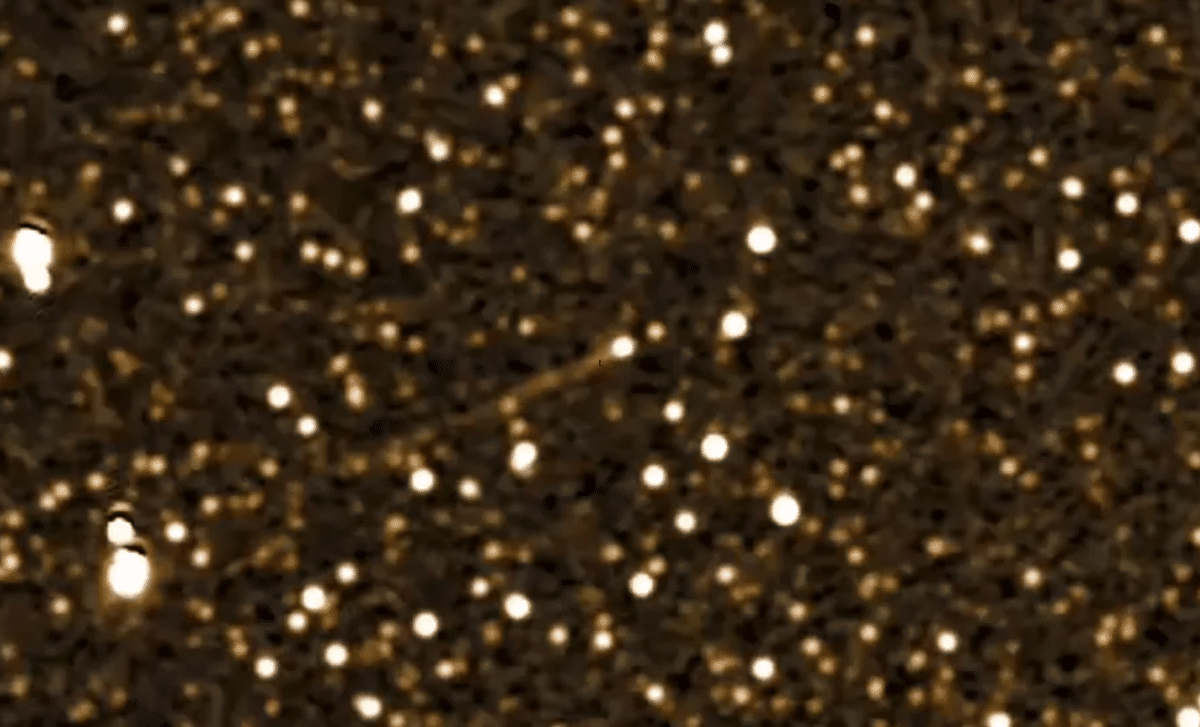
In an unprecedented feat of space exploration, NASA’s spacecraft tracked Comet C/2025 R2 (SWAN) with stunning detail, capturing hundreds of images every few minutes over a 40-day period. This breakthrough study provides a remarkable glimpse into the life cycle of comets and the dynamic forces of space weather. The mission, part of NASA’s ongoing efforts to better understand our solar system and beyond, offers valuable insights into the behavior of these icy wanderers and their interactions with the Sun’s solar wind.
Unveiling the Secrets of Comet SWAN
NASA’s recent timelapse tracking of Comet SWAN reveals a level of detail never before captured in such a short time span. The spacecraft took images of the comet every four minutes from August 25 to October 2, 2025, providing a continuous, high-resolution look at the comet as it moved through the sky. The result? A breathtaking video sequence that shows Comet SWAN as it glided past Mars and the star Spica, giving astronomers an unprecedented view of how comets behave under the influence of solar wind.
Unlike previous missions, where comets were tracked at a once-per-day cadence, this study set a new standard by capturing images at a rapid rate. As Craig DeForest, the principal investigator for the PUNCH mission at the Southwest Research Institute in Colorado, noted, “Other comets have been tracked at once-per-day cadence for years. What’s new here is the few-minute cadence of observation.” This rapid observation allowed scientists to capture the comet’s tail in fine detail as it reacted to the Sun’s solar wind.
The Science Behind the Timelapse
The study, conducted by NASA, primarily focused on understanding the effects of solar wind on cometary bodies. As Comet SWAN approached the Sun, its ices began to vaporize, releasing gas and dust that formed a glowing tail. The images taken by NASA’s spacecraft showed this tail constantly being pushed away from the Sun by the solar wind, giving scientists a unique opportunity to study the dynamics of this process in real time.
Gina DiBraccio, a heliophysicist and acting director of the Solar System Exploration Division at NASA’s Goddard Space Flight Center, emphasized the importance of multiple observation points:
“Watching the sun’s effects from multiple vantage points — and with different types of instruments — is what gives us a complete picture of the space environment.”
This method of tracking the comet’s movements with various instruments provided a more comprehensive understanding of the comet’s interaction with the solar wind and other cosmic forces.
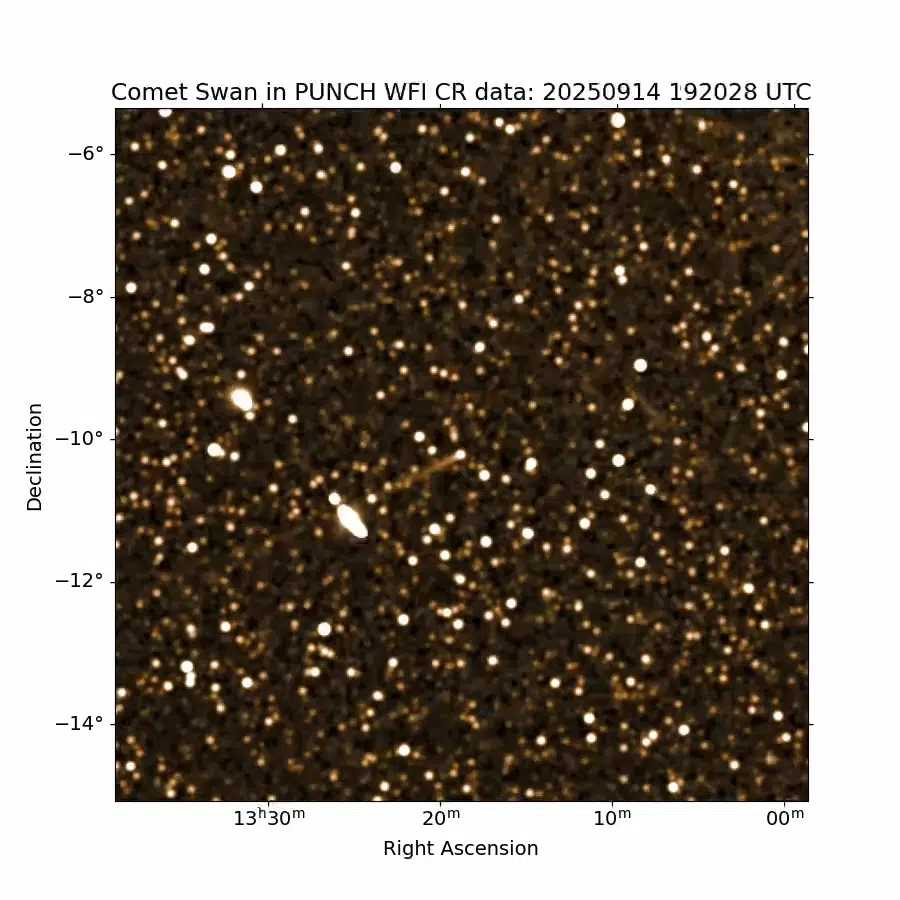 This processed movie shows comet SWAN moving across the sky in PUNCH images taken from Sept. 11 to 22, 2025. The two bright objects that the comet passes between (roughly halfway through the movie) are the planet Mars (top) and the star Spica (bottom). Comet 3I/ATLAS also makes a brief appearance, crossing from left to right below comet SWAN near the end of the video. In these images, the Sun is out of view to the upper right. As the comet moves to the left, away from the Sun, the solar wind also pushes the tail to the left, away from the Sun, making the comet appear to be moving “backward.”
NASA/Southwest Research Institute
Interstellar Visitor: 3I/ATLAS and Comet SWAN’s Shared Journey
As if Comet SWAN wasn’t spectacular enough, the timelapse also revealed a rare cosmic event: the brief appearance of the interstellar visitor, 3I/ATLAS. This interstellar object, which passed through our solar system in recent years, shared the same swath of sky as Comet SWAN. It appeared momentarily in the timelapse, zipping past beneath the comet, offering an incredible opportunity to observe an interstellar body in our solar system.
The brief appearance of 3I/ATLAS is significant because interstellar objects are extremely rare, and their passage through our solar system offers a wealth of scientific data. The study not only provided a detailed view of a comet but also of an object that originated outside of our solar system, giving astronomers a glimpse into the unknown realms of interstellar space.
The Future of Space Weather Studies
NASA’s timelapse study of Comet SWAN marks a significant step forward in our ability to understand space weather and its effects on both the solar system and Earth. The data gathered from this mission will help scientists analyze how solar wind interacts with comets, which in turn can inform our understanding of how space weather affects our technology and astronauts.
“We use these same tools to track and analyze how space weather impacts our astronauts, our spacecraft, and our technology here on Earth,” DiBraccio explained.
Understanding how comets react to solar wind and other space phenomena could prove critical in predicting the effects of solar flares and other space weather events on satellites, communication systems, and even power grids on Earth. This research has far-reaching implications for both space exploration and life on Earth.