
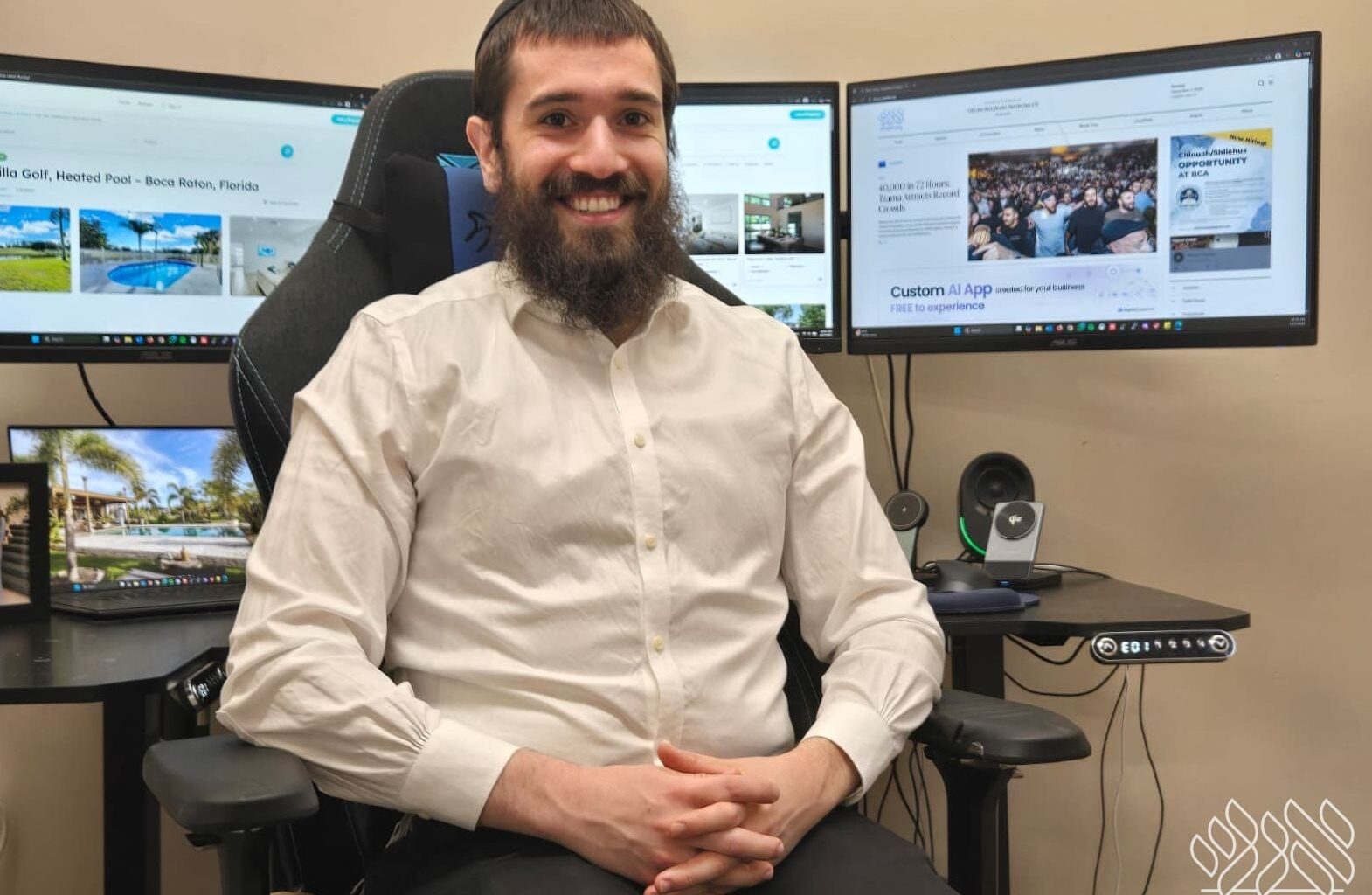
Liba Borisute interviews Yossi Schtroks, founder and owner of Kvation, for the N’shei Chabad Newsletter
Tell us about your journey in entrepreneurship.
Where things ended was actually where it all began. I remember the day when my first company, Zazion, went down.
I had built it up from scratch, starting in 2019, pouring time, energy, and resources into it. For the next few years, the business continued to grow. At its highest point, we had three full-time employees, and we were building up a name. I was running websites and digital marketing campaigns.
And then, everything started to collapse.
It was at a time when many other B2B (business-to-business) tech companies were going under. A few friends in the same industry, many of whom had been doing it longer than I had, had already shut down. I managed to hold on a little longer, but eventually I had to face reality. We didn’t have the cash reserves to ride the waves. I was in too deep, and it was time to let my employees go.
That must have been a very tough decision to make. What did you do next?
It was very difficult, especially because my expenses were increasing, baruch Hashem. At this point, we were expecting our first child and faced the ultimate crossroads in our parnassah journey: to take a job or try again to open my own business.
I knew the employee route wouldn’t work for me. I’d never been good with authority, and I had always wanted to be my own boss. I wanted the freedom to be there for my family that this route would eventually grant me.
With my wife Shaindy’s encouragement, I continued to pursue the path of entrepreneurship.
But I knew that this time, I needed to do things right. In the past, I had always tried to figure things out on my own. However, I had made many mistakes with Zazion, and I couldn’t afford another crash. We had bills to pay and needed a solid plan. That’s when I finally admitted it: I needed guidance.
It sounds like your wife’s encouragement propelled you forward.
Yes. She really pushed me to take the leap. Without her, none of this would have happened. She is my sounding board for creative concepts. In fact, the name of our current business, Kvation, is all to her credit.
What is Kvation?
Our website, Kvation.com, is a kosher vacation rental platform—basically, “the Airbnb of the kosher world.” The letter K, then “vation”—KAY-vayshen, or Kvation. Kosher Vacation!
The idea came from personal experience. My wife and I were trying to book a vacation, but had such a hard time finding kosher apartments in our preferred neighborhood that we ended up changing our plans to an entirely new destination. That’s when we realized there had to be a better way.
Kvation makes it simple to book directly with owners, see how close each property is to local shuls, and—most important—get clear pricing from the start. No back-and-forth emails asking, “Is this available?” or “What’s the cost?” Baruch Hashem, the platform is growing quickly. It really fills a need in the Jewish community.
We work directly with owners to list apartments and villas in places like New York, Israel, Mexico, and more. At the time of this interview, we have over 200 kosher rentals.
Let’s go back to your turning point—when you realized you needed guidance.
Yes. In general, I’ve always been a very self-reliant person. But after the collapse of Zazion, I quickly learned that grit alone can only take you so far. With mentorship, you gain clarity and direction. When you know you’re heading the right way, you go far.
I was pleasantly surprised by how interested people were in helping me. One of the first people I reached out to thought I was going to ask him for tzedakah or for a deal through his business, which is what most people approach him for.
But the moment he heard that I was asking for mentorship—to learn from his experience and help me get started—his face lit up, and he gladly gave me his number.
And he wasn’t even a professional consultant.
That’s correct. People commonly assume that good business advice has to come from a paid consultant, but in the early stages, what you often need most is someone who’s already built something and is willing to share what they’ve learned.
Many people are happy to help simply because they remember what it was like to be starting out. Professional consultants can become more useful later, once your business is covering expenses and past the survival stage. That’s when it can make sense to invest in professional guidance to streamline systems and scale strategically.
The main thing I’ve learned is to seek out someone who has been in your shoes. Also, keep in mind that mentorship doesn’t have to come from just one person—and it shouldn’t. I have contacts I reach out to for their different areas of expertise. One mentor might help you with hiring, another with strategy, another with mindset. What they all have in common is real-life experience and the generosity to share it.
They don’t need to have a formal title as a coach or mentor. Most of my mentors wouldn’t even call themselves that. They’re just people who are happy to help, as long as you ask with respect and sincerity.
For example, my go-to person for employee management is a vice president at a pharmaceutical company. He manages a team of remote employees across the U.S., so I ask him for tips on everything from hiring to communicating, as well as how to see when something’s not working and decide whether to try to fix it or move on. He’s not a business owner, but he’s a very successful employee manager at his company, and his guidance has been incredibly helpful.
How does one go about finding the right mentors?
Look for people in similar industries or with relevant experience.
During my journey, I reached out to CHYE (Crown Heights Young Entrepreneurs), a program dedicated to helping frum entrepreneurs launch and develop their visions. One of the mentors I worked with was Yehuda Berg, a seasoned business consultant with decades of experience. He guided me through the process of accessing funding for my business.
How has your mindset evolved?
Setbacks can be painful. But your biggest mistake can also become the springboard for your next big success. Don’t be afraid of getting back up again and trying new things. My experience with Zazion pushed me really hard, right into developing Kvation. I worked with more focus and invested even more energy. It was what I learned from my own past experiences that lit a fire under me—and gave me the drive to keep building.
Success isn’t possible without mistakes. I learned much of this mindset by spending time with successful people. Not long ago, I made a mistake that cost me a few thousand dollars. I learned something valuable from it and I know that I won’t make that same mistake again. Now I know better.
How do you deal with stress in business?
I find that stress and pressure actually help me focus. When I’m worried, it pushes me harder. Yes, it’s painful to be so focused—I wish I didn’t have to feel that way—but some of my best work happens under stress.
Sometimes I take a walk to clear my head; other times, I work nonstop until I solve the problem. Challenges motivate me to fix things and do better.
Recently, I have put more of a focus on the spiritual aspect, for example, davening with a minyan every day. I have seen a direct correlation between being careful with that and an increase in success in my business. When we get stressed, we may think we have to put more energy into our physical work, but the real success comes when we increase in our spiritual work. [See Hayom Yom below. -Ed.]
Any final words for our readers?
It’s not always easy to open that door or create a friendship with someone successful, and sometimes mentorship starts with just one phone call. Other times, you see someone more often, build a relationship, and, over time, you start to see things differently.
Keep in touch with others who are successful. It’s the idea of shachen tov: surrounding yourself with good neighbors—people who will encourage you and influence you to reach your potential. Mindset is developed by surrounding yourself with the right people.
I discovered after going into business that Yidden live by what we are taught—that the highest form of tzedakah is not giving handouts but rather helping someone else become independent and able to make their own money. I have found that Jewish businesspeople are not only willing, they are eager to help their fellow Jew who is just starting out in business. It’s a beautiful thing and surely brings nachas to Hashem.
*
Mentor Spotlight: Yehuda Berg, CHYE Consultant
Please tell us about your background and current work.
I’ve been working in the nonprofit sector for over 25 years, mainly as the director of financial services at the Council of Jewish Organizations of Flatbush. I help people and entrepreneurs take their business ideas from concept to reality—writing business plans, deciding how to budget funds, doing market research, and accessing financing. As a business consultant for CHYE, I counsel aspiring entrepreneurs and help them turn their dreams into viable businesses.
How does the process work?
A person comes to me with a business idea, and I flesh it out with them. I guide them all the way from having an idea to building a real, viable business. That’s my main focus and expertise.
How many people have you mentored?
I average about 100 to 150 clients a year, so over my career, I’ve mentored between 2,000 and 3,000 people.
Wow! That’s a lot. What inspires you to keep going?
Watching someone go from just an idea to a successful business is incredibly satisfying. Knowing I had even a small part in their success keeps me motivated. Many of the businesses we’ve mentored now give back to support CHYE. It’s wonderful to see this cycle of growth and generosity continuing in the community.
Under the leadership of Rabbi Yehoshua Werde, CHYE (Crown Heights Young Entrepreneurs) offers workshops, mentorship, and training programs for frum business owners at every stage. Learn more at chye.info.
*
Hayom Yom – 4 Menachem Av
מִיט דעֶר גרעֶסטעֶר האָרעֶוואַניעֶ קעֶן מעֶן נִיט פאַרדִינעֶן קֵיין אֵיין סעֶנט מעֶהר וִויפְיל הַשֵּׁם יִתְבָּרֵךְ האָט אָפְּגעֶשׁטעֶלט, אַז דעֶר אוּן דעֶר מעֶנשׁ זאָל פאַרדִינעֶן. מעֶן בּעֶדאַרף טאָן וִויפְיל עֶס אִיז נוֹיטִיג, אָבּעֶר מעֶן מוּז געֶדֵיינקעֶן, אַז דִי גאַנצעֶ אַרבּעֶט, אִיז מעֶר נִיט וִוי אַ טָפֵל, דעֶר עִקָּר אִיז דִי בְּרָכָה פוּן הַשֵּׁם יִתְבָּרֵךְ, אוּן דִי בְּרָכָה פאַרדִינט מעֶן וועֶן מעֶן אִיז אַ עֶרליכעֶר אִיד: תְּפִלָּה בְּצִבּוּר, שְׁמִירַת שַׁבָּת בְּהִדּוּר, כַּשְׁרוּת בְּהַשְׁגָחָה גְּדוֹלָה, חִנּוּךְ הַבָּנִים בּאַ מְלַמְּדִים עֶרלִיכעֶ אִידעֶן.
Even with the greatest toil, one cannot earn one cent more than Hashem has ordained for him. We must do what is necessary, but we have to remember that all our labors are only of secondary importance. What counts is Hashem’s blessing, and this is earned by acting in a way appropriate for a Jew: davening with a minyan, observing Shabbos with loving punctiliousness, keeping kosher vigilantly, and having one’s children educated by teachers who have yiras Shamayim.
Living in This World
The Rebbe Rayatz prefaced the above teaching with these words: “Some people assign primary importance to secondary matters and relegate those of primary importance to a lower status. Educating a child on the just path so that he will have yiras Shamayim is of primary importance. Business is of secondary importance. It is a medium for G-d’s blessing. The foolish, fatigued individuals who have lost the proper understanding of what is first and what is second are to be pitied.”
The Tzemach Tzedek compares a business to a garment. Just as a garment should not be too small, it should also not be too large. When we invest ourselves in our businesses to the point that we forget our true purpose in this world, the “garment” is too large. This is counterproductive, even from a purely business standpoint. A business will be successful only to the extent of Hashem’s blessings, which He grants far more bountifully to those who are dedicated to doing His will.
*
Reprinted with permission from Nshei Chabad Newsletter