
South Africa, China’s largest trade partner in the continent, and other Southern African Customs Union (SACU) members are suffering from an unforeseen barrier to enjoying Beijing’s zero-tariff policy.
The hurdle is eSwatini’s continued diplomatic recognition of Taiwan and hence exclusion from the favourable policy.
SACU customs deals are negotiated collectively among the five member states, which means none can unilaterally benefit from the preferential tariff exemption.
Do you have questions about the biggest topics and trends from around the world? Get the answers with SCMP Knowledge, our new platform of curated content with explainers, FAQs, analyses and infographics brought to you by our award-winning team.
Beijing sees Taiwan as part of China to be reunited by force if necessary. Most countries, including the United States and the rest of Africa, do not recognise Taiwan as an independent state. But Washington is opposed to any attempt to take the self-ruled island by force and is committed to supplying it with weapons.
John Steenhuisen, South Africa’s minister of agriculture, said in a recent interview that duty-free access to China had been rendered “quite complicated” as the country is part of SACU, whose other members are Botswana, Lesotho and Namibia.
SACU’s collective bargaining agreement prevents individual members from accessing Beijing’s zero-tariff deal, so the exclusion of eSwatini over its recognition of Taiwan means all five are excluded.
“It is still unclear how South Africa is going to get around our SACU agreement,” Steenhuisen said.
The South China Morning Post has reached out to the South African Ministry of Commerce for comment.
In June, Beijing announced a zero-tariff policy for all products from 53 African countries, excluding eSwatini. This is expected to take effect once negotiations and the signing of individual economic partnership agreements with each participating country are complete.
The move was seen as a response to the Trump administration’s sweeping reciprocal tariffs, which undermined African trade preferences under the African Growth and Opportunity Act. The act expired on September 30.
Steenhuisen said that the situation “does mean it slows us down sometimes, and as this situation uniquely shows, it can sometimes prevent us from being able to take full advantage”.
He confirmed that a review of SACU was ongoing within the 16-member Southern African Development Community (SADC) region and between the five-nation group.
Apart from the five SACU nations, the SADC includes Angola, Comoros, the Democratic Republic of Congo, Madagascar, Malawi, Mauritius, Mozambique, Seychelles, Tanzania, Zambia and Zimbabwe.
Steenhuisen added that South Africa’s Department of Trade, Industry and Competition was involved in extensive negotiations to find a way around this, so that South Africa could also take advantage of duty-free access to the Chinese market.
China remained a very important friend and trading partner for South Africa, particularly for agricultural goods, Steenhuisen said, citing huge opportunities with products like stone fruit, cherries and blueberries. The zero-tariff plan would be “a game-changer for us on wines and the like”, allowing South African wines to compete more evenly with major producers like Australia, he added.
During the Group of 20 Summit in Johannesburg last month, Chinese Premier Li Qiang said that Beijing was willing to work with South Africa to safeguard the multilateral trading system and promote the early implementation of zero-tariff treatment for South African goods.
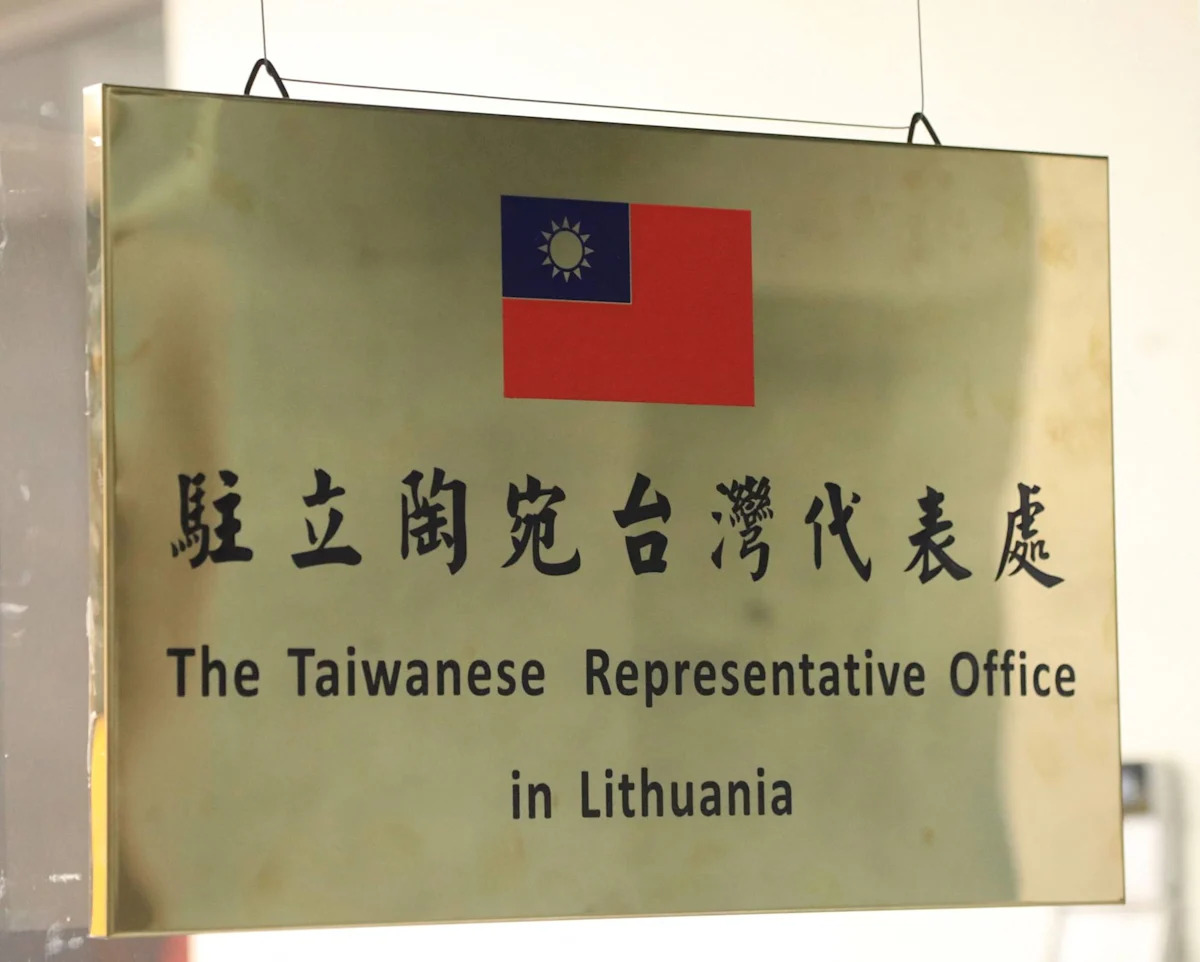
According to Lauren Johnston, a China-Africa specialist and a senior research fellow at the AustChina Institute, eSwatini’s exclusion echoes the 2021 Lithuania-China dispute. Tensions erupted after Lithuania, a member of the European Union, allowed a Taiwan representative office in Vilnius under the name “Taiwanese” instead of the customary “Taipei.”
The EU does not recognise Taiwan as a sovereign state, adhering to the “one-China policy” that views the People’s Republic of China as the sole legitimate government of China.
Beijing viewed the Lithuanian move as a violation of this principle and downgraded diplomatic ties with the Baltic country.
“China did not, however, punish the whole of the EU, but the supply chain effect did have impacts beyond Lithuania,” Johnston said.
Beijing also reportedly pressured multinational companies, including large German firms such as Continental and Bosch, to sever their supply chain ties with Lithuanian suppliers.
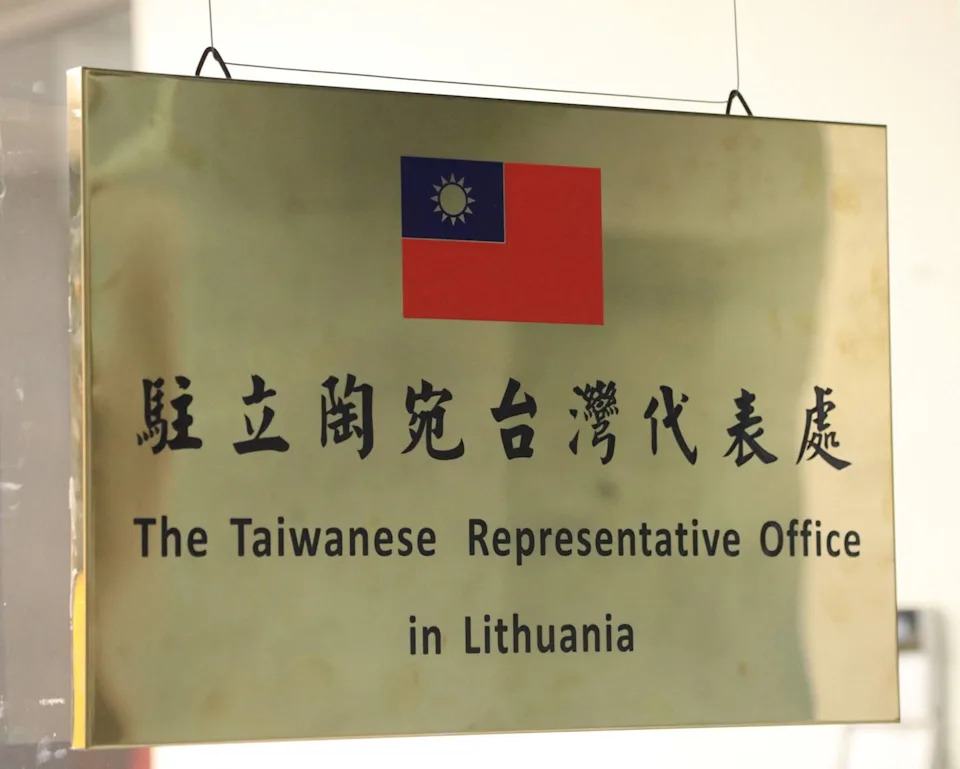
A plaque at the Taiwan representative office in Vilnius that caused Beijing to downgrade Lithuania ties in 2021. Photo: AFP alt=A plaque at the Taiwan representative office in Vilnius that caused Beijing to downgrade Lithuania ties in 2021. Photo: AFP>
Ties are still strained, though Lithuania’s new government has pledged to normalise relations with China to the level of other EU states.
Johnston said eSwatini’s share of the SACU trade was small, while South Africa acted as a crucial regional hub for banking, mining, education and political dialogue with China.
But she also highlighted challenges in isolating eSwatini’s trade, since definitively marking goods as originating solely from there would prove difficult.
Thandi Moraka, South Africa’s deputy minister of international relations and cooperation, defended continuing to strike deals without the exclusion of eSwatini.
“The continuous engagement with eSwatini needs to be driven from a SADC point of view,” she said.
Moraka said the SADC needed to approach trade and investment with “the unity that we need within the … region”, warning that a lack of coordination meant members would “continue to undermine each other”.
She added that working together as a bloc was essential “to leverage on these opportunities that China is presenting to us as various member states of the continent of Africa”.
Until a formal deal is reached, South African products will continue to attract tariffs; for example, wine is charged duties ranging from 14 per cent to 20 per cent and macadamia nuts face a 12 per cent tariff, remaining subject to current Chinese levies.
This article originally appeared in the South China Morning Post (SCMP), the most authoritative voice reporting on China and Asia for more than a century. For more SCMP stories, please explore the SCMP app or visit the SCMP’s Facebook and Twitter pages. Copyright © 2025 South China Morning Post Publishers Ltd. All rights reserved.
Copyright (c) 2025. South China Morning Post Publishers Ltd. All rights reserved.