
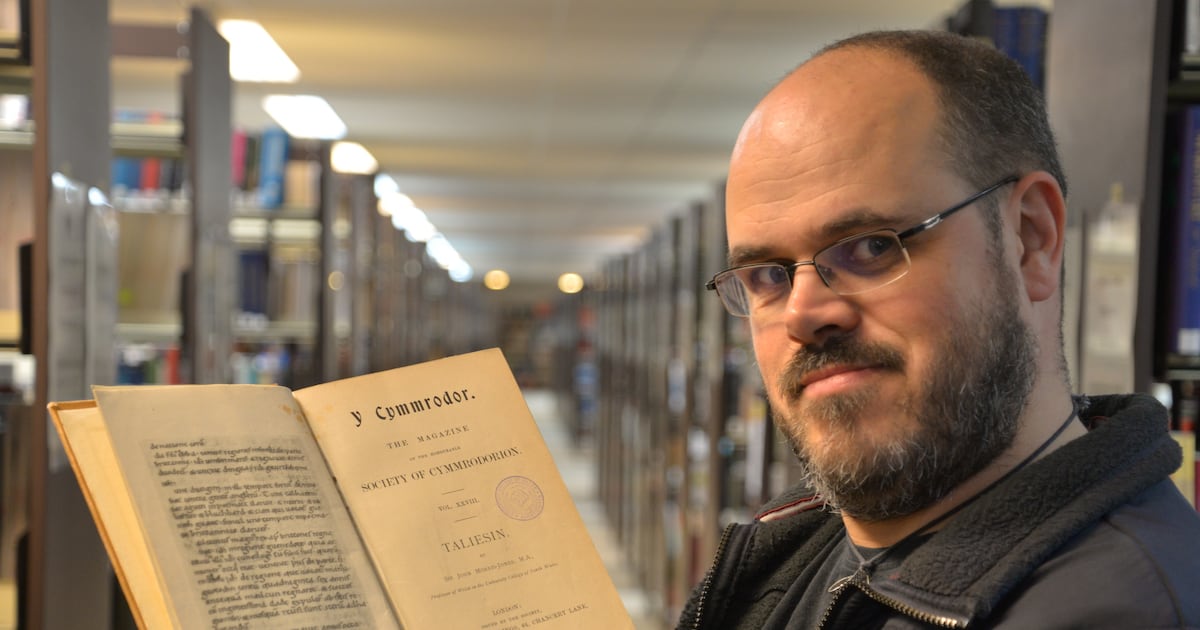
Researchers at a Welsh university have begun work on the first comprehensive dictionary of the ancient Celtic languages spoken in Ireland and Britain.
The three-year project, led by Dr Simon Rodway at Aberystwyth University, will compare linguistic evidence from across the islands dating back to around 500 AD, including Old Irish alongside ancient British Celtic languages.
The dictionary will draw on Celtic place names and personal names recorded in Greek and Latin texts, inscriptions from Roman Britain, and early Irish and British inscriptions using the Ogham alphabet.
Modern Celtic languages – including Irish, Welsh, Scottish Gaelic, Manx, Breton and Cornish – all derive from these earlier tongues, and similarities remain visible.
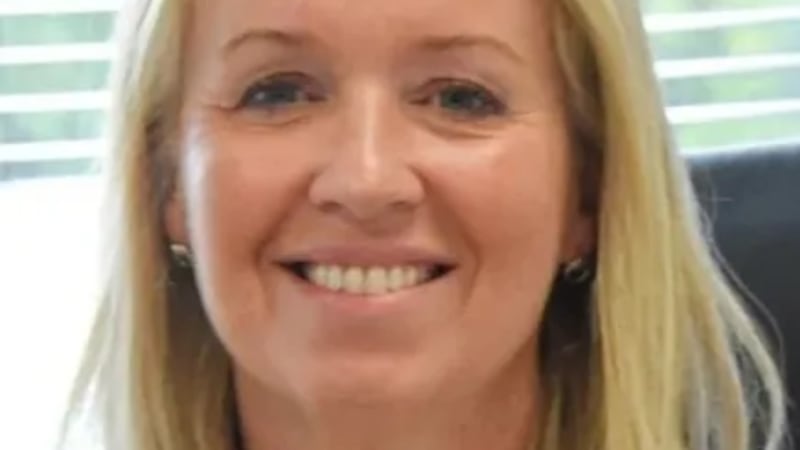
Dr Rodway, senior lecturer in Welsh and Celtic Studies at the university, is heading up the project, thanks to a three-year research grant from the Leverhulme Trust.
“It’s extremely exciting to lead this project and pen the first dictionary of this kind,” he said.
“These disparate sources have never before been brought together in a way that offers such a comprehensive insight into the nature of Celtic languages spoken in these islands at the dawn of the historical period. It will also show how that evidence compares to the much fuller record from the medieval and modern periods of Welsh, Irish, Scottish Gaelic, Breton, Manx and Cornish.”
The project will also evaluate theories about other languages spoken in Ireland and Britain in prehistory and their connection with the Celtic languages.
Dr Rodway added: “While it is certain that non-Celtic languages were spoken in these islands before the Celtic languages, and for some time alongside them, we have no uncontroversial direct evidence for those languages, and hypotheses about them range from the cautious to the fanciful. A full collection of the available evidence will allow us to sort the wheat from the chaff.
“The resulting picture of the linguistic landscape of Britain and Ireland in the earliest period will be of huge interest not only to linguists, but also to historians, archaeologists and archaeo-geneticists. This project underlines once again the importance of the Department in Aberystwyth to the study of ancient Celtic, following in the footsteps of and building on the success of important projects on the early Celtic evidence from continental Europe.”