
Founder’s Briefs: An occasional series where Mongabay founder Rhett Ayers Butler shares analysis, perspectives and story summaries.
Patricia Wright arrived in Madagascar nearly four decades ago to look for a lemur thought to be extinct. She found it, along with a new species, and then ran headlong into a broader reality: protecting wildlife would depend on the well-being of the people living alongside it. Her discoveries eventually led to the creation of Ranomafana National Park, today a UNESCO site. Yet the forces that threaten the island’s forests have only grown more entangled.
“Poverty is the enemy of conservation here in Madagascar,” she says.
It is not a line delivered lightly. Roughly four out of five Malagasy live in poverty, and for many families forests are still the last resort when the economy falters. In a year marked by political turmoil and a slump in tourism, Wright says she has seen the pressure intensify. Empty planes mean empty hotel rooms, and eventually empty stomachs. When that happens, people fall back on slash-and-burn agriculture or small-scale logging, even inside protected areas. The conservation gains built over decades start to fray.
Wright’s argument is that any lasting strategy must braid together conservation, health, and education rather than treat them as separate fields.
“Both health and education are very important… but it has to be connected to the fact that [people] have forests,” she says.
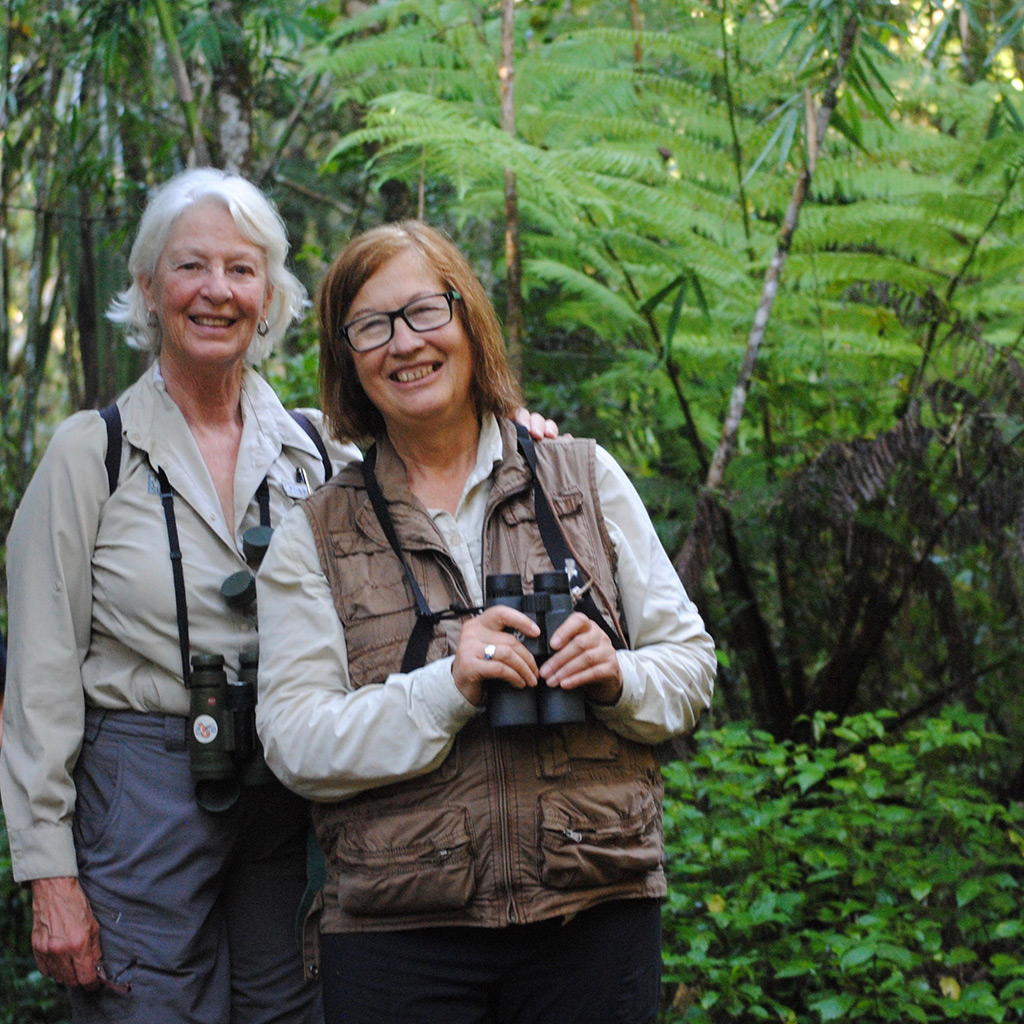 Jane Alexander and Wright in Madagascar. Photo courtesy Jane Alexander
Her research station, Centre ValBio, has tried to model this by training local residents as biodiversity monitors and field researchers, while also supporting clinics, fellowships for rural students and small experiments in forest-friendly agriculture. Vanilla vines trained on native trees and peppercorn grown on reforested hillsides are small steps, but they offer income streams that do not require burning land.
If this sounds like a development program as much as a conservation effort, that is the point. Madagascar’s challenges are not abstract. Fires, deforestation, political upheaval and cyclones all feed into each other. Conservationists who ignore this reality, she suggests, are unlikely to succeed.
Where Wright sees a clearer path is in storytelling. She has long used film to draw global attention to the island’s biodiversity collapse, from IMAX productions to recent documentaries such as Surviving Alone: The Tale of Simone.
“It plays a pivotal role in the public understanding what the real issues are,” she says.
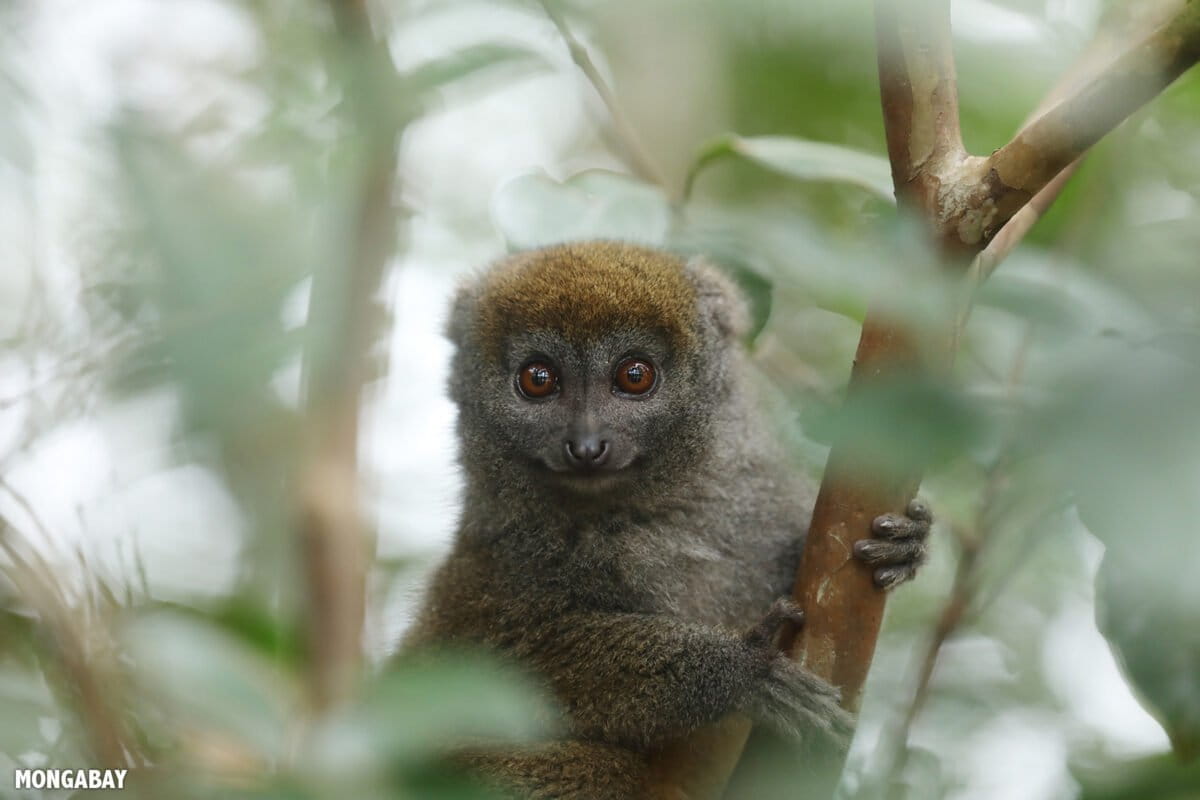
Images of a lone greater bamboo lemur, searching for companions she can never truly join, make the stakes visible in a way research papers cannot.
Madagascar still holds pockets of forest where new species wait to be described. But saving them, Wright argues, means confronting the forces draining the country’s human communities as well. Conservation cannot stand on its own here. It must carry the weight of everything around it.
Wright recently spoke with Mike DiGirolamo for the Mongabay Newscast.
Header image: Bamboo lemur. By Rhett Ayers Butler.
