
Seb Cheerin Northallerton
 BBC/Seb Cheer

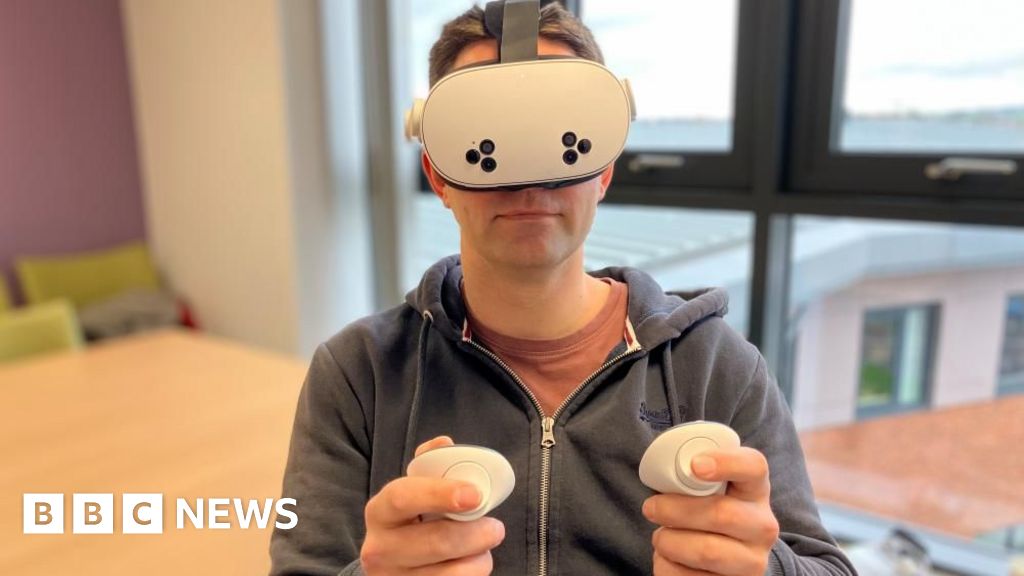
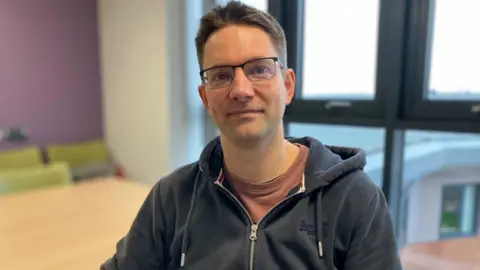
Charlie Jenkinson is one of about 30 patients who are receiving the VR treatment
One of the first patients to receive virtual reality mindfulness treatment on the NHS has said it had “transformed” his life.
Charlie Jenkinson is a patient of the North Yorkshire Talking Therapies team, which is the first NHS service to offer the immersive ‘Tend VR’ treatment.
The mindfulness-based cognitive therapy guides service users through practical activities and exercises, such as breathing techniques.
Mr Jenkinson said: “I don’t find it easy being in front of other people, so doing a breathing exercise with a group of people, or even with a therapist online, I find really difficult.”
The 40-year-old said he had “probably had depression throughout my life”, but a “combination of factors” had put pressure on him over the last five years.
“I ended up just freezing the whole time,” he said.
He is one of about 30 patients with anxiety and depression who are receiving the VR treatment as part of a 10-week course.
“The first time I did the breath ball exercise, it was just transformative for me,” Mr Jenkinson, from Stokesley, said.
 Tend VR
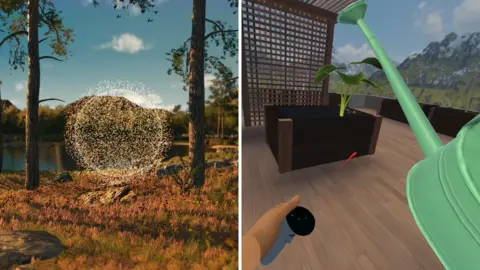
The mindfulness treatment includes guided breathing exercises (left) and watering plants (right)
The exercise encourages patients to breathe in while squeezing the trigger on one of the hand-held controllers.
Set against the backdrop of a peaceful forest, they see a ball growing as they inhale and shrinking as they exhale.
Mr Jenkinson said he often used the technique when not using the headset by closing his eyes and visualising the ball.
“I’m often in the forest or I’m by the lake – I’m even moving my finger as if I’m actually using the trigger on the handset,” he said.
He also said the treatment had helped to relieve pain in different parts of his body.
“I couldn’t believe how much that has transformed my life,” he added.
Listen: How virtual reality is changing therapy
Poppy Danahay, North Yorkshire Talking Therapies team manager, said the breath-ball exercise worked as it wasn’t “a breathing exercise where you’re thinking about breathing”.
“You’ve got a sound in the background that’s helping you stay in the moment, there’s a visual,” she said.
Being immersed in the exercise helped patients to “move away from thoughts that come in and intrude”.
She continued: “What drives anxiety and depression can be some unhelpful and negative thoughts.”
 BBC/Seb Cheer
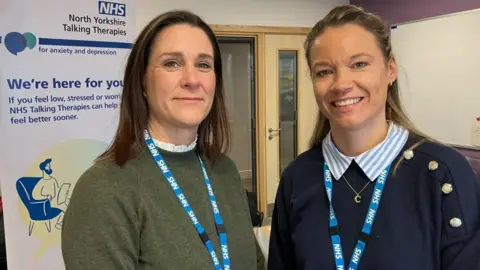
Poppy Danahay (left) and Carla Webb say patients are experiencing “great recovery rates” from the VR treatment
The uptake of the treatment had been “really great” so far, according to clinical lead Carla Webb.
“If we think about the rural demographic of North Yorkshire, it’s not easy for everybody to be able to come in to a healthcare setting,” she said.
Patients visit the team in Northallerton at the start and the end of the course, with fortnightly telephone calls with a therapist in between.
The check-ins help to ensure that Tend VR is “right” for the patient, according to Ms Danahay.
“We will always talk again if there’s anything more that we can do as a service to support the depression and anxiety,” she said.
Ms Webb added: “We’re still in the early days, but actually what we are seeing is great recovery rates for patients.”