
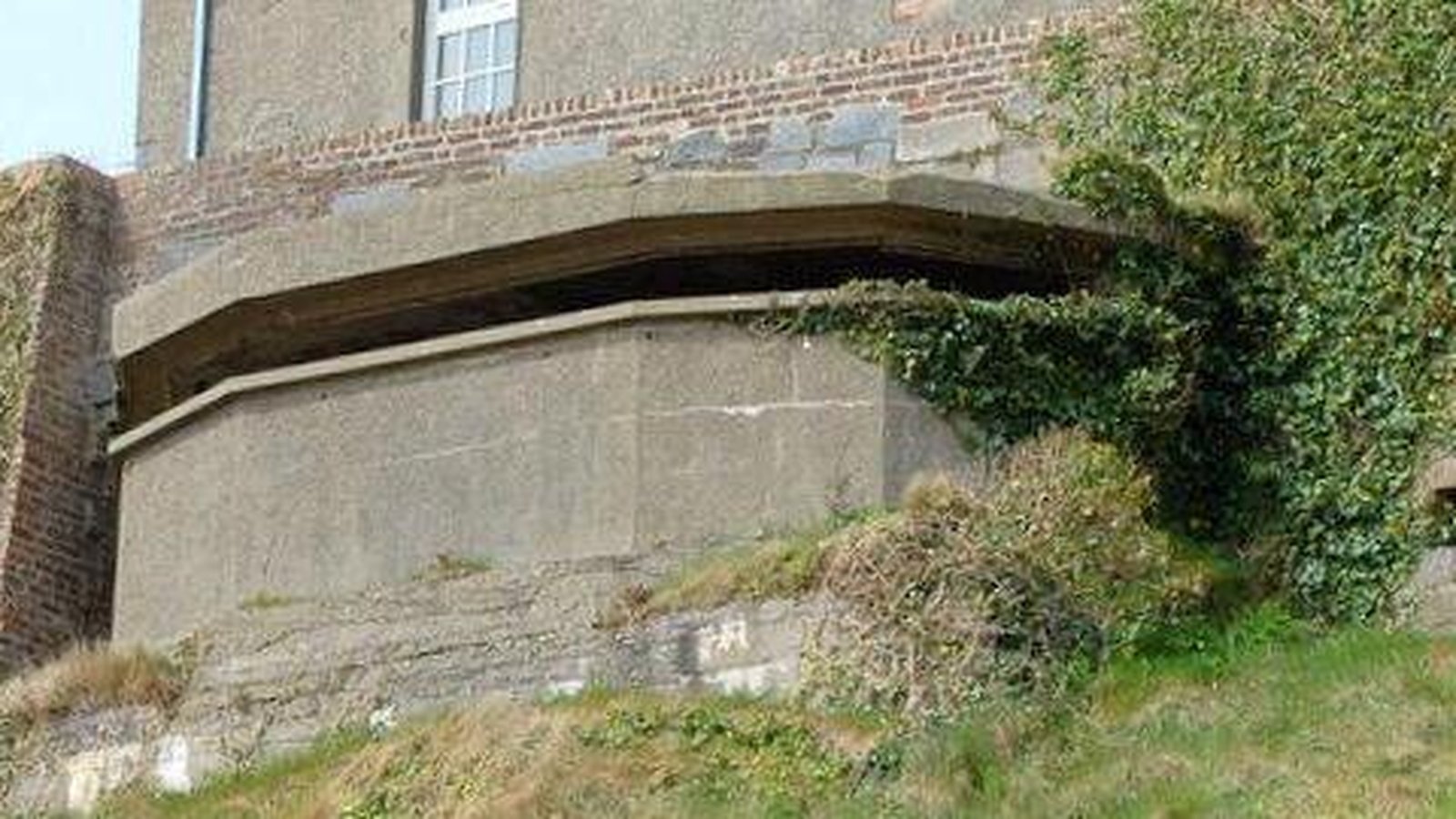
At the entrance to Waterford Harbour, the strategic importance of the village of Duncannon in southwest County Wexford has been recognised for centuries.
Queen Elizabeth I built Duncannon Fort to defend against the Spanish Armada. During the Napoleonic Wars, a Martello Tower was added. Ireland’s neutrality during the Emergency notwithstanding, Duncannon Fort was partially refortified with a mighty pill box.
In the opening years of the Second World War, almost three hundred pillboxes were built throughout the island of Ireland, particularly in places of high strategic value such as the Boyne Valley, the Curragh, the Shannon Estuary and coastal areas such as the Hook Head peninsula. The earliest recorded pillboxes were constructed by the Russians during the Russo-Japanese war in 1904 to 1905. The Germans then built them along the Western Front during the First World War. The British and Irish only took up the architectural form in the Second World War.
It is surmised the term pill box comes from the structures being compared to early twentieth-century containers used to store pills or from a pillar box with its embrasure resembling a letter slot.
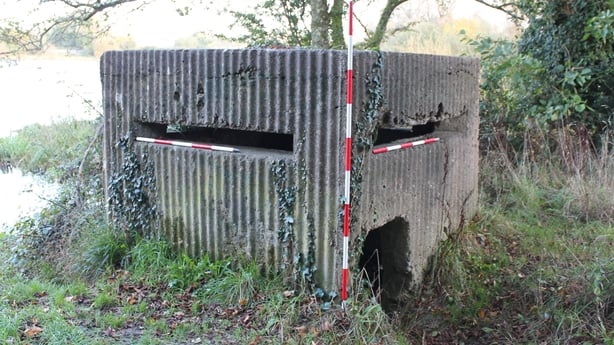
Corbally Pill Box, Limerick city on the banks of the river Shannon.
The use of shuttering formed apparently using corrugated iron as
a facing material is very unusual in the Irish context (Pic: Tom Cassidy)
A pillbox is a simple, small, defensive structure made from mass concrete with narrow openings often referred to as embrasures or gun loops. They are flat-roofed and have a small entrance doorway for a soldier to crouch through. The narrowness of the embrasures enabled the firing of rifles while providing cover against a direct assault. They also acted as guard posts, allowing soldiers to watch over strategic positions and important infrastructure.
The Duncannon pillbox was built in 1943 at the height of the Emergency. It has an unusual half-octagonal plan with rendered, reinforced concrete walls and a flat, reinforced concrete roof. It has one continuous, square-headed embrasure with a concrete sill at gun tripod height. It is the quintessential pill box, partially disguised amongst its surroundings. This particular one like a concrete crow’s nest built into the cliff face, jutting out over the harbour.
Tom Cassidy, of Fola Archaeology and Heritage Services, has been studying pillboxes in Ireland for years and was responsible for placing noteworthy examples in Askeaton, Co. Limerick on Ireland’s Record of Protected Structures during his time as Conservation Officer for Limerick City and County Council. He is now testing an unattributed claim that the Irish military authorities obtained drawings for standard British pillbox designs from the War Office in London. So far, he has not found any evidence to establish this relationship.
With eighty years since the end of the Second World War, and in light of current debates about Ireland’s neutrality, these structures remain as a concrete reminder of the threat of war.
Thanks to Tom Cassidy at Fola, and Colm Moriarty of archaeology.ie
Read more entries in the 100 Buildings series here