
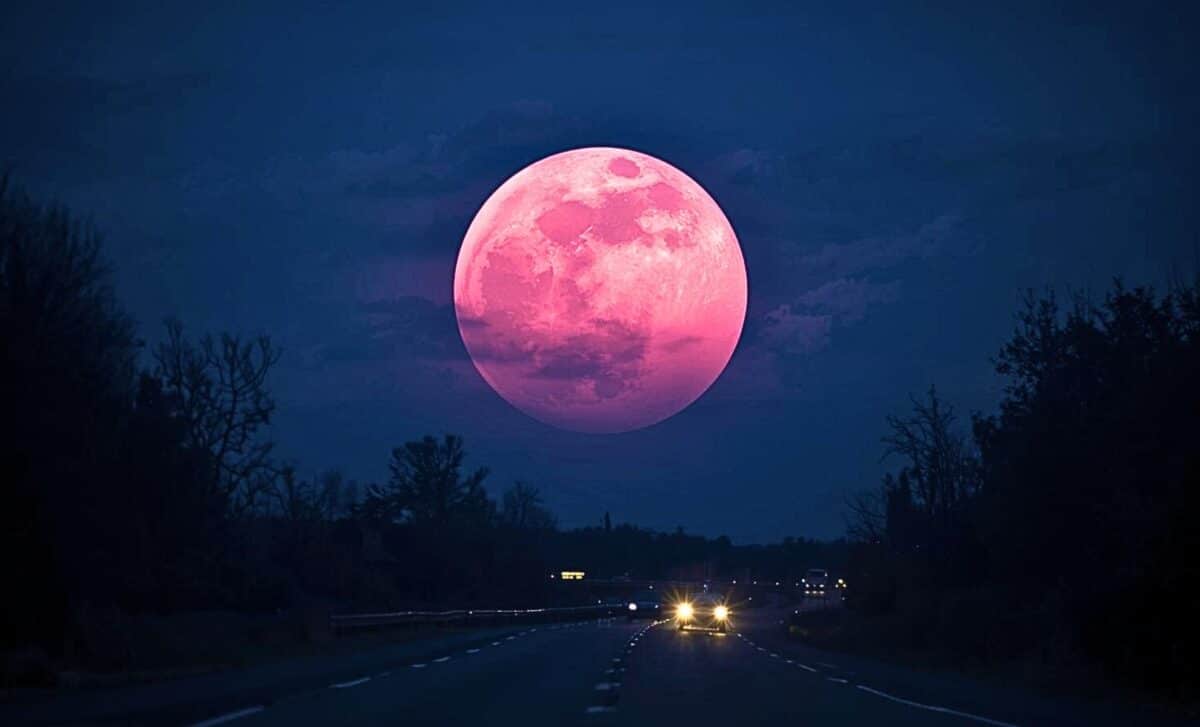
In an exceptional confluence of astronomical events, the final supermoon of 2025—known as the Cold Moon—lit up global skies on December 4, reaching its peak brightness just after sunset. Beyond its visual magnitude, the full moon intersected with key dates in space exploration history and overlapped with two of December’s most active meteor showers, offering a rare multi-layered skywatching opportunity.
This final supermoon capped a trio of back-to-back lunar perigees, closing the year with one of the brightest and highest full moons visible in the Northern Hemisphere. Its timing also marked the anniversaries of Apollo 8 and Apollo 17, two pivotal NASA missions that reshaped humanity’s relationship with the Moon.
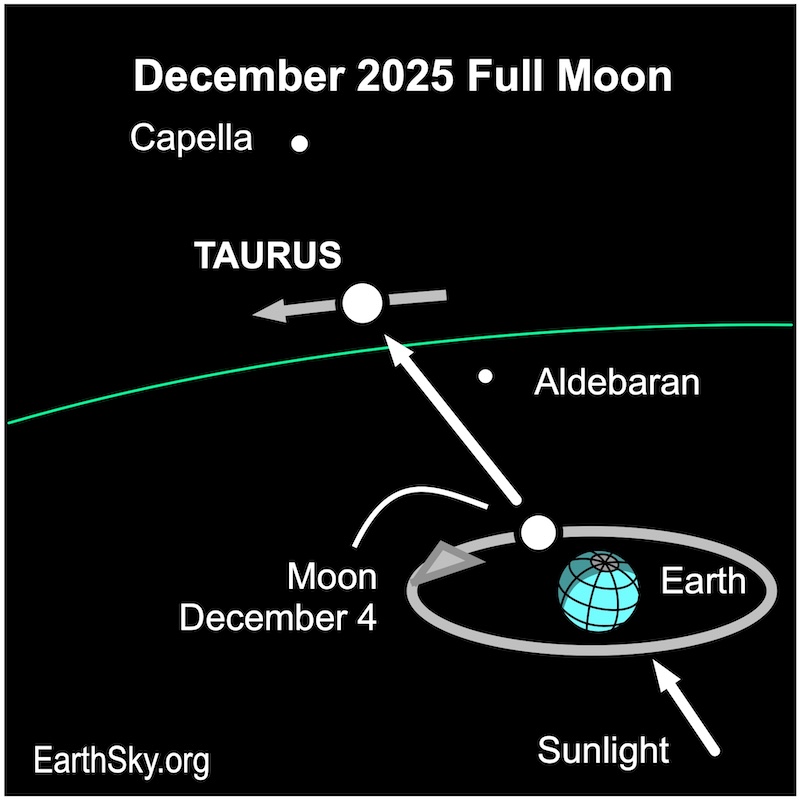 The December 2025 full moon occurred on December 4, and lied in the constellation Taurus the Bull. Credit: EarthSky
The lunar event comes as anticipation builds for Artemis II, scheduled to launch between February and April 2026, which will send astronauts around the Moon for the first time in over 50 years. For observers and astronomers alike, the Cold Moon offered not just a visual spectacle, but a moment of historical and scientific resonance.
High-Riding Cold Moon Brings Peak Brightness and Visibility
The Cold Moon peaked at 5:14 p.m. CST (23:14 UTC) on December 4, roughly two hours after moonrise in central North America. Because the Moon reached perigee—its closest point to Earth—less than 12 hours earlier, it qualified as a supermoon. This made it appear up to 14% larger and 30% brighter than a typical micromoon, the most distant full moon of the year EarthSky.
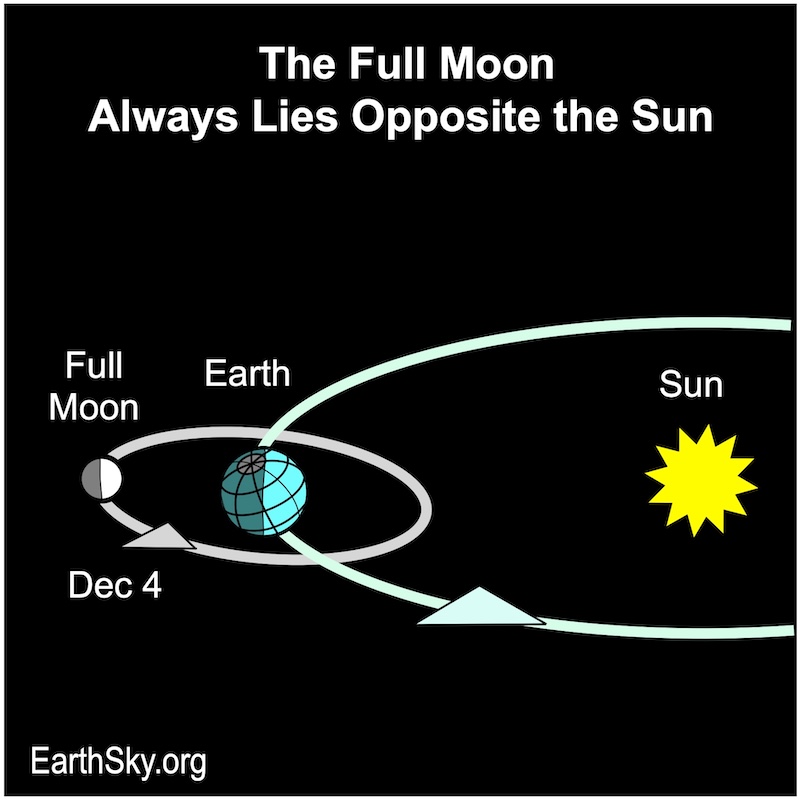 At full moon, the sun, Earth and moon are aligned in space, with Earth in the middle. The moon’s day side – its fully lighted hemisphere – directly faces us. Credit: EarthSky
In the Northern Hemisphere, the December full moon closely tracks the arc of the June solstice sun, rising high and staying visible for extended hours. That elevated path, combined with dry winter air and sparse foliage, enhances brightness and shadow detail—conditions ideal for both observation and photography. In the Southern Hemisphere, where summer is beginning, the moon remains low, mimicking a winter sun.
The term Cold Moon stems from its timing near the winter solstice, and it has been known by various names in Indigenous traditions, including the Snow Moon (Cherokee) and Winter Maker Moon (Abenaki) CNN. These seasonal monikers underscore how lunar cycles have long been used to mark climatic transitions and guide agricultural rhythms.
Apollo 8, Apollo 17, and the Artemis Return
December’s supermoon arrived with a sense of historical weight. It fell just days before two major NASA anniversaries:
Apollo 17, launched December 7, 1972, marked the final time humans landed on the Moon.
Apollo 8, launched December 21, 1968, was the first crewed mission to orbit the Moon and famously captured the Earthrise image.
NASA is now preparing for Artemis II, the agency’s first crewed mission beyond low Earth orbit since Apollo. Expected in early 2026, the 10-day flight will send four astronauts around the Moon and serve as a precursor to Artemis III, which targets a crewed landing near the lunar south pole CNN.
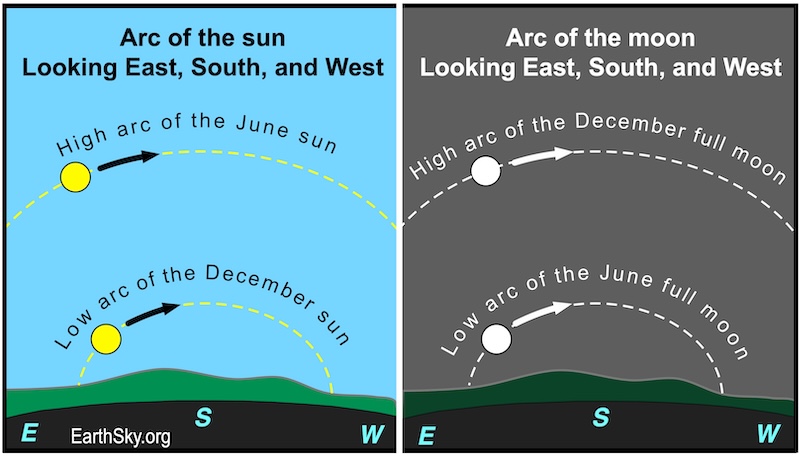 The high arc across the sky of the December full moon closely matches that of the June sun. The low arc of the December sun closely matches that of the June full moon. Credit: EarthSky
The proximity of the Cold Moon to these historic dates has reignited public interest in the Moon as both a scientific target and a cultural symbol. As EarthSky notes, the Cold Moon also marks the last full moon of 2025 and the final one of autumn in the Northern Hemisphere, a moment of both reflection and forward momentum for lunar exploration.
Meteor Showers Align Under Dark Skies
Adding another layer to the December night sky, two of the year’s most active meteor showers—the Geminids and Ursids—are peaking within weeks of the Cold Moon.
The Geminid meteor shower reaches its peak on December 13–14, with a favorable 30% waning moon, allowing darker skies for optimal viewing. Known for high activity rates—often exceeding 100 meteors per hour—the Geminids are regarded as one of the most reliable annual showers American Meteor Society.
The Ursid meteor shower, which peaks December 21–22, benefits from even darker conditions, with the moon down to just 3% illumination. Though less intense than the Geminids, the Ursids still offer a solid display for northern observers, especially in rural or high-latitude locations.
These showers, combined with the supermoon’s clarity and brightness, made December an exceptional month for amateur astronomers, astrophotographers, and casual stargazers alike.