
First Drive: German car-maker has created an 800-km EV that combines technology, driver engagement and quality in one seamless package
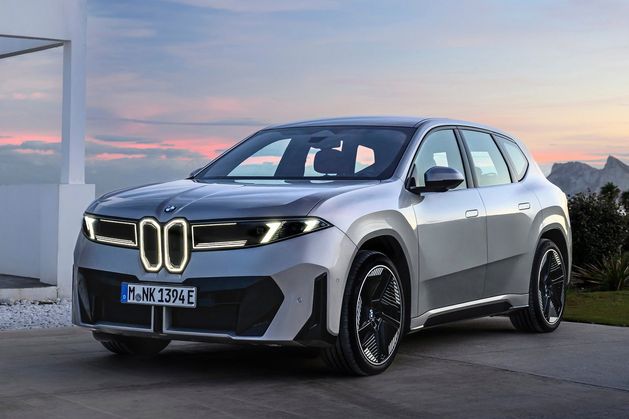
The first of its Neue Klasse designs, the car is a ground-up re-imagining of the BMW design philosophy that harnesses the latest technology, design thinking and materials.
Following years of teases, sketches and ‘Neue Klasse X’ concept car unveilings, the iX3 production model was finally shown to Irish customers last month and, based on rumoured order numbers getting close to the 300 mark, it seems to have caught the car-buying public’s attention here.
So does the car live up to the years of BMW Neue Klasse hype? Based on our recent first-drive impressions in southern Spain, the answer is an unequivocal yes.
The iX3 50 xDrive launch model features an all-new 112kWh battery that delivers 468PS to power dual motors, on the front and rear axles. The rear motor is the more powerful of the two, giving the car’s drivetrain a typical BMW real-wheel bias.
Claimed WLTP range on the launch model is in the 800km bracket, which is game-changing territory for Irish drivers. While it’s not feasible to accurately test this figure over two days of driving different cars, I’d estimate 700km is achievable under a normal mix of driving conditions.
The 400kW DC charging and compatibility with both 400V and 800V chargers ensure the car is future-proofed for whenever we see this rapid-charge infrastructure rolled out and BMW claim an increase from 10pc charge to 80pc in 21 minutes under rapid charging.
We can expect a single-motor, less powerful (and cheaper) model a little further down the road.
The battery is a series of cylindrical cells (think oversized D batteries) packed in a flat structure that forms part of the chassis, lowering the car’s centre of gravity and creating more space
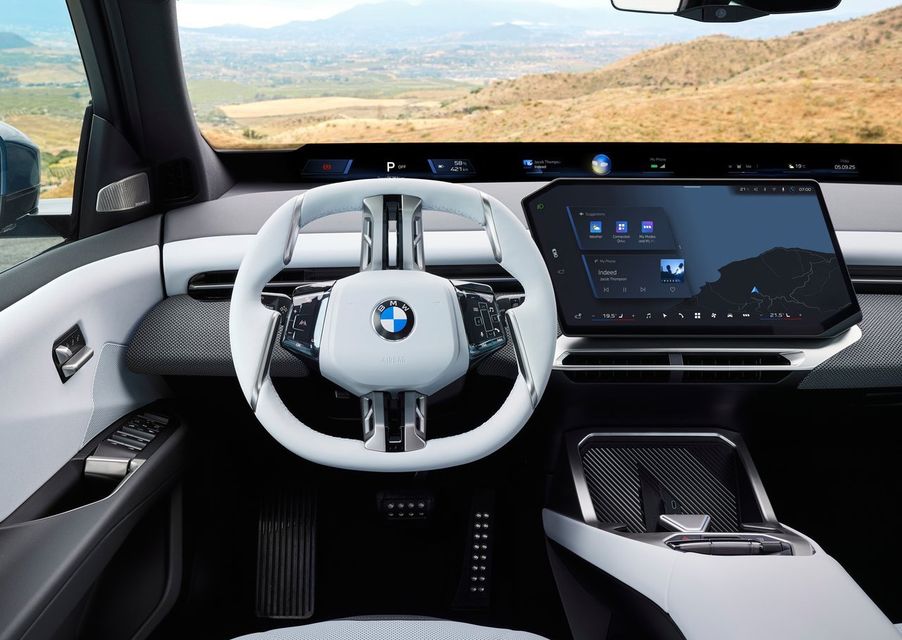
BMW have treated the new iX3 to a new cockpit which is dominated by a full width Panoramic View screen
Like most recent BMWs, the Neue Klasse design language is causing a lot of debate online.
The retro kidney grille (with its optional ‘Iconic Glow’) is a clear nod to the original Neue Klasse from the sixties.
That’s where the similarities end, however, as the rest of the car looks modern and clean while retaining many BMW design cues, including the ‘valley’ on the bonnet that runs down to the grille and the sharp light cluster. This theme is replicated at the rear of the car and gives it a purposeful stance without looking too aggressive.
For me, the car looks better in some colours than others; Space Silver and Ocean Wave Blue really accentuate the design features, while the likes of the Brooklyn and Polarised grey options do the car no favours.
Sit inside and the first impression is of modern, clean design with a single, large central screen and BMW’s new Panoramic iDrive spanning the width of the cabin.
While the six-sided shape of the central screen could appear gimmicky at first, the clever ergonomic design means that all regularly used functions fall within easy reach. It’s a big improvement on the widescreen set-up in much of the current BMW range.
The panoramic dashboard concept is nothing new (early noughties Renault Espace, anyone?) but the quality and execution here is superb.
Projected onto a black space at the bottom of the windscreen, essential information seems to float in front of the driver, while much of the display can be configured by simply swiping some widgets on the central screen.
This is all supplemented by an upgraded version of BMW’s head-up display, which now features 3D navigation that proved to be particularly useful on the twisting mountain roads of our test routes.
The layout, tech and displays are so good they might just distract your attention from the steering wheel.
While the thinner width and ergonomics are a massive improvement over BMW’s current chunky steering wheels, the design looks fussy and, frankly, weird. It’s the only let-down in an otherwise excellent cabin. (The wheel in the M Sport Pro model is the least offensive in this regard.)
On the road, the new car feels light years ahead of the outgoing iX3 model.
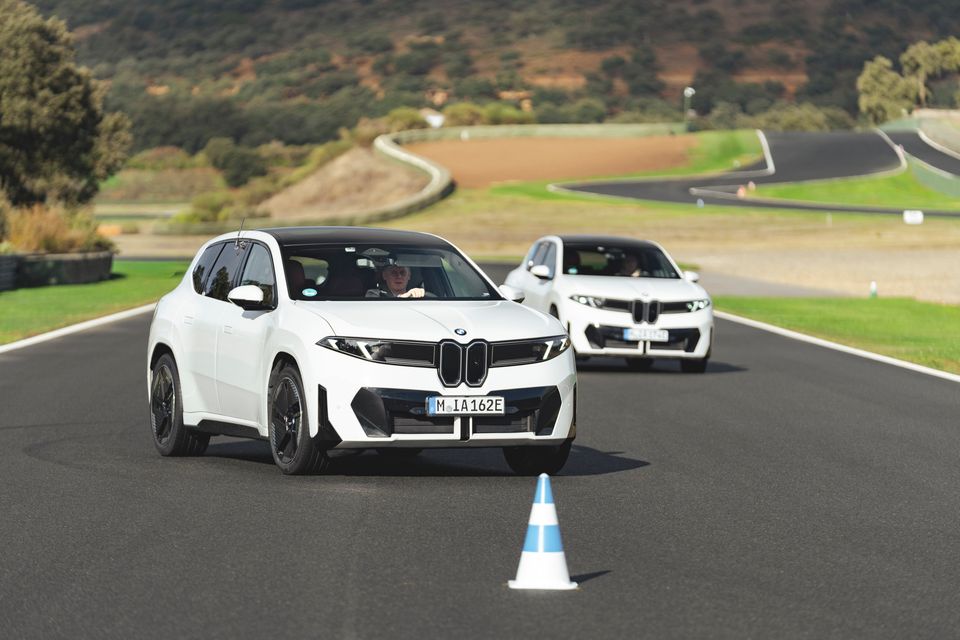
Alan puts the new iX3 through its paces at the Ascari circuit in Spain
Steering around town is light and responsive, while clever computing eradicates any lurching under braking and brings the car to a ‘soft’ stop every time.
This computing power is delivered by BMW’s ‘Heart of Joy’ processing unit that controls power delivery, steering, braking and recuperation and is one of the stand-out aspects of the car.
On the twisting mountain roads north of Malaga, the car revealed a sporty, engaging character with sharp steering, superb power delivery and the type of confidence-inspiring handling that makes you forget you’re driving a family SUV weighing 2,360kg.
The car’s suspension felt well set up and, despite the aforementioned mass, coped effortlessly with every mid-corner undulation and pothole.
So confident were BMW about the car’s handling capabilities, they allowed us some laps on the Ascari circuit. This outing included some slalom driving and emergency braking.
Now, the chances are remote of an iX3 ever troubling a track day at Mondello, but the car and its Heart of Joy system really showed their worth at the more extreme end of the driving spectrum.
Sudden changes in direction on the slalom were composed and stable, while emergency braking from 120kph while steering around obstacles was a non-event … all thanks to computer processing power rather than any driver skill.
On the wet circuit, with an M5 setting the pace, the iX3 felt assured and surprisingly fun and engaging to drive fast. While there were a few ‘computer says no’ moments during some provoked sliding, overall the automatic systems felt natural and unobtrusive.
Back on the road, some motorway cruising gave the opportunity to try the Advanced Driver Assistance Systems (ADAS). Powered by a powerful Superbrain, and depending on specification chosen, this can offer up to Level 2+ hands-free motorway driving with automatic lane-change, while also dealing with relatively complex urban scenarios including roundabouts and junctions.
On the motorway, the lane-change function is prompted by the car, which then monitors the driver to ensure the mirrors have been checked before it signals and carries out the overtake manouevre.
It mostly works well and, unlike many lane-assist systems, doesn’t require a lot of force for the driver to intervene and overcome the system. Manual braking by the driver while ADAS is active doesn’t disengage the system, and the car will return to the speed limit once the brake is disengaged.
At motorway speeds, the cabin feels very refined and quiet for both front- and rear-seat occupants, with plenty of space in the back but little in the way of creature comforts.
A remote parking function is also available as an optional extra. Operated via a ‘dead man’ control in the My BMW app on your mobile device, this gives the car self-park capability with the driver outside the vehicle. It works well, but I’m not sure there’s many practical advantages to justify the €975 cost to tick that option box.
In an era where many cars are packed with tech, the iX3 stands out from the crowd by delivering it all together in a seamlessly integrated package that enhances efficiency, safety and driving pleasure.
Its rivals have some catching up to do.
On-the-road pricing for the iX3 50 xDrive is €73,725, with the M Sport and M Sport Pro variants €77,075 and €78,995 respectively.