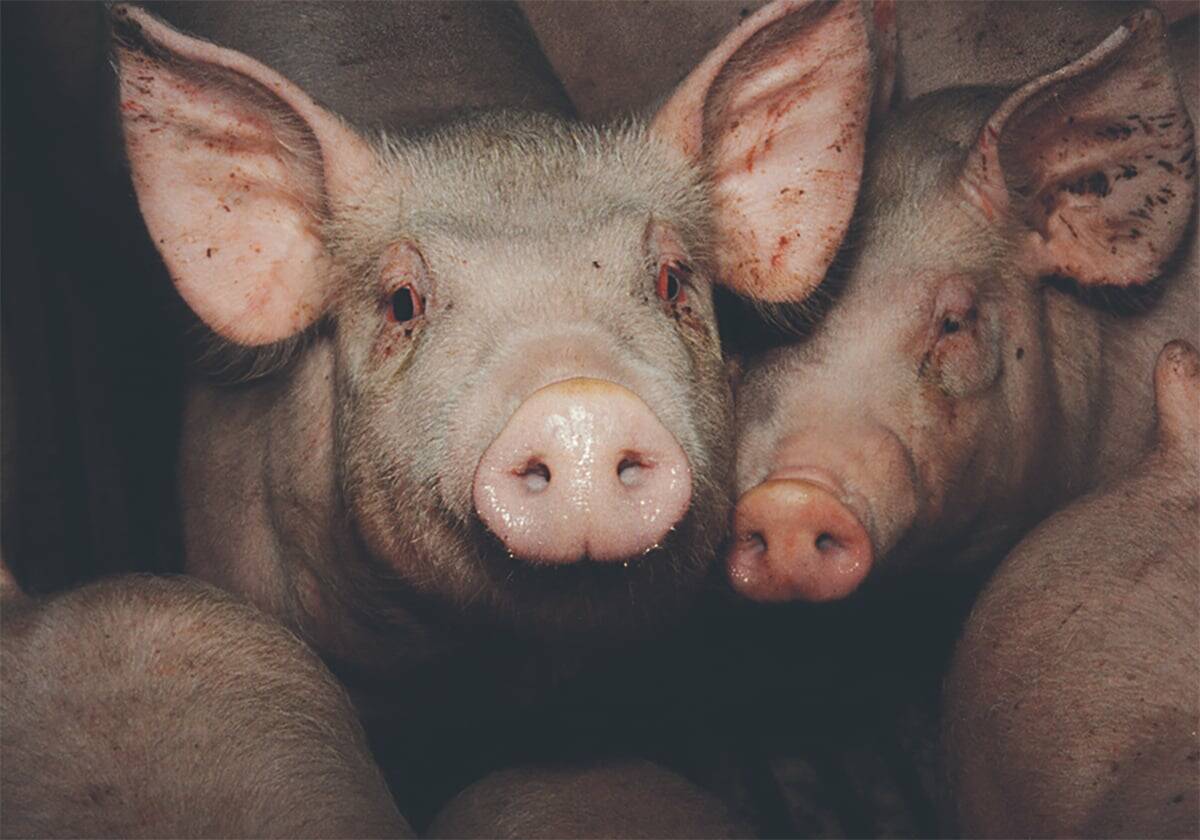
Pig ear necrosis is an extremely painful affliction that causes the ear tissue of pigs to rot away.
The disease has been a problem since the 1960s, but scientists had no idea how to control it, said Matheus de Oliviera Costa, an associate professor with the University of Saskatchewan’s Western College of Veterinary Medicine and an expert in swine health.
After years of research, Costa and his team have discovered new information about pig ear necrosis and how to control it.
Read Also

Farm Credit Canada thinks big about the future
Justine Hendricks, chief executive officer of Farm Credit Canada, says the corporation’s transformative strategy will yield real results for the industry.
Through clinical research at the U of S, Costa and his team identified a source for the disease — a common bacteria called Fusobacterium necrophorum, found in the mouth and gastrointestinal tract of many mammals, including humans.
Pig ear necrosis occurs when bacteria is transferred via saliva through biting or chewing ears.
The disease leads to tissue death on the ear, said Costa. It looks terrible as parts of the animal’s ear rot away.
“It’s usually exploited by animal activists as a cause of mutilation in commercial farms, which in severe cases, yes, they become mutilated by disease, but not due to neglect or anything,” he said.
Since the early years of the disease, there has been a long list of suggested causes, ranging from mycotoxins to ventilations to other infectious agents, including PCV2 and porcine circovirus, which can target the lymphoid tissues and lead to immune suppression.
“It’s always been kind of a guess, and I think that’s why we call it a multifactorial disease. We didn’t know what caused it,” he said.
To combat the disease, veterinarians told their clients to check ventilation protocols and improve hygiene and health in the hog barns.
Sometimes the disease would disappear, and other times it would not.
Pig ear necrosis compromises the pigs and slows down their growth and meat production.
“Animals will grow slower than they normally would. They are more susceptible to diseases. They have an open wound,” he said.
Sometimes these wounds can lead to abscesses that can lead to further complications.
Through their research, Costa and his team found pig ear necrosis is caused by a flesh-eating bacteria that destroys the tissue of the ear, which dies and falls off.
“It’s not something that happens overnight. It takes days for a piece of tissue to die like that,” said Costa.
Humans who have had necrosis describe even a small wound as excruciatingly painful, so it is likely extremely painful for pigs as well.
The disease usually shows up in nursery pigs. The lesions develop a couple of weeks out of the nursery stage, and by the time the pigs are grower-finishers, they will have severe presentation and will be missing parts of the ear.
The disease does not spread beyond the ears.
“For you to see the disease, first you need to have a lesion in the ear, and that’s usually just pig biting. With pigs in a pen, there’s usually a bully pig. The bully pig will run around chewing on ears,” he said.
The research team doesn’t have the evidence to support this, but they suspect if a pig bites another pig’s ear, they can inject the bacteria into the pen mates’ ears that can lead to necrosis.
Fusobacterium necrophorum is so prevalent in pigs that removing it completely would not be possible.
As part of their research, the research team travelled to farms and talked to producers and veterinarians about pig ear necrosis. They collected samples from pigs in barns with ear necrosis and used DNA sequencing to find out what was causing the necrosis.
“That essentially resulted in a list of potential causes, and we developed a model to attempt to recreate the disease,” said Costa.
The team tried multiple causes until they found Fusobacterium necrophorum. The bacteria cannot be eliminated because it is so prevalent.
Before they even identified the bacteria responsible for pig ear necrosis, the research team had developed a vaccine to immunize pigs against the pathogen. The vaccine is still considered a “research vaccine,” so it is not licensed and has not been approved by the Canadian Food Inspection Agency. However, a patent has been filed.
“It still must go through all the steps, but this vaccine candidate has been shown in our research trials under control conditions to reduce the amount of lesions to 50 per cent, so we have 50 per cent fewer pigs develop necrosis compared to our vaccinated pigs,” Costa said.
“And I’m hoping as we progress with this research that we’re going to be able to improve that efficacy number so we see fewer lesions. But moving forward, the vaccine probably means that fewer antibiotics are going to be used. We’re going to have fewer pigs developing ear necrosis, so better welfare for those animals. Hopefully that’s going to be a win for the industry and society’s ey, because we’re going to be reducing the number of cases of animals that may not be perceived as having proper welfare.”
Vaccinating the animals will improve their welfare and reduce the amount of pig necrosis cases.
Producers can try to reduce pig ear necrosis by making sure there is enough enrichment in the pens so ear biting is not as frequent.