
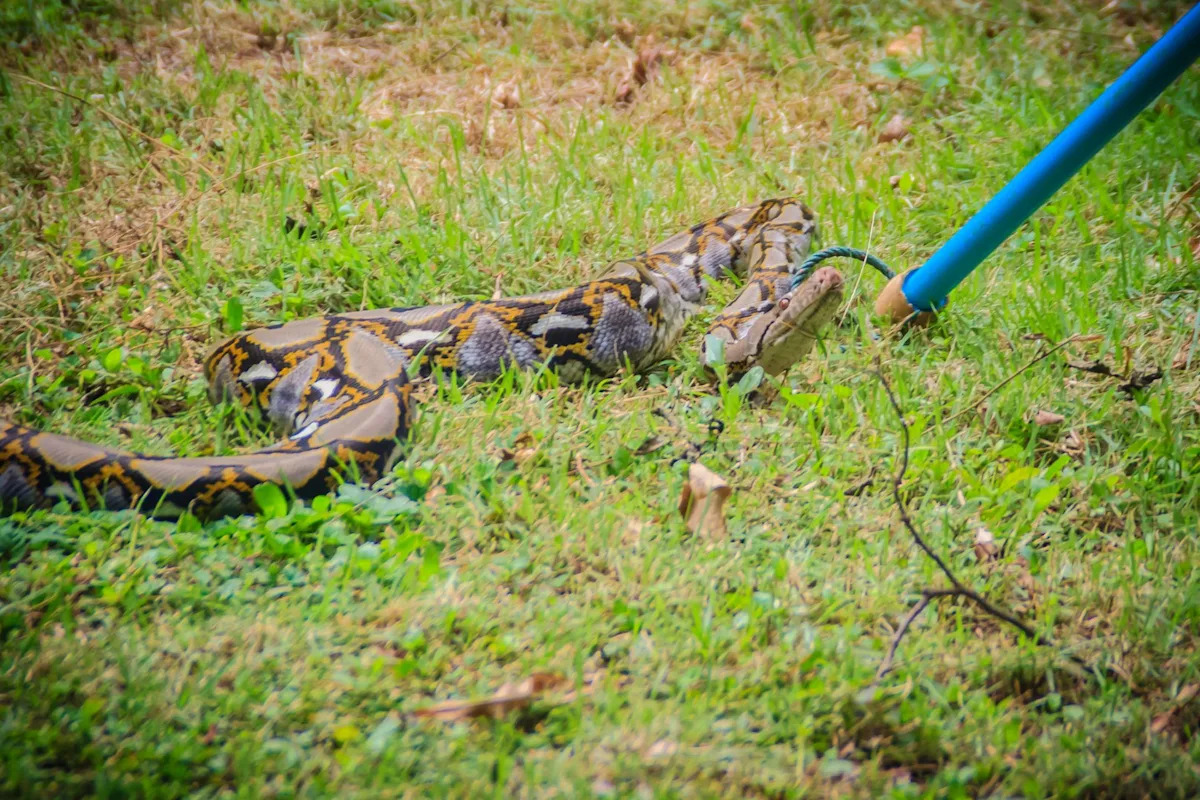
Charlotte County residents were unpleasantly surprised when an enormous Burmese python slithered into their neighborhood one night — but thanks to the quick actions of locals, the spread of this invasive species was curbed.
Resident Wade Gardner spotted the Burmese python while he was on his way home from dinner, WINK News reported.
According to Gardner, he and his neighbors examined the python, which was over 11 feet long and 15 inches wide, before retrieving a snare and an axe to remove it.
“They would never believe me if I just sent them a picture of it, they would want to know where I got the picture of the snake from,” Gardner said. When he contacted Florida wildlife officials, they told him there were too many pythons and to “bury it, and put it in the trash.”
Naturalist Rob Howell told WINK News that the reason residents are seeing more Burmese pythons in the area is that they are moving north in search of food.
According to the Florida Fish and Wildlife Conservation Commission (FWC), Burmese pythons are an invasive species in Florida and a threat to the native species and ecosystem in the Everglades.
While the FWC is working with partners to manage invasives like the Burmese python, they’re encouraging the public to take action and help curb the spread.
There are no protections for Burmese pythons in Florida, but they’re still covered by the state’s anti-cruelty law, per the FWC. Locals who encounter Burmese pythons have been advised to put them down humanely and report sightings of non-native species to the FWC.
Invasive species are a major threat not just to nature, but also to humans. They’re a major driver of biodiversity loss, altering ecosystems and threatening public health and livelihoods worldwide, as an assessment in Nature Ecology & Evolution detailed.
Invasive plants threaten native plant species that provide cultural and ecological value. Aside from removing invasive plants, homeowners can do their part to support local wildlife by installing natural lawns or rewilding.
Both are low-cost, low-maintenance options which can help conserve water and provide resources for pollinators.
On a WINK Facebook post, users weighed in on the situation.
“Florida speed bump,” one user joked.
“They are ‘moving’ north because people are catching them down south and releasing them elsewhere,” another observed.
“If there is one, sure to be more,” said a third.

��
Get TCD’s free newsletters for easy tips to save more, waste less, and make smarter choices — and earn up to $5,000 toward clean upgrades in TCD’s exclusive Rewards Club.