
As consumer expectations continue to evolve across Asia-Pacific, one shift is becoming impossible for marketers to ignore: messaging is rapidly emerging as the new frontline of customer experience.
By 2026, real-time, two-way conversations—once a “nice-to-have”—will form the core of brand engagement, especially in markets across Southeast Asia and Australia where customers increasingly prefer personalised, chat-based interactions over traditional ads and email.
For brands, this isn’t just another channel to add to the mix; it’s a fundamental change in how trust, convenience, and loyalty are built in an era where immediacy and authenticity define competitive advantage.
To better equip marketers with the much-needed insights and advice on creating efficient messaging-led engagement strategies, MARKETECH APAC recently concluded its ‘Messaging-Led Engagement: The New Frontline of Customer Experience’ webinar hosted alongside Proximus Global, which explored how conversational engagement delivers stronger relationships and higher satisfaction compared to traditional marketing.
How conversational engagement builds stronger trust, loyalty
For the first part of the webinar, Trinette D’lima, general manager, product at Proximus Global hosted a keynote presentation explaining why messaging apps like WhatsApp Business are becoming the preferred channel for customer brands in the Asia-Pacific region, as well as spotlighting the rise of one-to-one, personalised communication at scale.
In her presentation, she noted how the APAC region leads in WhatsApp Business adoption, remarking that Indonesia alone has more than 112M users. Moreover, SMS usage is declining; with OTT messaging apps (like WhatsApp, Messenger, Instagram) dominating brand-consumer interactions.
“The shift isn’t just about convenience; it’s about creating experiences that feel personal, immediate, and conversational — all through the channels people already love using,” she stated.
With that growth in mind, platforms are recognising that there should be a transition for their messaging platforms that not only bring value to brands but also effectively connect with customers. For instance, Meta introduced Marketing Light (MM Light)—now renamed Marketing Messages API—to reduce spam and enhance engagement. Meta’s goal for this introduction is to transition WhatsApp from a “marketing channel” to a utility and conversational commerce platform.
Moreover, WhatsApp also introduced voice calling within chat for businesses in July 2024, and was powered by Meta’s WebRTC, not telecom operators—low latency, high quality. As part of said launch, it was then integrated into Proximus Global’s SIP and Live Agent systems for real-time interactions.
“We’re entering a phase where WhatsApp isn’t just a messaging channel anymore; it’s evolving into a complete customer journey hub. From the moment a user discovers a brand through a Click-to-WhatsApp Ad, to making a purchase, to post-sale engagement — the entire lifecycle can now happen within one platform. That’s what makes WhatsApp Business so powerful: it unites discovery, communication, and conversion in one seamless thread,” she explained.
Speaking about the future of customer engagement, Trinette noted that WhatsApp isn’t just another channel anymore — it’s the channel–and is where discovery, engagement, payment, and support can all happen within one continuous experience.
“The idea is to bring every step — from awareness to loyalty — into a single, cohesive journey. When brands adopt that mindset, they stop thinking in campaigns and start thinking in conversations. That’s where the magic really happens,” she remarked.
How to create effective messaging that builds real customer relationships
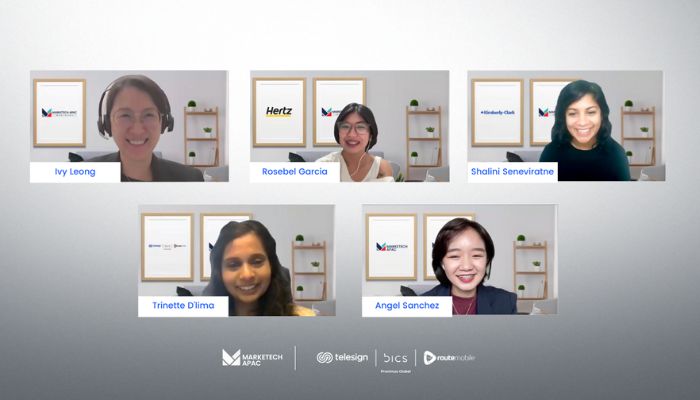
Next up on the webinar was a panel discussion featuring industry leaders Ivy Leong, regional marketing director (APAC) at Faber-Castell; Rosebel Garcia, head of marketing and commercial at Hertz Philippines; Shalini Seneviratne, marketing director – Baby and Child Care at Kimberly-Clark; and Trinette D’lima, general manager, product at Proximus Global as they discuss conversations that convert—and how messaging builds real customer relationships.
During the webinar, Faber-Castell’s Ivy Leong shared how AI-driven personalisation can build trust when it provides real, relevant, and non-promotional advice — a parallel to how brands should engage customers conversationally.
When asked how Faber-Castell maintains its premium image while adapting to changing markets, Ivy structured her answer around four dimensions of consistency — message, personality, visual identity, and trust.
“We always stay true to our heritage by grounding our message in product quality, craftsmanship, and trust. We avoid overclaiming and exaggeration. Our tone is authentic, factual, and respectful to consumer intelligence,” she said.
Ivy added, “All our communications share a unified visual identity — standard media formats, local placement, ending with our tagline, brand mark, typography, and photographic style. We want consumers to instantly feel, ‘Hey, this is Faber-Castell.’”
Meanwhile, Hertz’s Rosebel focused on the main theme centered around “connection through care” — how human empathy and attentive service turn digital conversations into meaningful, long-term relationships.
When asked about how messaging and customer communication shape their brand voice, Rosebel emphasised genuine human tone over corporate polish. “People can tell if you’re reading from a script. They know if your ‘thank you’ is genuine. That’s why our brand voice is always warm, personal, and sincere — even on chat, she stated.
She also acknowledged the role of technology (AI, chatbots, automation) — but with a crucial caveat.
“Technology helps us respond faster, but the heart of service will always be human. When technology and empathy come together, that’s when the magic happens.”
Lastly, Kimberly-Clark’s Shalini explained how their brand Huggies aims to move beyond superficial personalisation, and how they use AI chatbots and data platforms to deliver contextual care.
“We want our chatbots to act like companions — not salespeople. When a mom uploads a photo of her baby, we can recommend the perfect diaper size or product, not through guessing but through smart, visual understanding,” she explained.
Shalini also gave a thoughtful response to a question about how Huggies sustains loyalty when its consumer life cycle is naturally short. “For us, it’s a short relationship — about three years — but we want that relationship to be meaningful and memorable.”
She outlined their ecosystem approach, stating, “We have communities like Huggies Moms Club and MomQ Korea, where moms share stories, ask questions, and feel supported. Even when they move on, they remember how we made them feel. Loyalty for us doesn’t mean retention forever — it means leaving a lasting positive memory.”
The webinar was attended by 103 delegates from brands such as 2GO Group Inc., ABS-CBN, Allianz PNB Life, Bank Mayapada, BPI, CHG Global Inc. First Standard Finance Corporation, Frasers Property Singapore, Hikvision, Jollibee Group, Kim Hin Joo (M) Berhad, MetroMart Technologies Inc., NutriAsia, Inc., PBCOM, PJ Lhuillier Corporation, Telekom Malaysia, Unilever, and World Vision Malaysia.
If you missed attending it, you can catch the on-demand access to the webinar, where brands explore strategies to boost customer engagement and loyalty. Register HERE for free.