
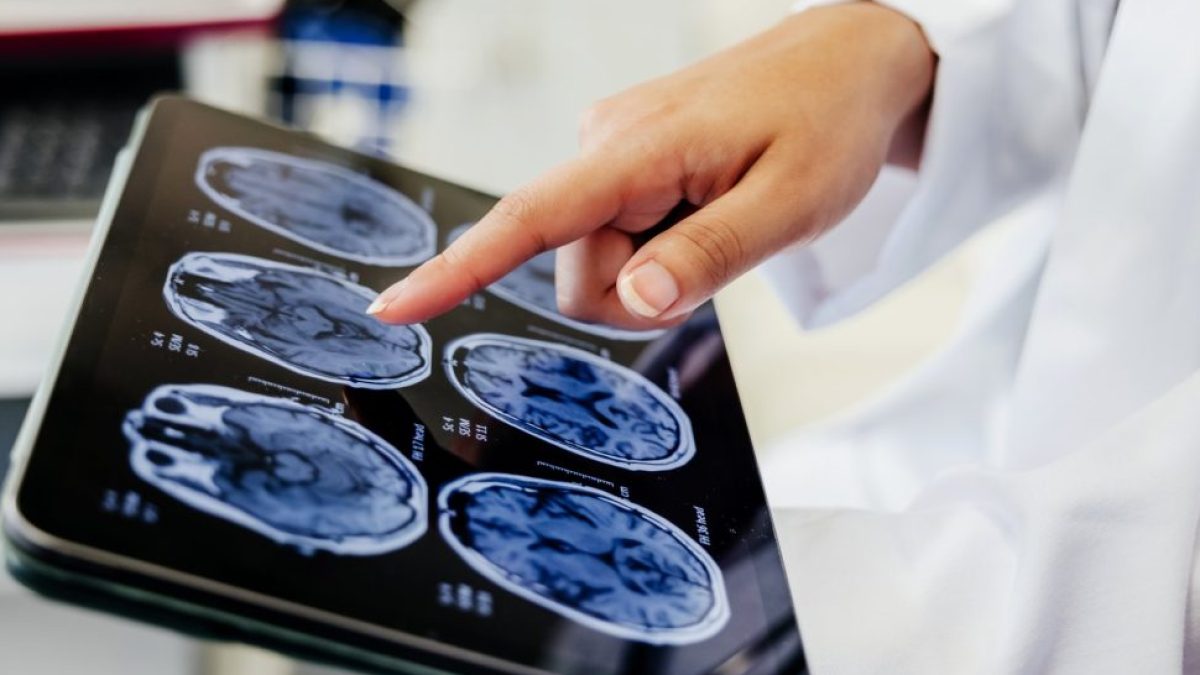
What are usually seen as 14 different mental health or neurodiversity conditions could really be five clusters of closely related ones
This is Everyday Science with Clare Wilson, a subscriber-only newsletter from The i Paper. If you’d like to get this direct to your inbox every week, you can sign up here.
Hello, and welcome back to Everyday Science.
What are currently seen as three separate mental health conditions – depression, anxiety and post-traumatic stress disorder (PTSD) – could really be different aspects of the same underlying brain disorder.
In fact, the 14 most common mental health and neurodiversity conditions seem to really be just five clusters of closely related conditions.
New FeatureIn ShortQuick Stories. Same trusted journalism.
The findings, which come from the largest ever genetic study of mental health and neurodiversity, suggest that the way we currently define and treat mental health may be flawed.
And they could explain why many people are diagnosed with more than one mental health condition – because they all really have the same genetic root causes.
“The fact that these things go together so often is not just something to be observed, but a problem to be solved,” said Dr Andrew Grotzinger, a geneticist at the University of Colorado Boulder, who was involved in the research. “This work helps move the needle in terms of helping to solve that problem.”
Worldwide push to understand mental health
The new research, which was published in the journal Nature this week, is the outcome of a worldwide effort to understand the genetics of numerous mental health conditions, as well as autism and ADHD. (The last two conditions come under the psychiatry umbrella within health services, although they are classed as neurodevelopmental conditions.)
It is by no means the first time that our understanding of the causes of mental health problems has been questioned.
Most psychiatrists would acknowledge that our diagnosis and treatment of these conditions is at a far earlier stage than for most physical health problems, and is on a less scientific footing.
We still don’t know the underlying biological causes of the most common conditions like depression, anxiety, anorexia or schizophrenia.
Contrast this with when someone has a heart attack. Doctors understand that this was probably caused by the build-up of plaque inside the patient’s arteries. They can see the plaque with a scan and insert a device called a stent to widen the artery. To tackle the root cause, they can measure cholesterol levels with a blood test and offer drugs to lower cholesterol.
 PTSD shares genetic origins with depression and anxiety (Photo: Dragos Condrea/iStockphoto/Getty)
With mental health problems, there are no blood tests or scans to confirm diagnoses.
Instead, doctors can only question people about their feelings and behaviour – relatively subjective, hard-to-measure qualities compared with cholesterol levels – and try to match this up with checklists in psychiatry textbooks.
It is common for people to get different diagnoses from different doctors, for their diagnosis to change over time, and to be given multiple diagnoses simultaneously.
What’s more, treatments, such as medicines and talking therapies, help some people but not all. At best, they tend to only alleviate the person’s problems but are not curative.
Such shortcomings have long driven researchers seeking to better understand the root causes of mental illness, including those involved in the latest study.
It was done by an enormous international group of scientists who shared the genetic sequences of more than one million people with 14 different mental health or neurodiversity conditions, as well as five million unaffected people who were used for comparison.
Confirming previous research findings, the conditions were found to have strong genetic influences, involving 238 common genetic variants. (The study did not analyse rare ones.)
Compulsive disorders have common genes
Some of the genes were shared by all 14 conditions, giving partial support for a radical theory that proposes all mental health conditions have common underlying biological roots.
But far more of the genes were associated with five distinct clusters of the conditions. As well as the first cluster of depression, anxiety and PTSD, there was a second cluster of three “compulsive” disorders – obsessive compulsive disorder (OCD), anorexia and Tourette’s syndrome, when people have involuntary tics.
The other clusters were: schizophrenia and bipolar disorder; addictions to either alcohol, opioids, cannabis or nicotine; and unsurprisingly, autism and ADHD made up their own cluster.
The findings don’t mean that depression, anxiety and PTSD are exactly the same illness, said Dr Grotzinger. But they do help explain why it is so common for people to have more than one condition from within this group.
Explanation for antidepressants’ effects
They may also explain why the Prozac group of medicines called selective serotonin reuptake inhibitors (SSRIs), originally developed as antidepressants, can also help people with anxiety and PTSD, said Dr Grotzinger.
“If you’ve got someone who’s meeting criteria for depression, anxiety and PTSD, what I would say now is that these are not three completely separate things. These are three things that share a lot of risk pathways, and hopefully we’re going to be able to find the levers to pull that are going to treat all of them.”
The findings may also point the way to new treatment approaches by looking at the biological role of the genes that raise risk. For the depression cluster, some of the genes affect brain cells called oligodendrocytes, which support and nurture the neurons making up the brain’s electrical circuitry.
New treatments may therefore arise from improving the functioning of oligodendrocytes, said Dr Grotzinger.
This kind of research is a long way from being translated into new medicines. But current approaches for helping people with mental health problems are certainly in need of a shake-up.
Your next read

The most widely used list of recognised psychiatric conditions, a book called the Diagnostic and Statistical Manual of Mental Disorders or DSM for short, has many critics.
“The way that you have diseases clustering and sharing so much of their genetic effects is not something that was picked up by psychiatrists [who wrote] the DSM. And I think that that could possibly inform future DSM criteria,” said Dr Abdel Abdellaoui, a geneticist at the University of Amsterdam, who was not involved in the study.
“The most you can zoom in [on a condition] is to look at the genetic code. That’s why I find this study so exciting, because it throws these sorts of unexpected results at us, and gives us a lot of new questions to explore.”
I’ve also written
At least 197 children, some of whom are British, have been placed at high risk of cancer because they were conceived using a Danish sperm donor who had a faulty gene.
It is a medical catastrophe that could have been avoided. For years, doctors have been calling for fertility clinics to cap the number of children who can be conceived from the same sperm or egg donor.
I’ve been visiting
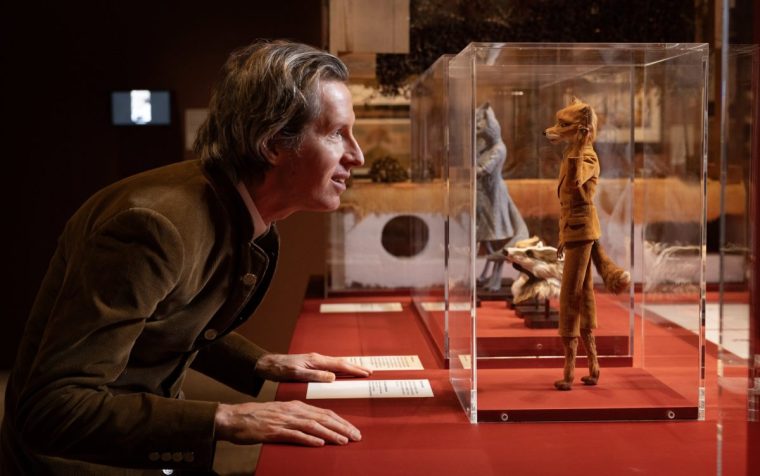 Wes Anderson meets an old friend (Photo: Matt Alexander/PA)
If you’ve enjoyed any of the films by US director Wes Anderson, I highly recommend the exhibition of props from his three-decade-long career, on display at London’s Design Museum.
As well as his quirky, imaginative plots and whimsical dialogue, Anderson is known for his meticulous attention to detail in his costumes and sets. In this exhibition, we can revisit items we saw only for moments on screen.
I loved immersing myself in the worlds of Anderson’s more highly regarded films like The Grand Budapest Hotel and The Royal Tenenbaums. But my personal highlight was getting face-to-face with the stop-motion puppets used in his adaptation of the children’s tale, Fantastic Mr Fox.
The Design Museum’s exhibition, Wes Anderson: The Archives, runs until 26 July 2026.