
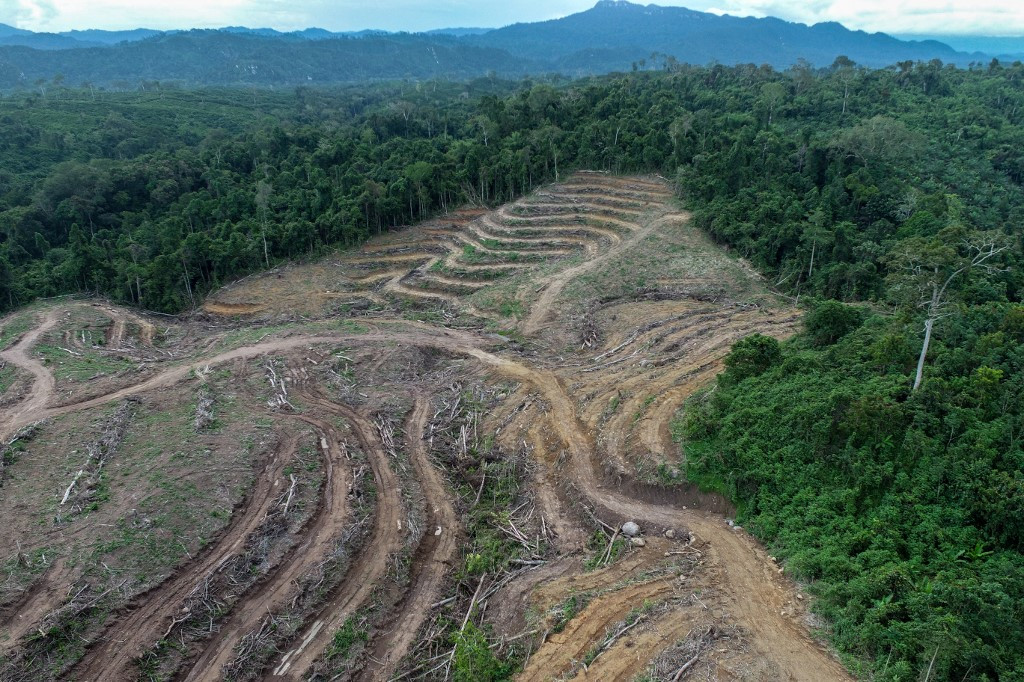
eforestation driven by the expansion of pulpwood plantations is increasingly threatening Kalimantan, a new report has found, raising fears of repeating the devastating floods and landslides that recently hit northern Sumatra and claimed hundreds of lives.
The report, issued on Wednesday by global environmental nongovernment organization Trase, found that the pulp industry across Indonesia had cleared more than 13,000 hectares of natural forests throughout 2024.
While the figure shows a decline in pulp industry deforestation after increasing for three consecutive years, the group revealed the hot spot for forest loss in Indonesia is now shifting from historically plagued Sumatra to Indonesia’s Kalimantan area on Borneo Island, where 90 percent of deforestation from the pulp industry was detected.
Forest loss in Sumatra has been in the spotlight recently following recent cyclone-induced floods and landslides that caused widespread destruction and casualties. At least 990 people were killed across Aceh, North Sumatra and West Sumatra, as of Thursday.
Environmentalists have blamed deforestation in the three provinces for causing the disasters, as the land’s ability to contain rainwater during extreme weather events has been reduced.
“If the trend continues, it’s not impossible that in the next 10, 15 or 20 years, the ecological disasters that happened in northern Sumatra might also take place in Kalimantan,” said Hilman Afif, a campaigner of local NGO Auriga Nusantara that contributed to Trase’s report, during the report launching event in Jakarta on Wednesday.

Every Monday, Wednesday and Friday morning.
Delivered straight to your inbox three times weekly, this curated briefing provides a concise overview of the day’s most important issues, covering a wide range of topics from politics to culture and society.
for signing up our newsletter!
Please check your email for your newsletter subscription.
Indonesia is one of the world’s major pulp producers. The country produced 11.3 million tonnes of pulp in 2024, roughly two-fold increase from 2015.