
December 10, 2025 — 4:11am
Save
You have reached your maximum number of saved items.
Remove items from your saved list to add more.
Save this article for later
Add articles to your saved list and come back to them anytime.
Got it
We have paid off our house, and now we wish to invest our surplus money for our future. We are tossing up whether the best investment would be shares or an investment property. I’d appreciate your thoughts on this.
I’ve been comparing the two for decades, and while both have their place, the differences are stark. The first major difference is entry and exit costs. With shares, there are virtually none – just a small brokerage fee to buy or sell. Property, by contrast, attracts stamp duty, legal fees, inspections, and mortgage costs on the way in, and agent commissions and advertising when you sell.
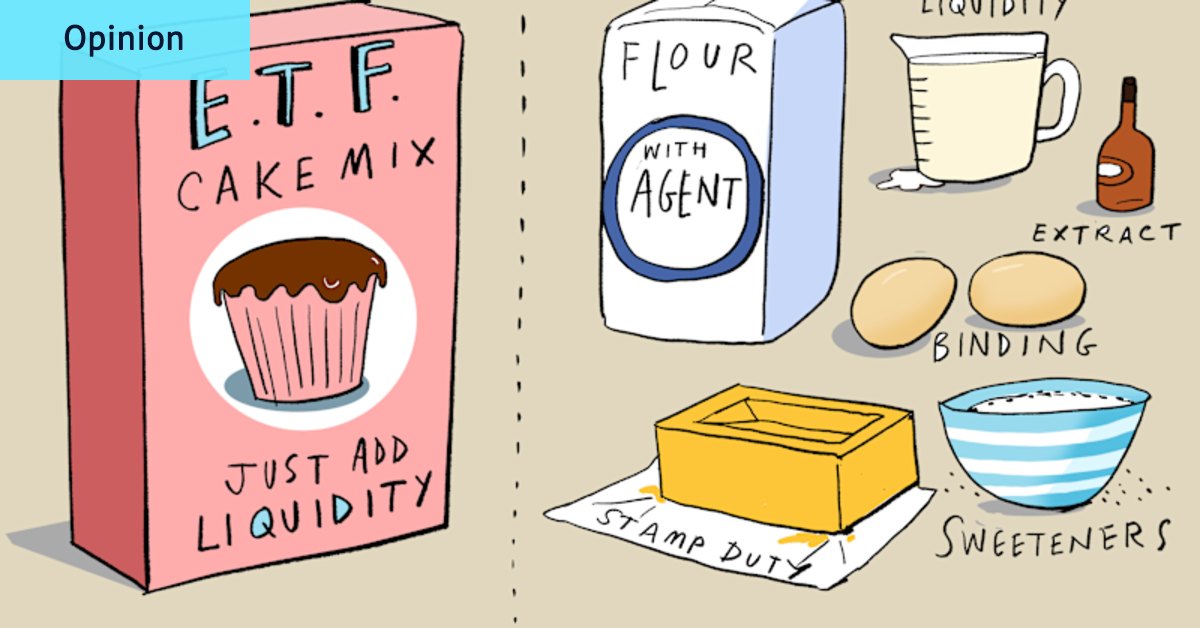
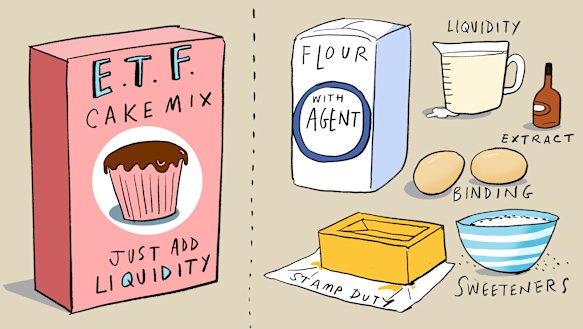 There’s no easy answer when comparing shares to property, but the latter certainly involves more ingredients.Simon Letch
Next is the ability to add value. You can renovate or extend a standalone house, but apartments offer little scope beyond paint and a recarpet. The best gains have traditionally come from improving a residential property, but those opportunities are now prohibitively expensive in most capital cities.
Liquidity is another key issue. If I have $1 million in shares, and you have $1 million in property, and we both need $100,000, I can sell part of my shares and have the money in the bank within 24 hours.
You can’t sell the back bedroom – you must borrow against the property or sell the entire asset, triggering capital gains tax and transaction costs.
Editor’s pick
Tax treatment also differs. Dividends from Australian companies often carry franking credits, making income effectively tax-free for many retirees. Rent, however, is taxed at your marginal rate and the net yield after costs is usually low. Negative gearing helps while you’re working, but provides little benefit in retirement.
Many people fear shares because they don’t know where to start, and they’ve heard of companies going broke. But there’s no need to pick winners – you can buy a fund such as STW, which tracks the top 200 Australian companies and gives you low-cost, broad diversification.
Because it tracks the top 200 shares, it can never go broke. Though, of course, it will be subject to the normal ups and downs of the market.
I have a super pension of $500 per fortnight, own my own home and am single. I have $450,000 in the bank. My furniture and vehicle would be worth $25,000. Would I be eligible for an age pension, full or part?
Your money in the bank will be given a deemed income of $427 a fortnight, which, along with your pension, would give you an income for pension purposes of $927 a fortnight. You would be eligible for a pension of $718 a fortnight under the assets test.
If I include my three adult non-dependant children as my binding death benefit nominees, will they pay tax on their share of my super? There seems to be confusion because “dependant” under super law includes children of any age, while under tax law, it generally includes only children under 18. Which definition applies?
If instead I nominate my Legal Personal Representative, does that avoid tax because the money goes to my estate and is then distributed under my will? My understanding is that in that case, no tax or “death duties” would apply when my adult children inherit. Is that correct?
Mindy Ding of the Entireti Technical team points out that superannuation law defines who a super fund can pay a death benefit to directly, while taxation law governs how the benefits will be taxed when received by the beneficiary.
Children of any age are considered dependants under super law, so one option is to nominate your adult children to receive their inheritance directly. However, tax law considers children under age 18 and those who are financially dependent to be dependants who are entitled to receive the death benefits tax-free, so your adult children will be subject to paying tax on the super death benefits, to the extent that the payment contains taxable component.
Editor’s pick
An alternative option is to direct your super death benefits to your estate and make the necessary arrangements in your will to distribute the benefits to your children. However, this does not necessarily mean that your children will avoid tax entirely.
The tax applicable to the ultimate beneficiary is broadly the same as if they had received the inheritance directly. That said, the final rate of tax may be lower depending on whether the estate has other taxable income.
While tax is an important consideration when deciding whether to leave a super death benefit directly to a beneficiary or via the estate, other factors – such as asset protection in the event your adult child experiences a relationship breakdown or bankruptcy – should also be considered.
My wife and I have a superannuation fund through ESS Super. It is divided into an accumulation fund, an income stream and a lump sum. I wish to enquire if the lump sum, which we cannot access, is counted in the calculations for the Commonwealth Seniors Health Card.
The Commonwealth Seniors Health Card is based solely on an income test, not an assets test, so the size of your super doesn’t disqualify you. What matters is your adjusted taxable income, plus any deemed income from account-based pensions.
If part of your super is in an account-based income stream, the balance of that stream is deemed to earn income and counted for the test. Amounts still in accumulation, or lump-sum components that have not been converted to an income stream, are not counted.
For a couple, the current combined income limit is $161,768 a year. The key is to confirm whether the lump-sum portion is still in accumulation or has been rolled into an income stream – only the latter affects the income test.
Noel Whittaker is author of Retirement Made Simple and other books on personal finance. Questions to: noel@noelwhittaker.com.au
Advice given in this article is general in nature and is not intended to influence readers’ decisions about investing or financial products. They should always seek their own professional advice that takes into account their own personal circumstances before making any financial decisions.
Expert tips on how to save, invest and make the most of your money delivered to your inbox every Sunday. Sign up for our Real Money newsletter.
Save
You have reached your maximum number of saved items.
Remove items from your saved list to add more.
 Noel Whittaker, AM, is the author of Making Money Made Simple and numerous other books on personal finance.Connect via Twitter or email.Most Viewed in Money
 From our partners