
Many Jewish holidays come with an array of festive foods to go along with them, and Hanukkah is no exception. Each year, Jewish people around the world enjoy fried foods during the eight nights of Hanukkah, whether it’s bimuelos, gulab jamun, or fried eggplant. Eating fried foods during the holiday represents the miracle of the oil of the menorah, which lasted eight nights instead of just one in the story of Hanukkah.
Latkes, a type of potato pancake, are one of the most popular Hanukkah foods. The dish originated as an alternative to ricotta pancakes, which come from another tradition of eating cheese on Hanukkah. Since shmaltz was the most common cooking fat in Eastern Europe, and kosher laws prohibit mixing meat and dairy, people started making the pancakes with root vegetables instead. And with the boom of potatoes in Eastern Europe between the 18th and 20th centuries, the potato latke was born.
When Ashkenazi Jewish people emigrated to the U.S. in the early 20th century, latkes came along for the ride. They’re as popular as ever in Jewish-American Hanukkah cooking, though they’re now made vegetable oil instead of shmaltz. They’re so popular in fact that they’ve gone commercial, with some grocery stores carrying dry latke mixes or ready-made frozen latkes. It’s a workout to shred potatoes and make them by hand, so, it’s not surprising that there’s now a market for a quick alternative.
But which brand tastes like homemade? We asked a panel of Jewish professional chefs to find out what the best store-bought latke is—plus, the best way to reheat them and ideas for serving this traditional Hanukkah treat.
Our Panel of Latke-Judging Chefs
Qualities of a Great Latke
According to the chefs, latkes should have:
Crisp exterior, soft interior. Every chef on our panel agreed that texture is the key to a great latke. This is especially important since latkes are made with simple ingredients (potato, onion, egg, etc.), so there isn’t much variation in taste. “The best latkes are super crispy on the outside, ideally with some crunchy wispy edges, and soft and custardy on the inside,” says award-winning cookbook author Leah Konig. “For a latke to be considered ‘good,’ the middle should taste pillowy with the exterior being crispy and salty,” says Morgan Peaceman, Nomaste Hungry content creator and recipe blogger.Right amount of thickness. The ideal latke is half an inch thick, according to Laura Biederman, owner of Biederman’s Specialty Foods. Any thicker and it’s overkill—the latke will lose its crunch.No grease, please. Though latkes need to be fried, a greasy latke is a non-starter. According to Mark McShane from the Food Hygiene Certificate in the U.K., a greasy latke can indicate that the oil wasn’t hot enough or the batter was compressed too much before cooking.Balance of flavors. According to McShane, the main flavor of a latke should come from “the natural sweetness of the potato.” The onion is also a simple but mighty part of the equation. “The onion should be a standout but not overpowering,” says Emily Braubkaer, executive chef at Omni La Costa Resort & Spa.
The Best Store-Bought Latkes, According to Jewish Chefs
When it comes to the best store-bought latkes, our chefs rejected dry latke mixes, instead praising two brands of frozen latkes: Trader Joe’s Potato Pancakes and the classic brand Golden’s Potato Pancakes.
Allrecipes / Trader Joe’s
On Team Trader Joe’s, Peaceman makes a compelling argument. “They warm up really well and they have that classic onion flavor. They also have a nice mouthfeel when it comes to the ‘chew factor’ and are not overly floured,” she says. McShane says that though Trader Joe’s latkes aren’t an exact replica of a homemade version, they come “frighteningly close” with the right reheating method. However, he also gave a shoutout to Golden, which he says “come very close to the classic flavor and are surprisingly easy to fry.”
The Best Way To Reheat Latkes
Reheating latkes is “akin to reviving a soul,” says McShane. According to our panel, your best bet for reviving a soul is in the oven. “400 degrees F for 10 minutes should do the trick,” Biederman says. McShane also revealed his ingenious hack to prevent the latkes from getting soggy, placing them on a wire rack over a baking pan to allow steam to escape.
Konig also stands by the oven method, saying you’ll know when to pull out the latkes when they’re “crispy and bubbling a bit.” She adds that even if you’re making them from scratch, it still may be worth it to freeze them beforehand and reheat “so you’re not standing in front of the stove flipping potato pancakes all night.”
Alternatively, if you love your air fryer and prefer to use it over the oven, have no fear. The chefs say that it’s also a suitable reheating method. Simply use the same temperature and cook for the same amount of time as you would for the oven.
And finally, what about using the trusty old microwave? It’s not ideal, as the latkes will likely become soggy upon reheating. However, if you absolutely must, Peaceman recommends “laying a paper towel on top to absorb any popping oil.”
How To Serve Store-Bought Latkes Like a Pro Chef
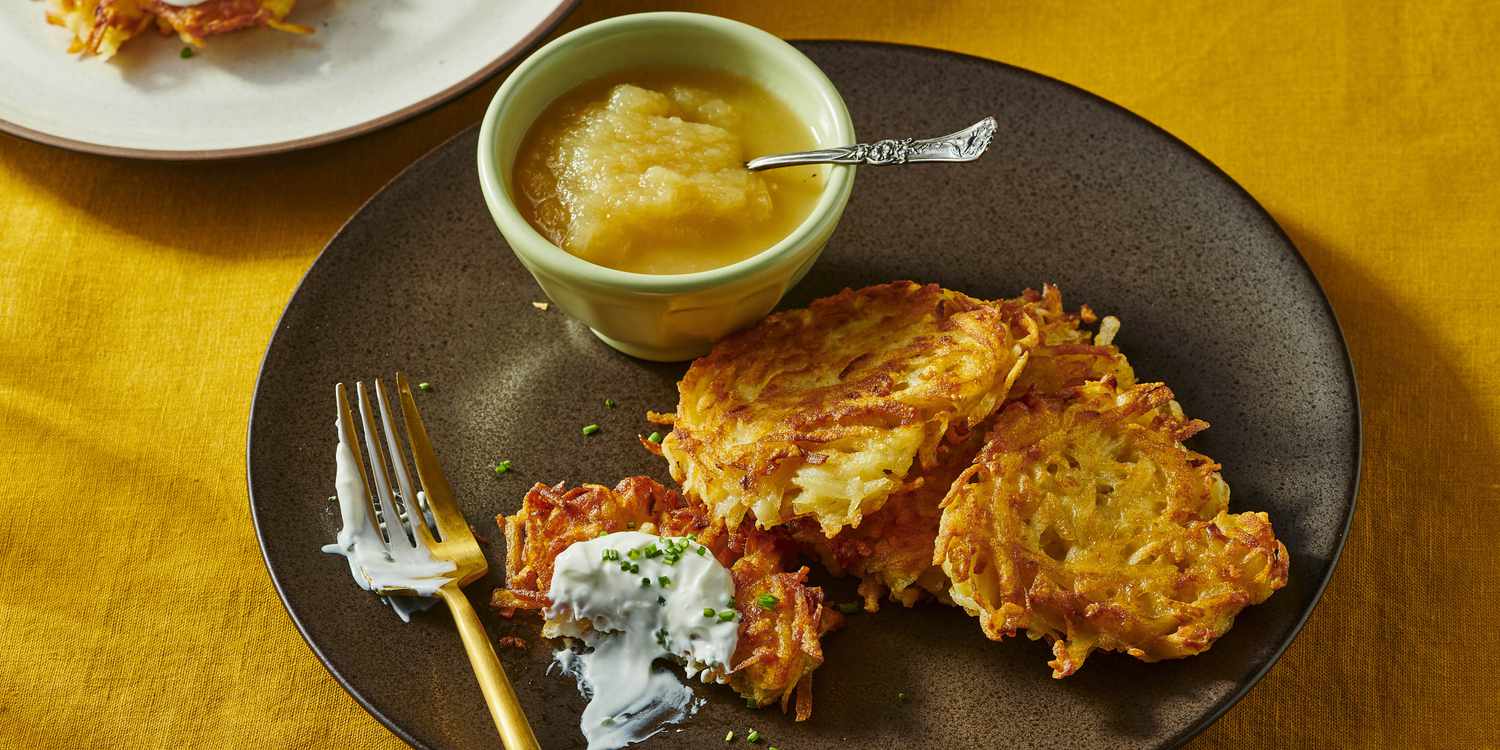
Apple sauce and sour cream are traditional latke toppings, and without hesitation, all five chefs agreed that they’re an absolute must to serve. “Applesauce contributes a bright, sweet flavor that cuts through the richness, while sour cream provides a cool, tangy flavor that balances the whole bite,” McShane says. While Peaceman admits a lot people “like the sweet and savory combination,” the recipe blogger is “Team Sour Cream.”
However, if you’d like to try a more modern twist, several of the chefs piped up with alternatives for serving latkes. According to Brubaker, the pancakes are an excellent vessel for canapes. Here are some recommendations for latke toppings from the panel: