
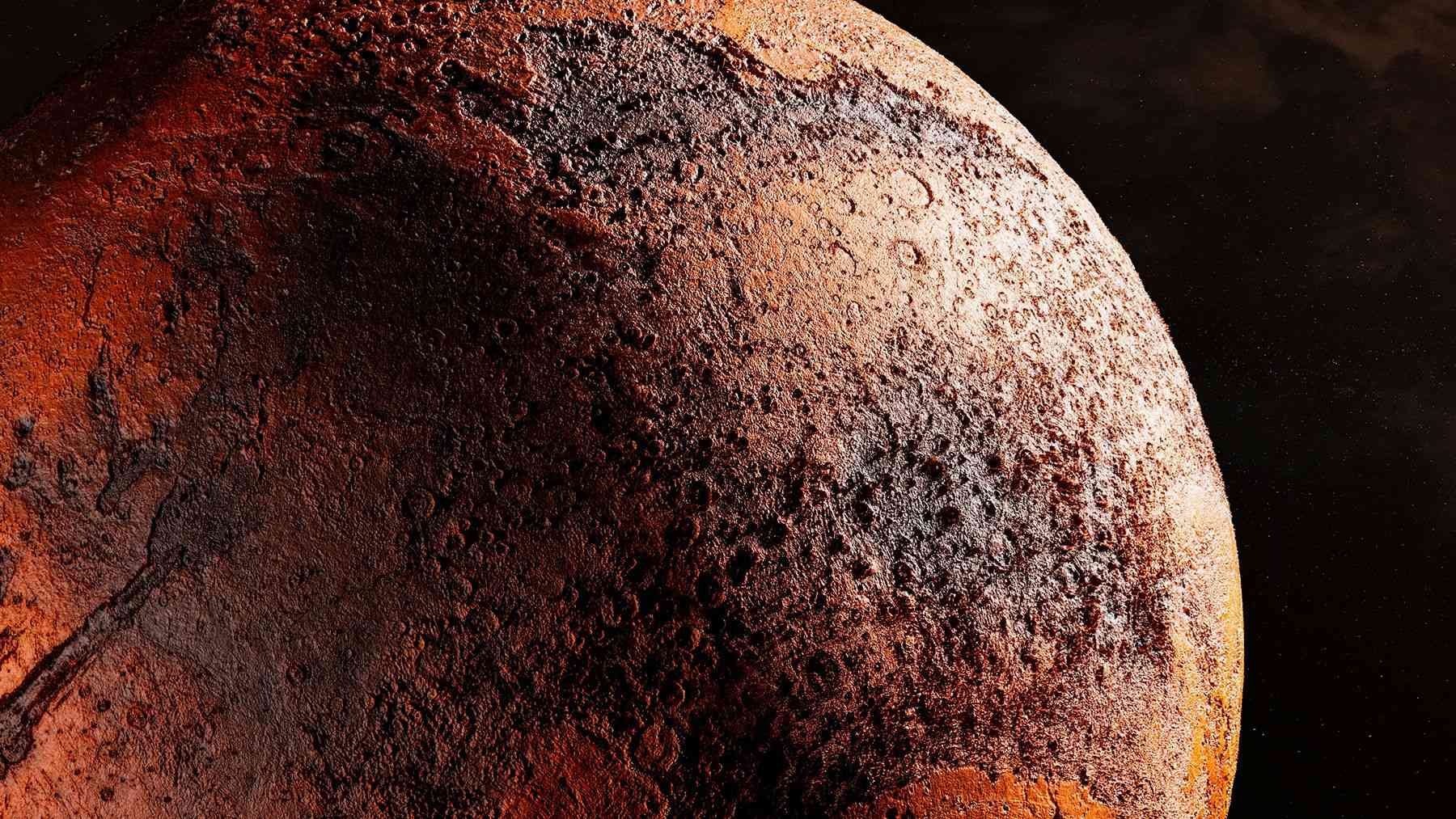
Mars is one of the most explored planets within our solar system. Yet, although NASA has been exploring the red planet for almost half a decade, several terrains with its landscapes have remained prohibited from us. In this article, we discuss these areas on Mars and why they are forbidden for exploration.
Overview of NASA’s Mars planetary protection program
During the 20th century, the space race was at its height between the United States, the Soviet Union, and the United Kingdom. At the time of their rivalry, all three came together to sign a document known as the Outer Space Treaty of 1967. This signed treaty forbade any nation on Earth from claiming sovereignty over any celestial body.
However, at the heart of this space race, NASA and the other foreign space agencies were on the lookout for life outside Earth. Although this was a potentially difficult task, all of them believed other lifeforms could exist in the outer darkness of our solar system. But should they find any, what evidence would there be that we didn’t bring it there?
This is when the other part of the UN Space Treaty comes into play. It included a section called the Planetary Protection Program, which says, “States Parties to this treaty could conduct exploration on any celestial bodies so long as they do not contaminate or bring any potentially hazardous matter from Earth.”
Why are certain regions on the Red Planet prohibited?
Since the enactment of the treaty, Mars has been explored for potential extraterrestrial lifeforms. However, to explore whether this exploration is done responsibly, the Committee on Space Research (COSPAR) from the International Council of Science has maintained oversight. The committee sets guides on where and cannot be explored on the red planet.
These regions where NASA is prohibited from exploring are known as special regions. According to the committee, there are certain microbes from Earth known as prokaryotic or eukaryotic organisms that are usually carried by spacecraft, like the strange black skull discovery, shocking scientists. Should NASA land on these regions, it could compromise the Martian soil in that environment.
What makes these regions special is that they have a near-perfect combination of atmospheric temperatures, water bodies with potential microbial life, and a shield from solar radiation. Therefore, although NASA is allowed to explore Mars, rover spacecraft like Perseverance and Curiosity cannot approach these regions.
Finding a critical balance to fully explore Mars
Since NASA has explored the Martin landscapes, efforts have been made to raise the ban in these special regions. The prominent arguments have echoed how life from Earth cannot grow on Mars and how both planets sometimes share ecosystems. This had left the Planetary Protection program at a crossroads: to explore, but to what extent?
Why this program matters for future exploration on Mars
Recently, NASA announced an ambitious mission to build the first human habitation on Mars. If this protection had not been in place, Mars would have long been contaminated, and NASA would have had difficulty accessing accurate data to analyze the Martian soil.
However, in the wake of the mission, it may become almost inevitable that Mars could be completely contaminated. Transporting millions of humans to the Martian soil would invite trillions of microbial organisms. Therefore, the Planetary Protection has begun developing new and stronger protocols to minimize this contamination.
In addition, NASA is also planning a system of controlled landing far away from these special regions. Long-term robots would also be deployed to ensure human activities don’t interfere with or endanger potential lifeforms in proximity. So far, exploring Mars has remained one of humanity’s greatest achievements, just like the mysterious Martian rock discovery with a foreign origin.