
Battery anxiety, pricing tradeoffs, unclear gains blunt demand for slimmer designs
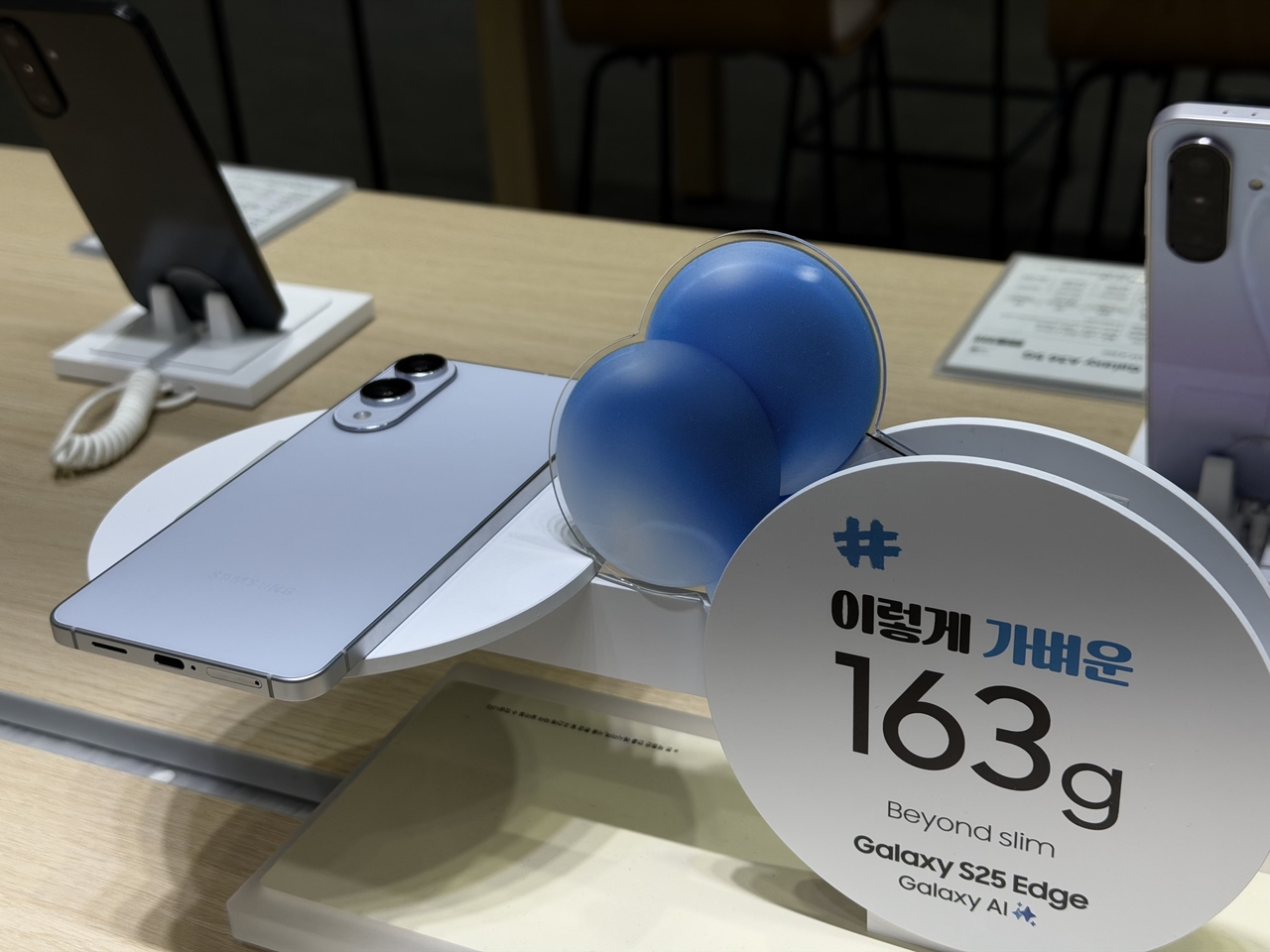 The Galaxy S25 Edge is displayed at Samsung’s retail store inside Lotte Department Store in Myeong-dong, Seoul, Monday, highlighting the ultraslim flagship’s 163-gram weight. (Moon Joon-hyun/The Korea Herald)
At Samsung’s retail store inside Lotte Department Store in Myeong-dong, the Galaxy S25 Edge sits prominently on display, but the staffer there says customer interest peaked months ago.
“When it launched in May, people were curious,” he said. “Now most ask about the Fold. For the Edge, battery anxiety is what they mention first.”
Across the street, at Apple’s Myeong-dong store, the pattern is similar. The iPhone Air, Apple’s slimmest phone to date, gets passing attention, but few linger.
“The people who actually own it are usually happy with the design and real-world battery life,” a staffer said. “But many hesitate when they think about the tradeoffs.”
While the iPhone Air’s functionality was stripped down dramatically for thinness, Samsung’s Edge maintained more features. But the result was nearly identical. There is growing evidence that both ultraslim flagships have underperformed in sales.
According to Hana Securities, the Galaxy S25 Edge sold just 1.31 million units in its first three months, while the Galaxy S25 Plus sold 5.05 million. Consumer Intelligence Research Partners estimated iPhone Air made up just 3 percent of US iPhone sales in September. By November, The Information reported Apple had halted almost all Air production, citing inventory overhang and supplier cutbacks.
Samsung’s case is arguably more puzzling. The S25 Edge was designed to be the “less compromised” slim phone. It retained stereo speakers, a dual-camera setup and a larger battery than the Air, yet it failed to sell even a quarter as well as its own Plus variant.
Thin design, thick hesitation
The failure, analysts and users suggest, was not due to the idea of a thinner or lighter phone itself; it was how much buyers were asked to give up and whether the tradeoff felt worth it.
“There is interest in lighter, slimmer phones,” said Park Sang-hyun, senior analyst at Korea Investment & Securities. “But that interest is soft. In a mature market with long replacement cycles, new form factors only succeed if they offer dramatic advantages. Even the foldables haven’t really made a dent. So, a slight weight reduction and thinness aren’t enough.”
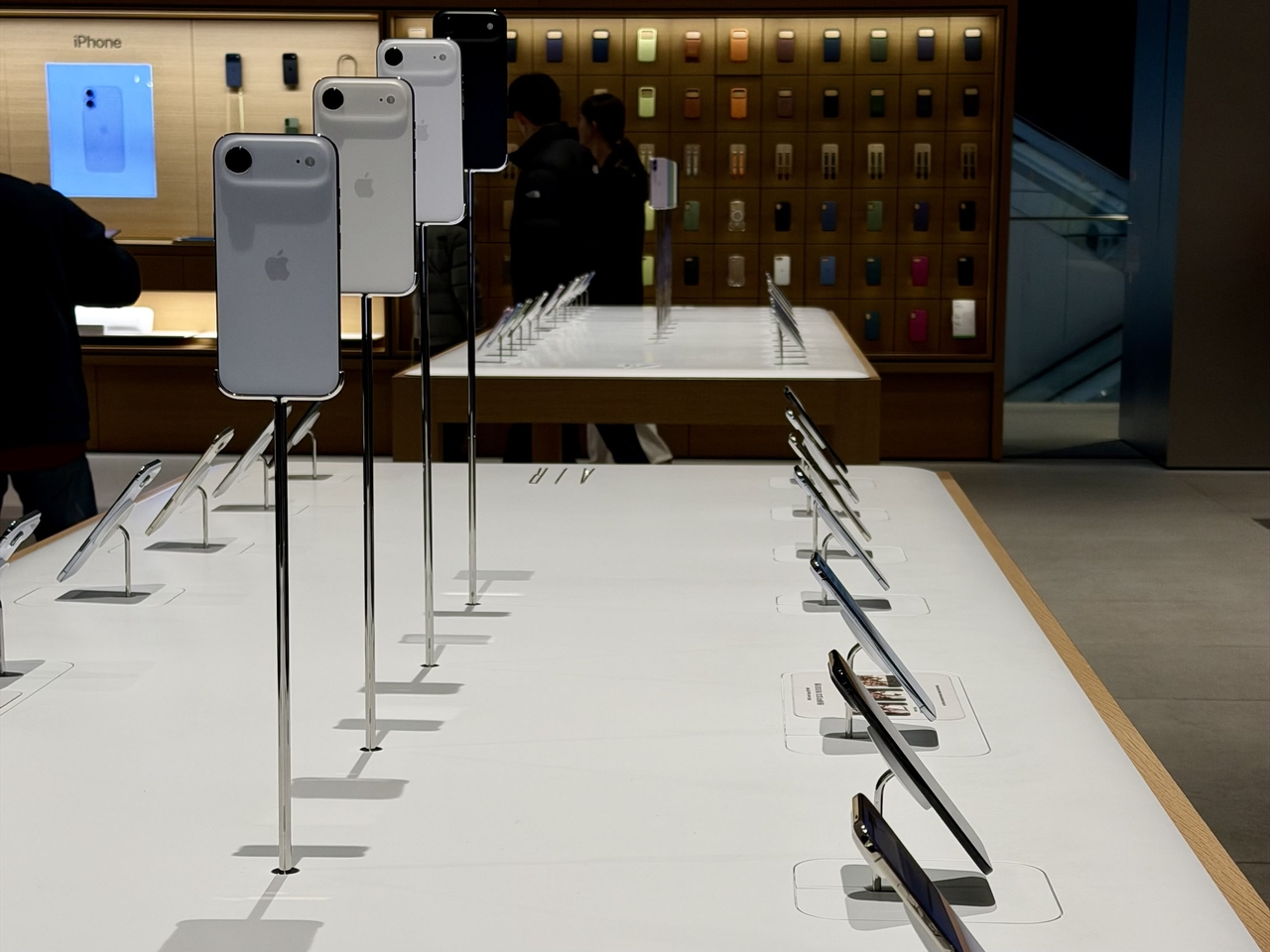 The iPhone Air is displayed at Apple Store Myeong-dong in Seoul on Monday, showcased with its ultrathin profile as part of Apple’s latest iPhone lineup. (Moon Joon-hyun/The Korea Herald)
Samsung seemed to expect otherwise. Lim Sung-taek, head of Samsung’s domestic sales, said at the S25 Edge launch in May that the company expected “very high sales,” based on “internal research showing preference for slimmer phones among consumers in their teens to 30s.”
Preference did not translate into purchase, mainly because slim phones require compromises.
Apple’s iPhone Air was particularly aggressive in this respect. At $999, it was thinner than any previous iPhone, but included just a single rear camera and a mono speaker — features not even found in lower-tier models in today’s smartphone market. In contrast, the iPhone 17 at $799 included a dual-camera setup and stereo sound. The Pro, just $100 more than the Air, offered the full flagship experience.
For many buyers, the Air’s pitch did not justify its price point.
“It’s a beautiful design, and it feels great in the hand,” said Yoo Seung-jun, a 27-year-old developer at Netmarble who upgraded from an iPhone 14 Pro. “But for most people, it looks like you’re paying more to get less. If it were either dramatically lighter or a bit cheaper, I think it would have made more sense.”
Value gap, not demand gap
Samsung avoided Apple’s most visible compromises, but could not overcome skepticism either. Some users appreciated the effort, particularly those with ergonomic concerns. Like the Air, the Edge was also priced between the base and high-end models in its lineup, occupying a similarly awkward middle-tier slot.
Park Ji-sun, a 33-year-old nurse in Gyeonggi Province, bought the S25 Edge because wrist pain made heavier phones difficult to use. “But I’ve seen friends try slim phones and go back. They miss the battery confidence, or the camera flexibility,” she said.
Other users expressed frustration with what they felt was an unclear value proposition. “The Galaxy Edge is clearly better than the iPhone Air,” said Choi Hyun-sik, a user in his 20s who owns both devices for work and personal use. “But even then, I understand why others hesitate to buy the Edge. They just don’t see enough upside to choosing a slim phone over a normal one.”
The awkward screen size didn’t help. “The Edge’s 6.7-inch display size feels in-between, not as portable and wieldy as the base model, not as immersive as the Ultra,” said Oh Min-wook, 29, in Ansan, who now plans to switch to an iPhone 17 Pro Max.
Analyst Park sees a broader lesson. “Apple and Samsung have both misjudged how much sacrifice consumers are willing to make for a slimmer device. The Air was too compromised. The Edge was less so, but the ergonomic gain wasn’t dramatic enough to shift behavior,” he said.
Patrick McGee, author of “Apple in China,” said that Apple may still benefit even if the Air didn’t sell. “If more consumers end up choosing a Pro model because the Air pushed them to see the benefits of the Pro, that’s still a win for Apple.”
mjh@heraldcorp.com