
Welcome to Rendering, a Deadline column reporting at the intersection of AI and showbiz. Rendering examines how artificial intelligence is disrupting the entertainment industry, taking you inside key battlegrounds and spotlighting change makers wielding the technology for good and ill. Got a story about AI? Rendering wants to hear from you: jkanter@deadline.com.
This edition: former Disney animators ponder whether the company is abandoning a century of storytelling tradition with its shock OpenAI deal.
When Disney signed its $1B agreement with OpenAI last week, it was quick to reassure actors. Disney will “respect the rights of individuals to appropriately control their voice and likeness,” it said, when detailing plans to hand over characters including Mickey Mouse, Simba, and Luke Skywalker to Sora, the generative AI video app.
But what about animators? Sure, their creations belong to Disney, and they won’t make a dime out of the OpenAI licensing deal, but that doesn’t stop these craftspeople from feeling a sense of ownership over their creators. Is Disney selling them out? Or is the Mouse House simply keeping pace with inevitable changes in the way people create and consume content?
To answer these questions, Rendering caught up with two former Disney animators who have differing perspectives on the AI deal that shocked Hollywood.
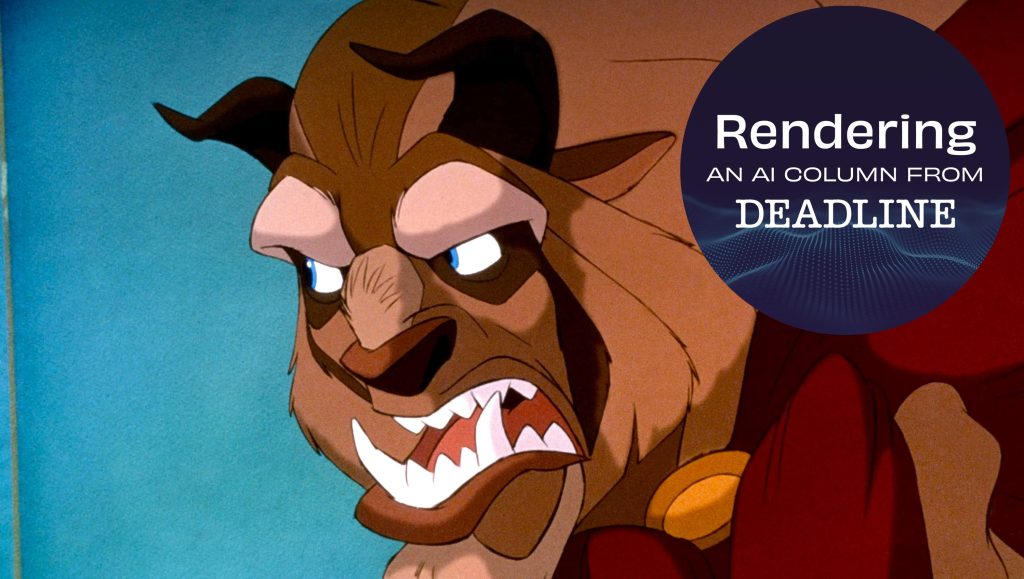
When Aaron Blaise talks about animating Beauty and the Beast‘s titular character, he recalls emoting at his sketch pad. If the Beast was angry, Blaise would snarl. If the Beast was awkward, Blaise would raise his hand to his face and thumb his beard. The Beast was Blaise, and Blaise was the Beast. “That’s what it takes to bring these characters to life,” he says.
Blaise was one of only a handful of animators who worked on Beast under Glen Keane, so there is little surprise he feels conflicted about the character being available on Sora. “That’s interesting,” he says cautiously.
The Oscar-nominated Brother Bear director picks his words carefully during our interview. He remains a cheerleader for Disney after spending more than two decades at the company, and he is resolutely looking for the positives in AI, but he accepts there is something unnerving about text-prompting the Beast into action.
“It degrades it for the filmmakers,” he says, before acknowledging that consumers won’t feel as strongly about artistic provenance once their kids are prompting Elsa. Blaise believes that Disney doesn’t have a choice but to side with OpenAI. “This is them trying to hold the reins and play damage control,” he explains. “If you can’t beat them, join them.”
And Disney is literally joining them. The best of Sora’s short-form fan creations will be showcased on Disney+, meaning generative AI characters will live alongside 100 years of animation tradition. Not that Blaise considers it a threat to feature-length stories. “Of the people I know [at Disney], the notion of creating films with AI couldn’t be further outside the universe of what they want,” he says.

Disney Channel
Dana Terrace, creator of Disney Channel series The Owl House, has a different take. She urged people to ditch Disney+ when Bob Iger first hinted at the short-form AI strategy last month.
She is now doubling down following the Sora deal, arguing it is evidence of Disney chiefs doing everything in their power to “take people out of the equation” (something the company would almost certainly deny). She says that artificial intelligence is “extremely exploitative” of creatives, customers, and the environment, given that the technology relies on energy sucking data centers.
“I think it’s soulless,” Terrace despairs. “I don’t think there’s any artistic integrity behind it. Art, whether it’s technically beautiful or a child’s drawing, is created with intent, with heart, and with meaning — even if that meaning is just to f**k around. AI doesn’t have any of that.”
Terrace remains in contact with old colleagues at Disney TV, arguing that the mood is “miserable” among animators. “Everyone is scared for their jobs. There’s barely any shows in development, there’s barely any shows in production … and this is just scaring people even more,” she explains.
Although Terrace and Blaise do not agree on the OpenAI partnership, they do share concerns about how the instant gratification of AI could impact future generations of animators.
“With Sora, we won’t have the time or patience to sit down and create works of art that help us deal with our feelings or communicate with others, or create something big and beautiful like a movie because we’ll be used to just getting it instantly,” Terrace says.
Blaise knows the value of patient storytelling. Snow Bear, his Oscar-shortlisted animated short, involved two years of painstaking hand-drawing. Depicting the journey of a lonely polar bear across a thawing wilderness, the 10-minute film essentially captures Blaise’s experience of losing his wife to cancer and seeing her almost literally “melt away.”
Snow Bear’s YouTube video has amassed more than a million views in two weeks and clearly packs an emotional punch for those who have watched. “The general, consistent comments we’re getting are that it’s so refreshing to see handmade animation — and they’re bashing AI,” Blaise chuckles.
Snow Bear is a timely reminder that, even as Disney hitches its commercial wagon to generative AI, it’s the human storytellers who really bring the Mouse House’s most iconic characters to life.