
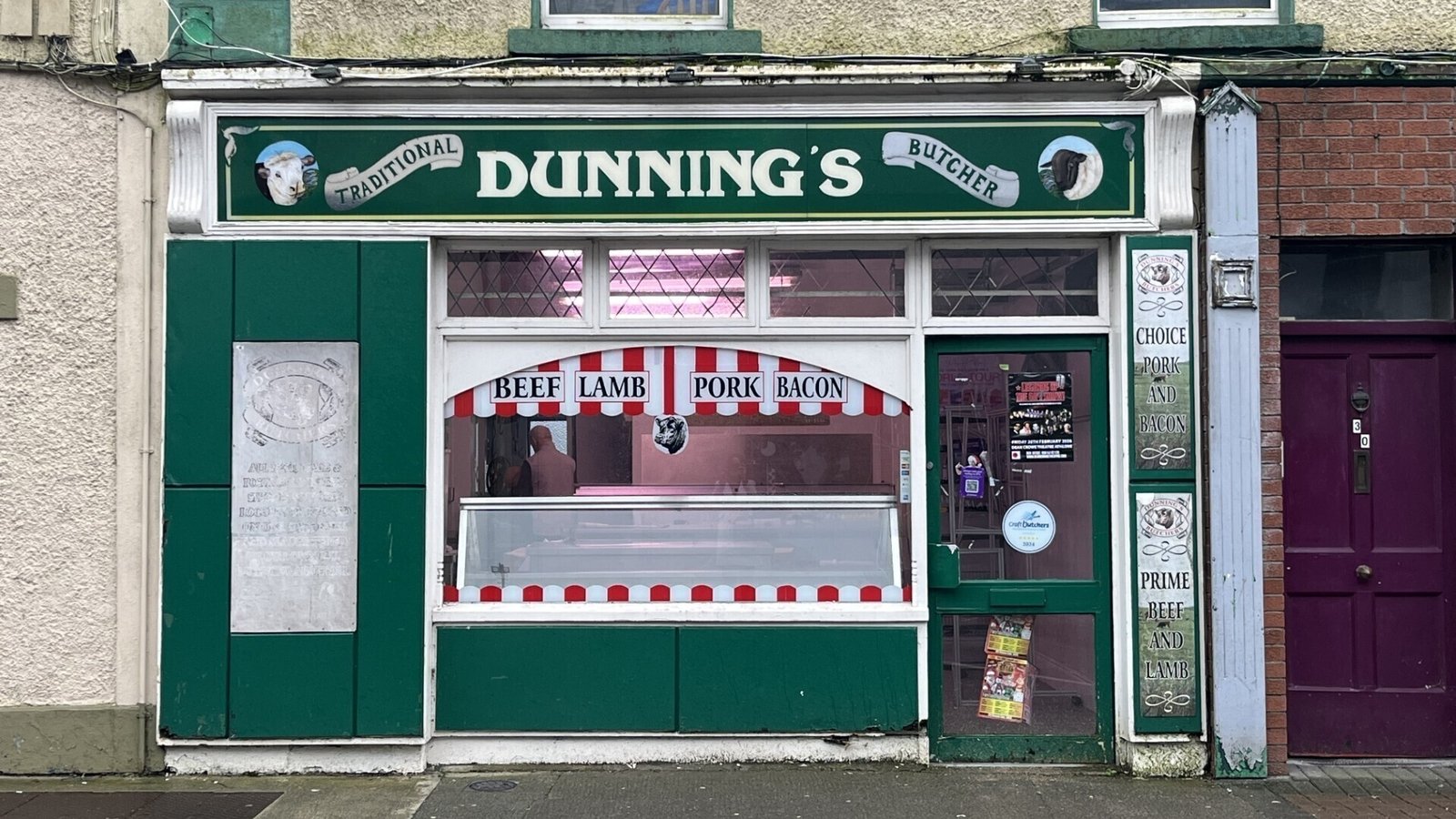
Irish butchers need support all year and not just at Christmas, according to the Associated Craft Butchers of Ireland (ACBI).
Traditionally, the festive season is a busy one for butcher shops across the country.
However, the industry’s representative body has said that many shops have been forced to close in recent years.
The impact of convenience stores, supermarkets and changes in the nation’s diet mean they are in decline, and few young people are joining the industry.
The ACBI said that 20 years ago there were over 1,100 butcher shops in Ireland. It now estimates that there are 520, meaning that in the last two decades, the number of butchers shops has more than halved.
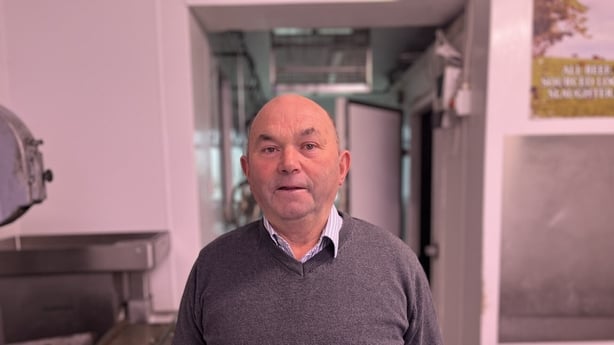
Bernie Dunning closed his business on Connaught Street in Athlone last April
Akin to the demise of rural post offices, pubs, newsagents and fruit and vegetable shops, the rise of convenience stores and big supermarkets has left many butchers struggling to survive.
Once an integral part of the retail trade in every town across Ireland, changing eating habits have also had a major impact.
At one time in Athlone, Co Westmeath, there were 22 butchers operating in the town and all making a viable living. Now there are three butcher shops.
Bernie Dunning closed his business on Connaught Street last April, after over 50 years in the trade.
Mr Dunning, who started working in the family butcher shop three months after it was established by his brothers, Tommy and the late Sean, in June 1971, said “a whole lot of reasons” contributed to his decision to close, but in the end, it came down to simple economics.
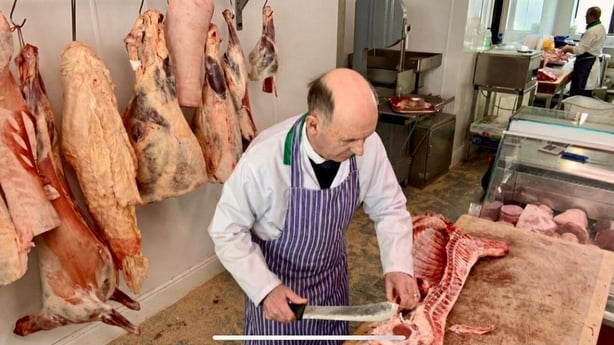
Dunning’s butchers was established by the late Sean Dunning and his brother Tommy
“I just couldn’t make ends meet, it’s very easy to make up your mind, then,” he said.
Bernie had been working alongside his brother Sean in the business, and Sean’s death last December meant he was left to run the business on his own.
“I wasn’t getting any younger either and lifting a side of beef, I’d be feeling my bones creaking,” he added.
Like many butchers, Mr Dunning believes consumer habits have changed dramatically in recent years.
“Butchering is a hard life, and it’s hard work”
“You see at one time there was a butcher and a green grocer and maybe a bakery, but now you can get everything in a supermarket,” he said.
“Eating habits have changed too. The traditional Sunday roast is down by around 80%. When families were bigger, a roast was nearly a must on a Sunday, but not anymore.”
Mr Dunning said it is also hard to attract people into the business.
“Butchering is a hard life, and it’s hard work,” he said
“If you’re slaughtering, and bringing sides of beef from the abattoir in here, you’re heavy lifting from one end of the week to the other.”
He said traditional butchering was where the meat would come from the abattoir, be slaughtered, hung, and brought into the shop before it was broken down and sold.
“A lot of the meat is coming from factories in vacuum packs now, being displayed and sold.”
Traffic and parking an issue
Fergie Jameson worked as a butcher in Athlone for over 50 years, having entered the trade when he was f 14. He closed his shop in Athlone in 2019.
“I found that my customers, who were older, when they died there was no one replacing them. Very few younger people were coming in.”
Mr Jameson also believes that while supermarkets selling meat below cost is one issue, parking in regional towns is another.
“Traffic and parking. It’s all geared towards the shopping centres and not the town centres. If people want to come to a butchers in town, they’ve to try find parking and walk a mile,” he said.
He is frank in his assessment of the trade.
“More doors will close without support. They need support. People have to make a bigger effort if they want to keep the small shop going, let that be the butchers, the fruit and vegetable shop, whatever. They’ll have to make a bigger effort.”
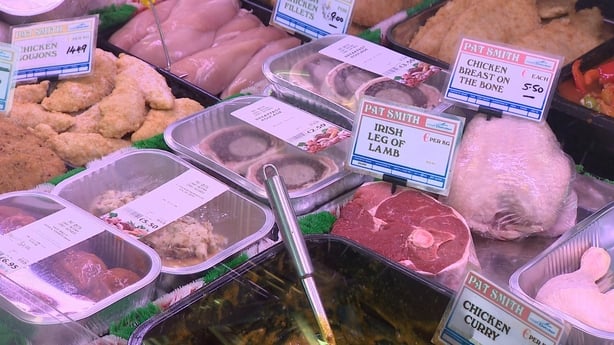
Pat Smith runs a butchers on the Dublin road in Athlone, which is one of the last three remaining butcher shops in the town, with a population of over 23,000 people.
He opened the shop in 1993.
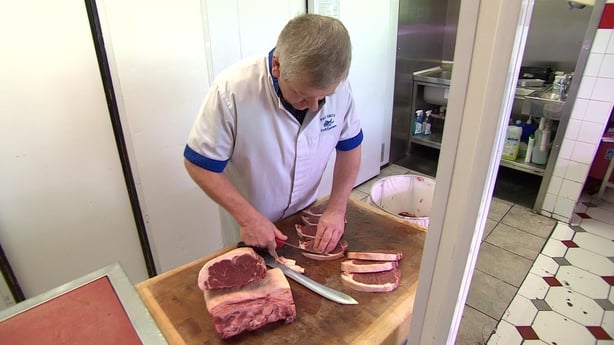
‘If you don’t keep up with the times you’re gone’ – Pat Smith
“For me, business is good, but overall, the butcher’s trade is suffering. You can see it around the country, shops are closed, left, right and centre.”
Pat said he had introduced tray packs, in order to compete with what the supermarkets are offering.
“If you don’t keep up with the times you’re gone,” he explains. “If you can’t match the supermarkets for price, or try and do it, you’re going to suffer, and that means you’re taking a hit on your margin.
“Some butchers will survive. It will be the minority.”
Pat said consumers also need to look at what is on offer in terms of quality and service.
“It’s the human touch. You can come in here and they know what they’re getting is quality.
“They can have whatever they want, whatever way they want it.
“So if they want a thick steak, a thin steak, or if you want a thick one and a thin one. Or if you want three quarters of a pound of mince or a pound and a quarter, you can have it.
“Once you have the quality, people will come back and they appreciate when they come in here, they can have a little chat. There’s very little places you can go now and have a chat with whoever is behind the counter.”
‘We are losing butchers’
A key threat faced by the sector in Ireland is an ageing profile. The Associated Craft Butchers of Ireland said succession planning is a challenge.
“We are losing butchers and a lot of it has to do with succession,” Dave Lang from the ACBI said.
“These are probably men in their late 60s and 70s and they’re probably working 60 hours a week, and there’s no children to come forward to take the business from them.
“There’s also a serious shortage of butchers, so there’s probably nobody who wants to buy the shop from them.”
The increasing cost of meat is also a major factor.
“Meat is another issue. It’s probably the most expensive it’s ever been, beef, lamb, pork, bacon, poultry, you name it.
“We’re hearing that some restaurants are stopping selling steak for example, because it’s too expensive.
“Packaging is expensive, labelling is expensive, labour is expensive, so there are a lot of factors at play here.”
The industry’s representative body said it is asking the Government for help.
“We’re looking for some sort of marketing funding, for some sort of money to help us out, because lots of other industries get help for various things.
“Is there some sort of grant system that could help us out?” Mr Lang said.
“Recently, I heard that there are only 25 thatchers left in the country and when they’re gone, they’re gone.
“It’s the same with the craft butcher, when the craft butcher is gone, they’re gone.”