
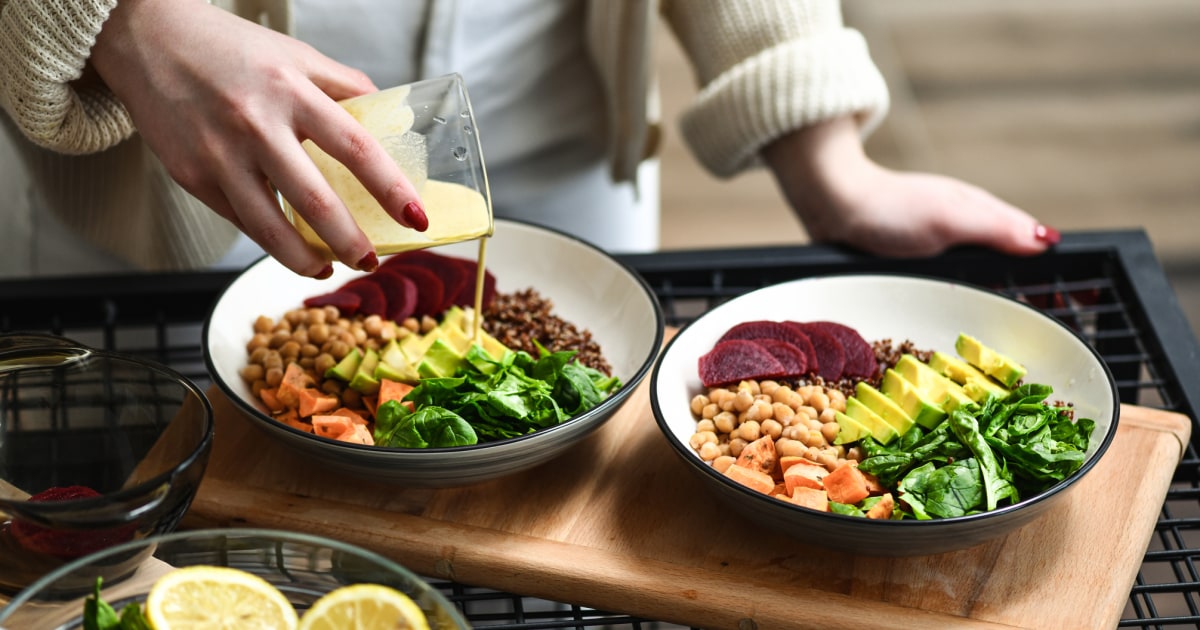
You can always count on social media to churn out another hack promising health results like you’ve never seen before. The 90-30-50 diet making the rounds on TikTok is no exception.
Unlike diets that call for cutting out entire food groups and only eating during certain times of day, this diet focuses on satiety — feeling full and satisfied from eating nutrient-dense foods — rather than calories and quantity.
“The premise of this diet is that you eat (at least) 90 grams of protein, 30 grams of fiber and 50 grams of healthy fat each day,” Frances Largeman-Roth, registered dietitian and author, tells TODAY.com.
The idea is that these amounts of protein, fiber and fat are the minimum the body needs to function, so it’s better for you than restricting what you eat. While this approach may be refreshing for some, it’s not inherently healthier than other eating patterns, experts say.
If the 90-30-50 diet piques your interest, there are a few things you’ll want to keep in mind.
What Is the 90-30-50 Diet?
This diet was created by registered dietitian Courtney Kassis, who shared its guidelines on her TikTok account. The diet promotes eating a minimum of 90 grams of protein, 30 grams of fiber and 50 grams of unsaturated fat from foods like fish, nuts, seeds, oils and plants, Erin Palinksi-Wade, registered dietitian and author, tells TODAY.com.
“The idea is that higher (amounts of) protein, fiber and healthy fat increase satiety, stabilize blood sugar and help preserve lean mass, which can indirectly support weight management,” Palinksi-Wade explains. Balancing your meals in this way, she adds, not only reduces “hunger and cravings, but you can find yourself eating more whole, unprocessed foods as well.”
How Is It Different From Tracking Macronutrients?
A common practice when trying to optimize health, nutrition and weight loss is tracking or counting your macros.
All foods are made up of the three macronutrients — carbs, protein and fat — and tracking how much you eat of each in a day can help you make sure you’re getting the right amount for your health needs.
“Traditional macro tracking sets individualized gram or percentage targets for protein, carbs and fat based on energy needs,” Palinksi-Wade explains. “90-30-50 applies the same three numbers to almost everyone regardless of age, size or activity (level). The 90-30-50 method also centers fiber explicitly as a daily target, whereas many standard macro plans monitor carbs without distinguishing fiber quality as clearly.”
The amount of each macronutrient you should consume in a day will depend on your health goals. If you’re looking to lose weight, your daily macros will look different from if you’re trying to maintain or gain weight, for example.
Will the 90-30-50 Diet Help Me Lose Weight?
It might, but weight loss is not a guarantee on this diet.
Weight loss depends on a caloric deficit, Palinski-Wade explains. If, by following the diet, you consistently end up eating fewer calories than you typically burn throughout the day, you’ll likely see a dip on the scale.
You may find that the 90-30-50 diet makes you feel fuller for longer and you end up eating less “due to increased satiety from increased fiber and protein,” which can lead to weight loss, says Palinski-Wade.
Regardless of the number on the scale, this diet can help you increase your intake of healthy foods and fiber, “which many people lack in their diets,” she adds.
Is the 90-30-50 Diet Safe?
That depends. “If you are hyper-focused on sticking to the minimum numbers, you won’t even reach 1,000 calories per day,” Largeman-Roth says of the diet’s gram requirement for each macronutrient.
This would be a “dangerously low” number of calories for a healthy, active person to consume, she explains. “But, if you use the numbers truly as a guide to ensure you’re at least hitting those minimums, it can be safe and balanced.”
There aren’t any studies to lean on when it comes to verifying the diet’s safety; however, “there are many research studies that show eating adequate lean protein, more fiber and healthy fats reduced inflammation, improved blood sugar balance and hormonal balance,” Palinski-Wade notes.
That said, if you’re not accustomed to eating large amounts of fiber, jumping to 30 grams per day can lead to gut discomfort, so you need to increase your fiber intake slowly and with adequate amounts of fluid, she adds.
And since the diet isn’t personalized, you might end up not getting enough of other important nutrients, adds Largeman-Roth. This can be especially dangerous for certain groups.
Who Should Not Follow the 90-30-50 Diet?
The experts say this diet is a solid starting point for anyone looking to feel fuller after meals, increase their intake of whole foods and work fiber into their diet.
Palinksi-Wade calls it a “good starting point for a healthy person looking to improve overall diet quality,” but individual needs must be taken into consideration, especially if you have diabetes, kidney disease or gastrointestinal disorders.
“For those with kidney disease on a protein restriction or those with certain digestive disorders who may not be able to tolerate higher-fiber foods, this diet would not be appropriate,” says Palinksi-Wade.
Also, for those trying to conceive, who require diets rich in folate and choline, and women over 50 who need adequate amounts of calcium, vitamin D and bone-healthy nutrients, this diet may not always deliver.
Children and anyone who is pregnant or breastfeeding should stay away from this diet, too, says Largeman-Roth. She also encourages those with a history of disordered eating and athletes who require specific amounts of carbs to perform to avoid it.
Bottom line: Palinski-Wade urges anyone interested in following the 90-30-50 diet speak to a dietitian first. This way you can “understand what balance of nutrients works best for your own body,” she says.