
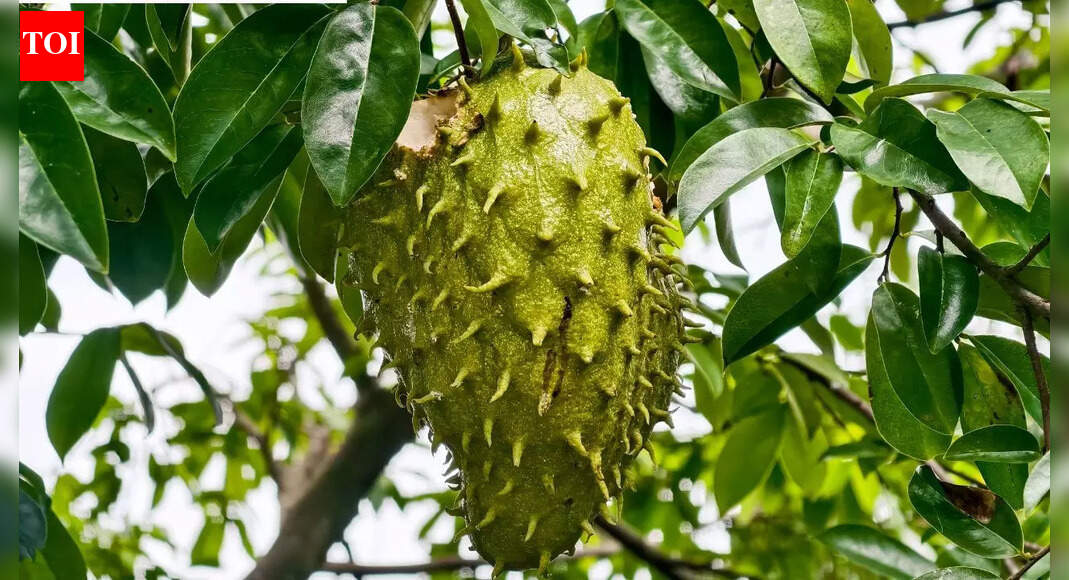
 Cervical cancer is still a major contributor to the number of cancer-related deaths of women all over the globe, and the situation is no different in Indonesia. The worldwide health data reveal that the number of both new cases and deaths is in the hundreds of thousands, and these are reported every year. However, these treatments are usually associated with negative side effects, and this has made people turn to nature and plants, looking for a solution that will not only be effective but also not cause too many problems.Research published on PubMed Central highlights the potential of endophytic fungi found in soursop leaves as a promising natural source for cervical cancer treatment.
Habits to Boost Longevity and Health
Soursop leaves and their medicinal potential for cancer
Indonesia has a wealth of medicinal plants with more than a few thousand species, among which soursop (Annona muricata) is the most researched one. Soursop leaves are full of bioactive compounds such as flavonoids, tannins, alkaloids, saponins, and phytosterols. These compounds are very powerful antioxidants, and thus they can help neutralise the agents that cause cancer, which are a type of free radical.The production of acetogenins, which are compounds that exhibit cytotoxic activity against different cancer cells, including those of the lung, colon, pancreas, and breast, is what soursop is mainly known for.Cervical cancer is mainly related to human papillomavirus infection; however, oxidative stress and too many free radicals also contribute to its occurrence. Besides that, standard cancer treatments may cause a long list of side effects, among which are fatigue, hair loss, early menopause, infections, memory problems, and decreased quality of life.Due to these difficulties, researchers are increasingly turning to the possibilities of herbal medicines and natural substances that can not only fight cancer but also strengthen the immune system and lessen the harmful side effects.
Role of endophytic fungi in cancer research
Endophytic fungi are microbes that reside in the inner parts of plants, however, they do not cause any harm to the host. These fungi may synthesise the same kind of biologically active compounds as the plant, since they have been co-evolving for a long time.There is a significant benefit in employing endophytic fungi. It lessens the requirement for repeated harvesting of medicinal plants, making it possible for them to keep on giving fruits and also sustaining the ecological balance. Hence, fungal-derived compound production is a greener way of developing drugs.
Study findings on soursop leaf endophytic fungi
In the research, scientists separated endophytic fungi from various soursop leaf samples and grew them in the lab. After the fungi were extracted by means of ethyl acetate, they were tested against HeLa cancer cells, yeast cells, and normal human cells through the MTT method. Five fungal isolates were found to have strong inhibitory activities, and one isolate, termed Sir-SM2 was particularly notable. The ethyl acetate extract of Sir-SM2 was very effective in killing cervical cancer cells and was minimally toxic to normal Chang cells.
Identification of the most effective fungi
Upon deeper examination, it turned out that the Sir-SM2 isolate is a member of the Penicillium genus. Molecular identification through internal transcribed spacer analysis indicated that it is very close to Penicillium crustosum.This result is crucial, as it not only pinpoints the exact fungal species that exhibits the anticancer activity but also paves the way for the next drug development stages.
Potential for future anticancer drug development
The findings indicate that soursop leaf endophytic fungi are highly potent to act as natural anticancer agents, especially against cervical cancer. The Sir-SM2 isolate was the one that showed the most selective toxicity; thus, it was able to target cancer cells effectively, i.e., with minimal damage to normal cells.By implication, with more research, isolation, and clinical testing, drugs made from these fungi may be a source of less harmful plant-based cancer treatments.Endophytic fungi in soursop leaves are not only effective but also a renewable resource for cervical cancer therapy. The identification of Penicillium crustosum Sir-SM2 as a powerful agent to inhibit HeLa cells is a clear indication of the rising role of natural products in healthcare. Scientifically investigating this can serve as a bridge to opening up new avenues for therapy to improve cancer patients’ prognosis and their standard of living.(Disclaimer: This publication is intended only to provide general information and is not a substitute for professional medical advice, diagnosis, or treatment. Please talk to a healthcare provider about cancer therapy options.)