
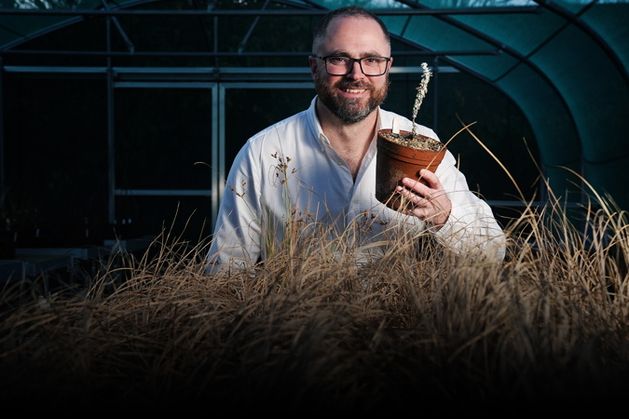
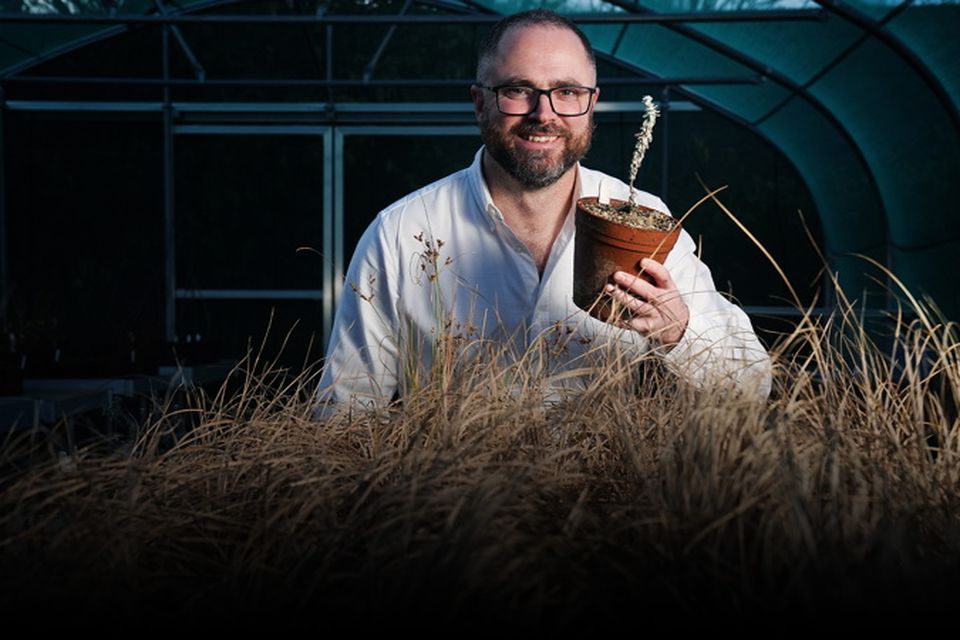
Conservation botanist Dr Darren Reidy explains his process of banking every native seed in Ireland so that they can be reintroduced in the event of an ecological disaster
The man in charge of logging each native seed in Ireland has described the project as like “Noah’s Ark” for plants – a vault for renewal after ecological disasters.
Conservation ecologist Darren Reidy has been researching, gathering and banking native seeds across Ireland since his appointment in 2022.
‘Banking’ the seeds of a native Irish plant is complicated – ideally you would need 10,000 seeds per species.
Mr Reidy gave the example of critically endangered whitebeam trees that grow only in Ireland.
“We only have five individuals of this species on the entire island, and they all occur in Killarney National Park in Kerry,” he told the Press Association.
“Only one of them is producing fruit. So this summer, I travelled to Killarney to collect fruit.
“There was only 40 fruit on the tree at the time, so obeying the 10% rule – which I have a licence for – I could only collect four fruit, and then when I opened those four fruits, there was only one viable seed inside of those four fruits.”
A decision was made to set up a seed bank in Ireland in 2019, after Ireland declared a climate and biodiversity emergency, with the aim of preserving the genetic diversity of the Irish flora.
But thanks to the pandemic plans were stalled until 2022, when Mr Reidy was appointed by the Office of Public Works.
His office at the herbarium at the National Botanic Gardens in Dublin has plant encyclopaedias, microscopes, storage bags, two incubators and a freezer – which holds Ireland’s seed bank.
Mr Reidy said not much space is needed to bank all Irish seeds. To illustrate this, he takes out a matchbox which he said holds a single seed of all 900 native species to Ireland.
“We only really have three big seed species, and those are the two oaks and the hazel, and then everything else is really tiny – the orchid seeds especially are like dust.”
Collected seeds are cleaned and dried to 15% relative humidity, which suits most species.