
AP Photo/Rebecca Blackwell
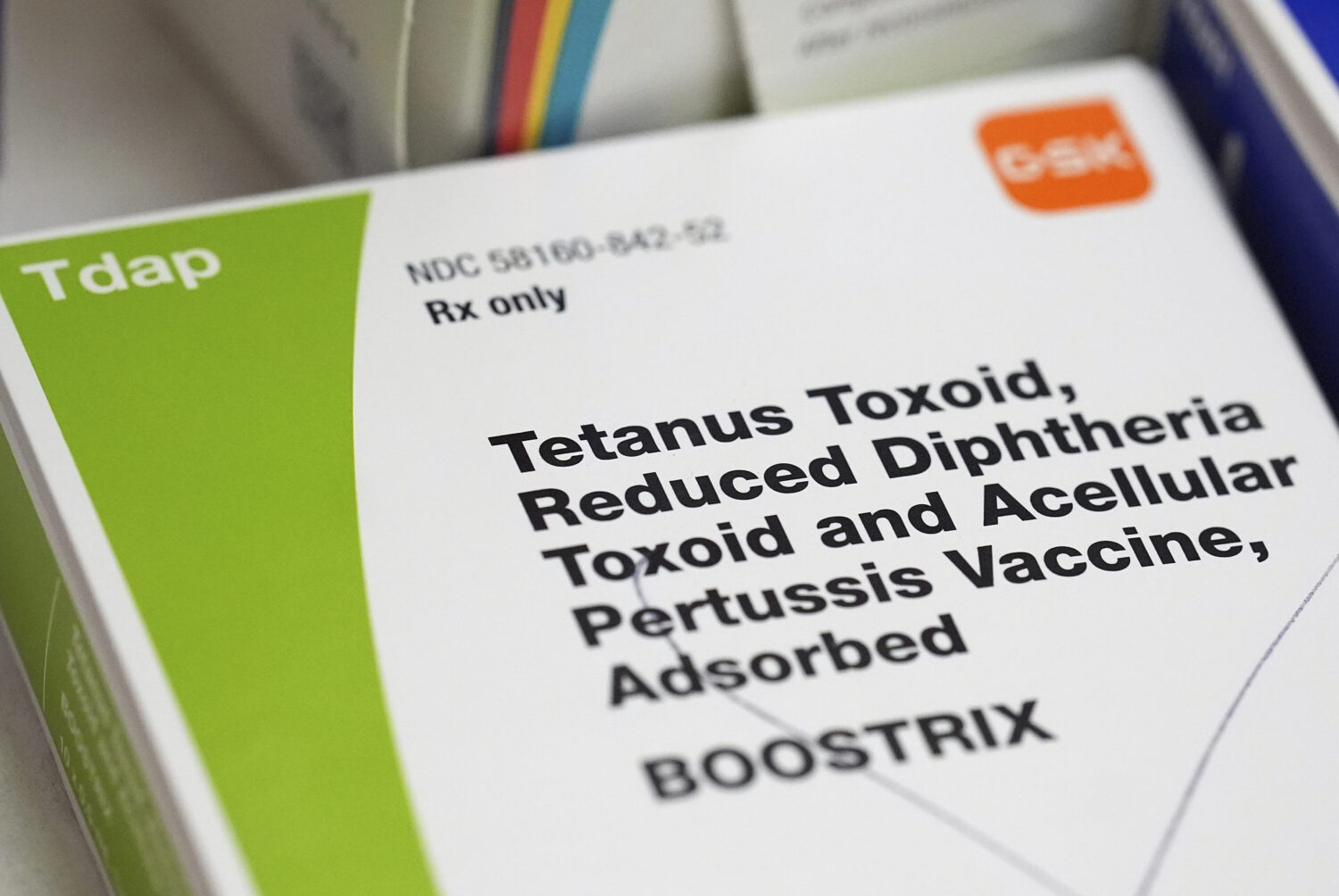
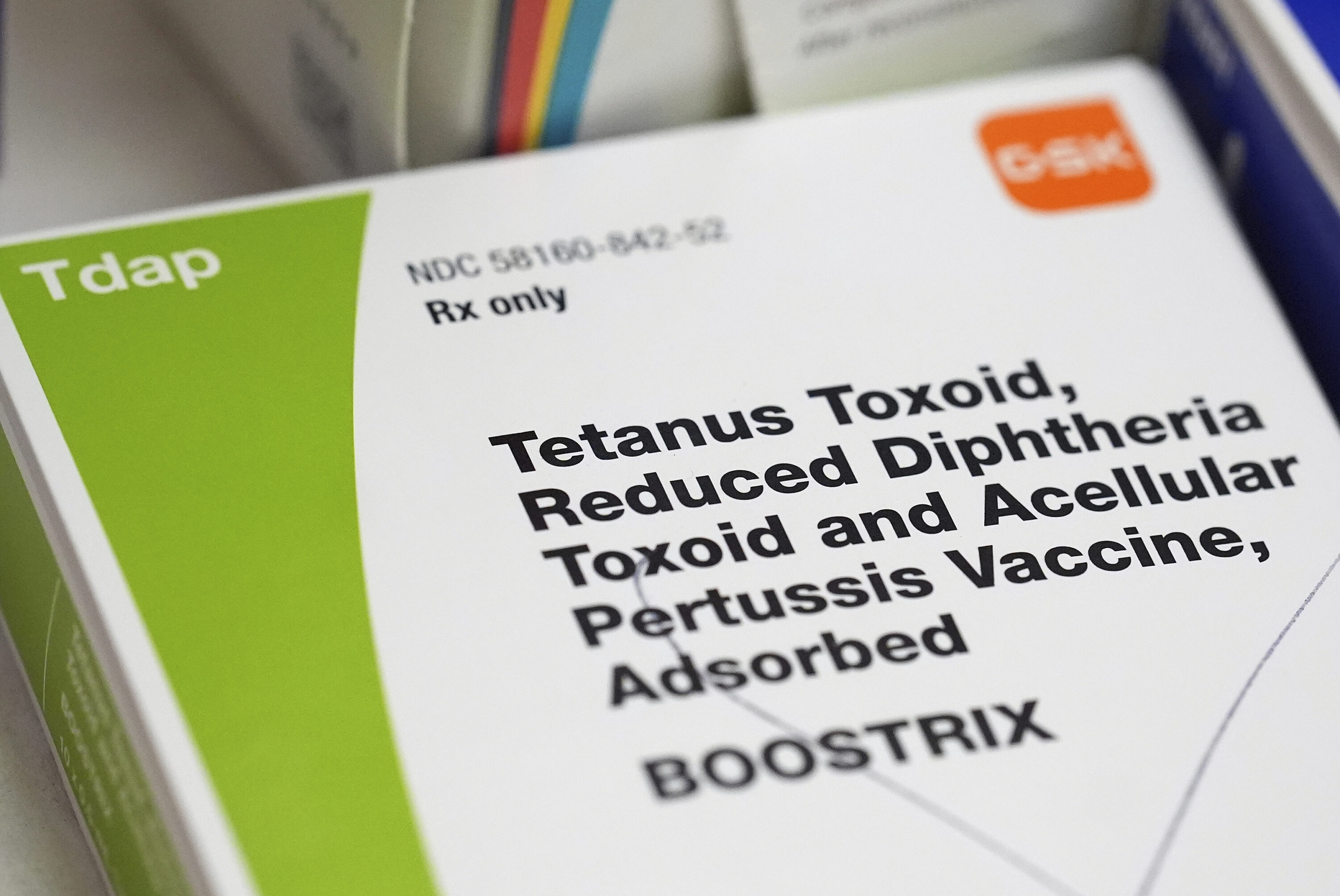
A box containing doses of a tetanus, diphtheria and pertussis (Tdap) vaccine is displayed at a CVS pharmacy, Tuesday, Sept. 9, 2025, in Miami. (AP Photo/Rebecca Blackwell)
Harris County’s health department recently reported that it had seen more than three times the number of whooping cough cases this year compared to 2024.
As of last Friday, Harris County Public Health (HCPH) had recorded 220 probable and confirmed cases of pertussis, commonly referred to as whooping cough. In 2024, the department recorded 68 probable and confirmed pertussis cases.
Whooping cough is an infectious disease that can cause serious and potentially life-threatening complications, especially in infants and young children, according to the Centers for Disease Control and Prevention (CDC).
Sign up for the Hello, Houston! daily newsletter to get local reports like this delivered directly to your inbox.
“The reported cases are compiled from multiple reporting sources, including hospitals, clinics, and schools within HCPH’s jurisdiction, which includes unincorporated areas in Harris County outside the City of Houston,” HCPH said in a statement to Houston Public Media. “This increase mirrors trends currently being observed at the state level.”
The Texas Department of State Health Services reported more than 3,500 cases of pertussis throughout the state as of Nov. 3. That’s nearly double the 1,907 cases reported by the state in 2024.
As of Dec. 13, the CDC reported 27,168 provisional cases of whooping cough across the U.S. For comparison, the CDC’s yearly provisional report for 2024 recorded 35,435 cases that year, up substantially from the 7,063 reported cases in 2023.
Dr. Bich-May D. Nguyen is a clinical associate professor in the Department of Health Systems and Population Health Sciences at the University of Houston Tilman J. Fertitta Family College of Medicine.
Nguyen said a rise in vaccine hesitancy is likely a contributing factor to the increase in cases.
“I think, especially in Texas, we’ve had problems for a long time around people being very hesitant to receive vaccines,” Nguyen said. “Especially in this past year, with all the changes happening in Washington D.C., and with the vaccine recommendations coming out of the CDC and immunization committee. People are just confused. There’s so much misinformation on social media.”
Since being appointed by President Donald Trump, Health Secretary Robert F. Kennedy Jr. — an environmental attorney and vocal vaccine skeptic — has pushed the CDC to change its stance on several childhood vaccines, such as its long-held policy on infant hepatitis B vaccines.
According to Nguyen, it’s recommended that children get their diphtheria, tetanus and pertussis (DTaP) vaccinations at 2, 4, 6 and 12-15 months old, then an additional dose at 4-6 years old. It is recommended that adults and older children, ages 11 and older, receive a tetanus, diphtheria and pertussis (Tdap) vaccine once every 10 years. Currently, the CDC recommends the same schedule.
Pertussis can at first cause a runny nose, dry cough and a low fever, Nguyen said.
“Then, after a couple of weeks, that cough worsens into severe fits, and so sometimes people will have throwing up, they’ll have a distinct, like, whooping sound when they’re catching their breath,” she said. “It is really dangerous for infants, especially before they receive any vaccine. … For really young babies, it can be deadly.”
Nguyen said it is best for parents to talk with their children’s primary health care provider and to ask them any questions regarding vaccines.
“People go online and they see all these different influences and they get confused about what’s out there,” she said. “So, I think it’s really important for people, if they can, to speak to their doctor. Talk to them about what their risk factors are. Ask them what can they do to stay healthy.”
Even if someone is relatively healthy, vaccines are important for “herd immunity” to protect those who are too young or who cannot get the vaccine due to medical reasons.
“So, [when] fewer people are receiving their vaccines, that lowers the herd immunity,” Nguyen said. “That means that there are more people who could get sick and could transmit it to other people. … We’re all a part of the same schools and communities and churches and things like that. So, that’s why these things can spread very easily.”