
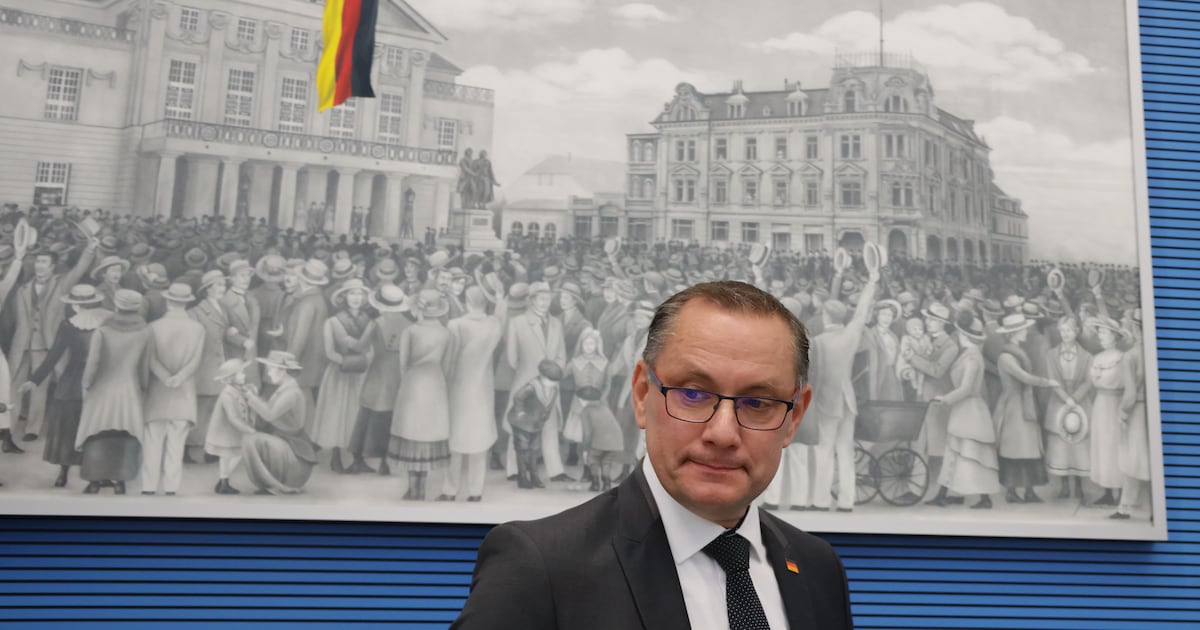
For 40 years, East Germany embraced a pacifist motto with Biblical origins: “beating swords into ploughshares”.
But last week, a train factory in Germany’s easternmost city of Görlitz abandoned the line from the book of Isaiah in favour of Joel: “beat your ploughshares into swords”.
After 176 years and 107,000 trains, a final, shiny red-and-white double-decker carriage rolled off the production line at the Alstom factory.
In the new year, production here pivots to tank parts.
“It’s a really emotional day,” said Jens Koep, head of the Görlitz plant to local television.
René Strabue, works council head of the factory, said the 500 workers were departing with feelings of “wistfulness and anxiety”.
“Overall, though, we hope we can look forward optimistically,” he added, “above all in the interest of our city and region.”
Establishing where the interests of this region lie, however, is a complicated business. Tensions are growing between Germany’s ascendant arms industry – some criticise it as a pre-war economy – and a traditionally pacifist worldview in Görlitz.
[ Russia to shift forces to Nato’s border after Ukraine peace deal, leaders warnOpens in new window ]
After the Alstom factory closes its doors in March, Franco-German armaments conglomerate KNDS moves in to make tank parts. It promised last May to keep on about 300 workers, though more recent reports suggesting the real number might be closer to just one fifth of that.
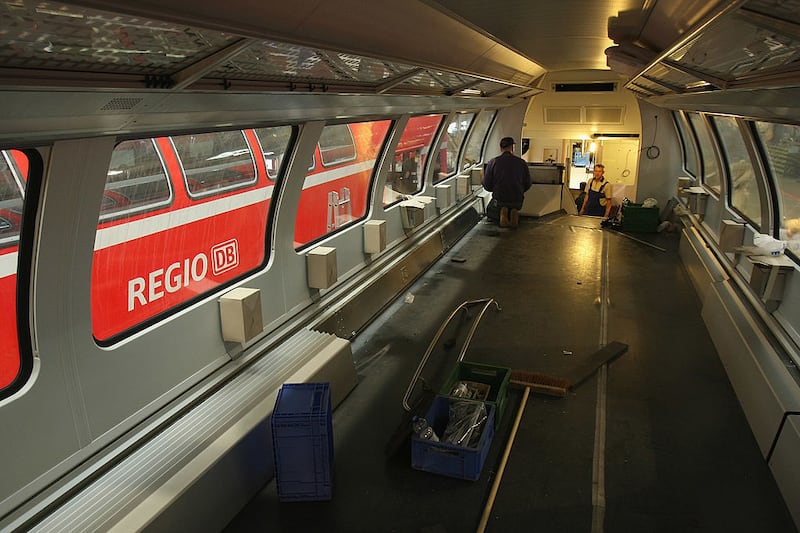 Railway carriages being manufactured in Görlitz. Photograph: Sean Gallup/Getty
Görlitz mayor Octavian Ursu remains optimistic the deal will keep industrial jobs in town as an “important motor for prosperity and development”.
With worries of war in Europe building once more, however, Görlitz locals say their ambivalence about the new arms factory is secondary to harsh economic realities. Nearly six years of German economic stagnation has seen the jobless rate here jump to nearly 10 per cent.
[ The German arms giant capitalising on renewed fear of RussiaOpens in new window ]
Tapping into that ambivalence – and, historically, a more friendly attitude here towards Russia – is the local branch of the far-right Alternative for Germany (AfD). In last February’s federal election in Görlitz, the AfD took nearly every second vote – 46.7 per cent – its second-best result in all of Germany. Local Görlitz tradesman Tino Chrupalla has ascended to become AfD co-chairman at federal level. He knows just how delicate a line he has to walk in his constituency on this issue.
Given the Görlitz factory is being retooled rather than closed, Chrupalla has been unable to deploy the party’s popular line of attack that Germany’s failure to tackle high energy prices and red tape is killing off industrial production.
And so, in a creative pivot, Chrupalla has criticised the incoming KDMS factory for allowing employees to work on tanks most likely being built for export.
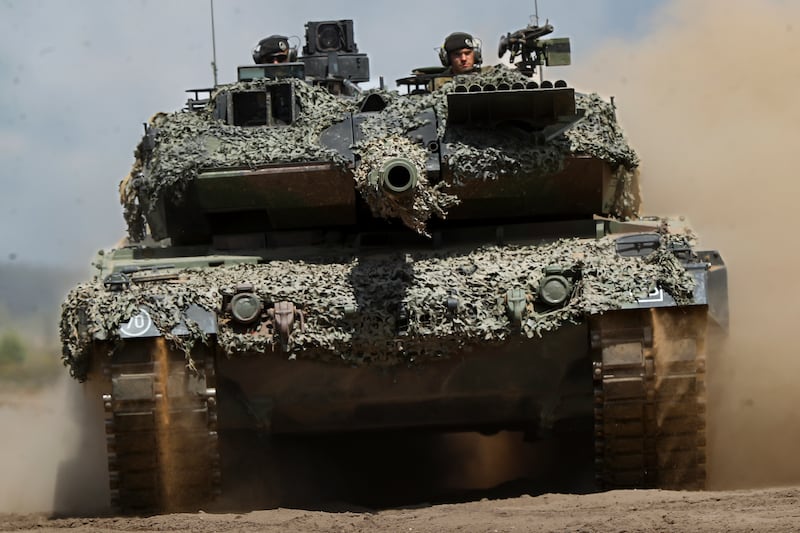 The new KDNS plant in Görlitz will manufacture components for Germany’s bestselling Leopard 2 (above), Puma and Boxer tanks. Photograph: Mindaugas Kulbis/AP
“Will the tanks remain in Germany?” he asked in a Facebook post to his followers. “Are investments in Ukraine a certain future investment?”
On a recent talkshow about the Ukraine war, Chrupalla pushed his pro-Russian line by suggesting Poland could be more of a threat to German security than Vladimir Putin.
“He’s not done anything to me,” said the AfD co-leader, prompting another guest to call him a “Russia troll”.
Germany’s ruling coalition justifies the pivot towards rearmament by pointing to Vladimir Putin’s aggressive stance towards his neighbours.
In mid-December, chancellor Friedrich Merz called Germany’s massive rearmament “the price of peace”.
“We have to be so strong that no one attacks us,” said Merz in the final Bundestag debate of the year. “Or, put another way, we have to be able deter credibly.”
Chrupalla’s response in the Bundestag was to accuse the Merz government of “ramping up the escalation spiral in Europe”.
[ With dry ice and a laser show, Germany’s new war machine gets star-studded launchOpens in new window ]
“We are glad to have left the east-west conflict behind us,” said Chrupalla, suggesting new military spending and conscription plans was “summoning it up once more”.
The Görlitz factory in Saxony is just one part of a wider picture of major German manufacturers pivoting to military production. With Germany’s automobile industry in crisis, for instance, component-maker Schaeffler has signed deals with drone-maker Helsing worth half a billion euro.
But such deals highlight the growing dilemma the AfD could face in 2026, particularly maintaining consistent Putin messaging across the country.
Next September in eastern Saxony-Anhalt’s state election, the AfD will do well with its claims that Germany’s Ukraine aid and rearmament are acts of provocation towards Russia. Less so with the March election in the southwestern state of Baden-Württemberg, a German industrial heartland.
For Trumpf, laser specialists near Stuttgart with 18,000 employees and a €4.3 billion fall in sales, the writing is on the wall.
“We in business have to make a new assessment of our contribution to a well-fortified democracy,” said Peter Leibinger, Trumpf co-owner and board chairman.
“That means accepting the value of defence capacity and the necessary means for this.”
Back in Görlitz, locals say the change in factory production from civil to military production has uncomfortable historical echoes. In the 1930s, during the build-up to the second World War, Nazi Germany ordered the Görlitz plant to manufacture armoured personnel carriers.
Some 90 years on, the new KDNS plant will manufacture components for Germany’s bestselling Leopard 2, Puma and Boxer tanks. From 2027, however, production will be ramped up for tank bodies.
Local union leaders insist it is good news when skilled industrial jobs are saved, particularly in a difficult economic climate and a traditionally weak economic region such as Görlitz.
But Mirko Schulze, regional head of the IG Metall metalworkers union, added: “I can understand that not everyone is happy about the transition to armaments.”