

Hospitals are using artificial intelligence to slash wait times in emergency departments this winter.
The technology pinpoints when Accident and Emergency (A&E) demand will be high, allowing hospitals to better plan for shifts and bed space.
About 50 organisations in the National Health Service have already adopted the technology “to do the things that they’re trained to do, rather than having to be bound down by bureaucratic processes”, officials said.
The forecasting tool relies on historical data such as weather trends to estimate how many patients are likely to visit A&E.
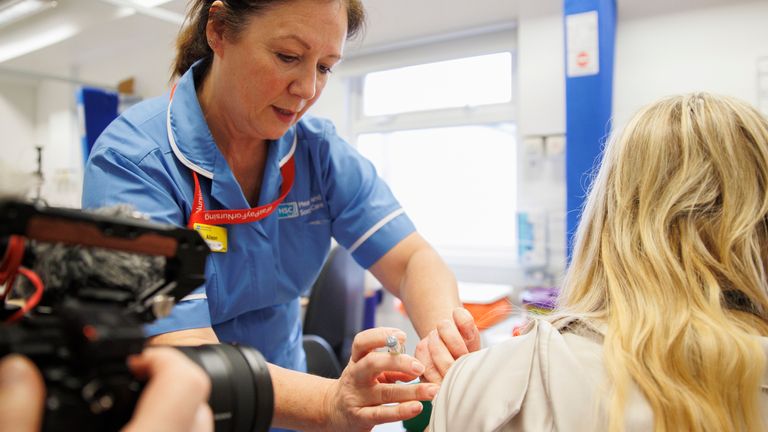
Image:
The tool has been adopted under Labour’s AI Exemplars programme. Pic: PA
Ian Murray, minister for digital government and data, said the hospitals were already seeing “great results”.
“You’ve no idea how many people will come through the door, although you can have some analytical evidence that Saturday nights might be busier than a Tuesday night, for example, and the winter might be busier than the summer, unless you have a heatwave, of course,” he said.
“It helps us to predict how busy their A&E departments are going to be.
“If you put that into context and see seasonal trends, along with how busy days are going to be, you can then put your resources in the right place.”

Image:
The AI tool is already being used in 50 NHS organisations: Boyloso/iStock
Mr Murray said the tool was focused on “concentrating what the NHS needs” to improve efficiency.
“So you can have more consultants of a particular variety on. You can have more nursing staff on,” he said.
“You can maybe then see about freeing up beds further down the pipeline, maybe see how you might need to get more people out of the hospital quicker, and free up those beds.”

Image:
Ambulances outside the Basingstoke and North Hampshire Hospital. File pic: PA

Image:
The prediction tool will help A&E departments allocate staff. Pic: PA.
The rollout of the tool forms part of Prime Minister Sir Keir Starmer’s AI Exemplars programme, which aims to improve efficiencies in the public service using AI technology.
Mr Murray added: “It’s about modernising the NHS, using the tools to allow clinicians and professionals to do the things that they’re trained to do, rather than having to be bound down by bureaucratic processes, allowing resources to be targeted where they need to be targeted.”
Read more from Sky News:
Wrong body cremated at Glasgow hospital
The children spending Christmas in hospital
Spotify
This content is provided by Spotify, which may be using cookies and other technologies.
To show you this content, we need your permission to use cookies.
You can use the buttons below to amend your preferences to enable Spotify cookies or to allow those cookies just once.
You can change your settings at any time via the Privacy Options.
Unfortunately we have been unable to verify if you have consented to Spotify cookies.
To view this content you can use the button below to allow Spotify cookies for this session only.
Enable Cookies
Allow Cookies Once
👉Tap here to follow Patient 11 wherever you get your podcasts👈
Secretary of State for Science, Innovation and Technology Liz Kendall said the uptake of the tool took the health system’s embrace of AI a “step further”, with the technology already being utilised in diagnosis and unlocking new treatments.
“By helping to predict demand, this AI forecasting tool is getting patients the care they need faster while supporting our incredible NHS staff,” she said.
“That means easing pressure by ensuring the NHS is at the forefront of the latest technology during the busiest time of year.”
National medical director for urgent and emergency care at NHS England, professor Julian Redhead, said: “Early and efficient planning is key to managing busy periods like winter, and new tech like the AI tool has the potential to make a real difference to the way we manage care for patients.”