
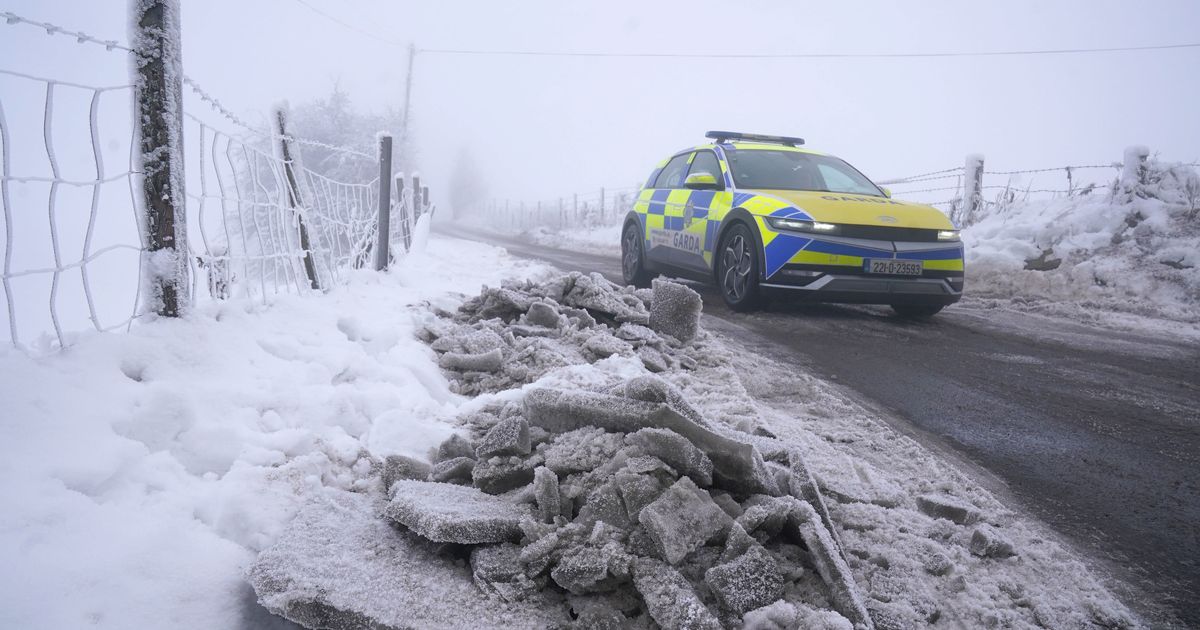
Although experts concede it is remarkably difficult to forecast snow, many are saying it’s likely parts of Ireland will see some of the white stuff over several days in the first week of January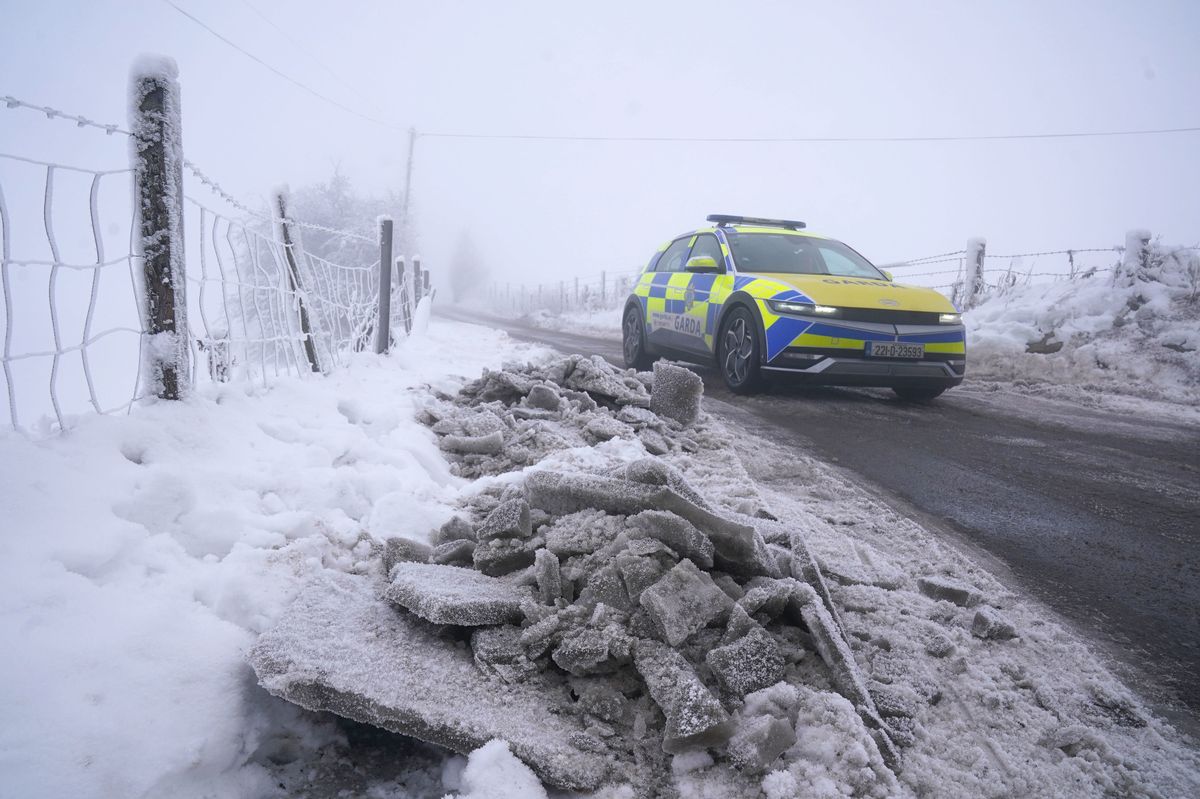 A Garda car passes cleared snow and ice on Slade More Road in Co. Dublin in January 2025. (stock image) (Image: PA)
Fears are growing that an Arctic blast that is on the horizon for Ireland at the beginning of the New Year could strike just as children all over the country are set to return to school following the Christmas holidays.
Experts, including meteorologists over at Met Eireann, are in agreement that the likelihood of a sub-zero blast are increasing by the day and current weather models suggest the blistering cold will strike at the beginning of January – just as kids will be preparing to return to classrooms.
Although experts concede it is remarkably difficult to forecast snow, many are saying it’s likely parts of Ireland will see some of the white stuff over several days in the first week of January. However, one Irish weather expert warned people not to be “promising children or teachers snow”.
“That cold air will likely last for 5 days but could be longer, hard to say yet and main risk of snow at present is Northern areas but as I said last night forecasting snow even 2 days out is tricky to don’t be promising children or teachers snow,” wrote Alan O’Reilly of Carlow Weather on X.
“Cold January on the way? GFS & ECMWF ensembles say YES! Snow threat on the up, esp NYD on…,” posted Mark Vogan of markvoganweather.com on X.
During a recent storm the Department of Education wrote to schools informing them of what they should take into consideration when weighing up whether or not to close a school due to severe weather conditions:
All schools should keep up to date with the current weather warnings which are carried on all national and local news bulletins, and particularly any change in the status warning for their area.The decision to close a school rest with the school management authority, taking into consideration the full guidance and direction available from the principal response agencies.In all events, and if in any doubt, schools should err on the side of caution. Schools are empowered to make closure decisions if, in their judgment, in the interests of the safety of the school community, it is prudent to do so.Primary and post-primary schools in areas affected by a weather warning should remain vigilant and keep themselves apprised of any hourly and other updates from Met Eireann, and from their local authorities, local radio, and the principal response agencies.The Be Winter Ready website includes advice for schools on dealing with issues related to weather conditions, including colour-coded warnings and health and safety and direct links to relevant circulars.The department will continue to monitor the situation as it progresses and will follow any advice from the National Emergency Coordination Group.
Citizen’s Advice has stated that individual schools make the final call on closures during severe weather. A post on their website reads: “School management in each school decides whether the school should close during extreme weather events. This is because they are best placed to assess how local weather conditions will affect their school’s ability to open.
“Schools will tell parents if they decide to close. This will usually be by text or email so keep an eye on your phone and emails for updates. You can also check your school’s website as they may post a notice there. Schools can use discretionary days where they planned to close to make up for any time lost due to unexpected school closures. This can include reducing mid-term breaks, for example.”
The Government’s Office of Emergency Planning also advises: “In the event of an emergency, the school management authority can make the decision to close a school. Any decision to close the school is made in the interest of children’s safety. The school management authority will assess local risks and consult school transport operators.”
Subscribe to our newsletter for the latest news from the Irish Mirror direct to your inbox: Sign up here.