
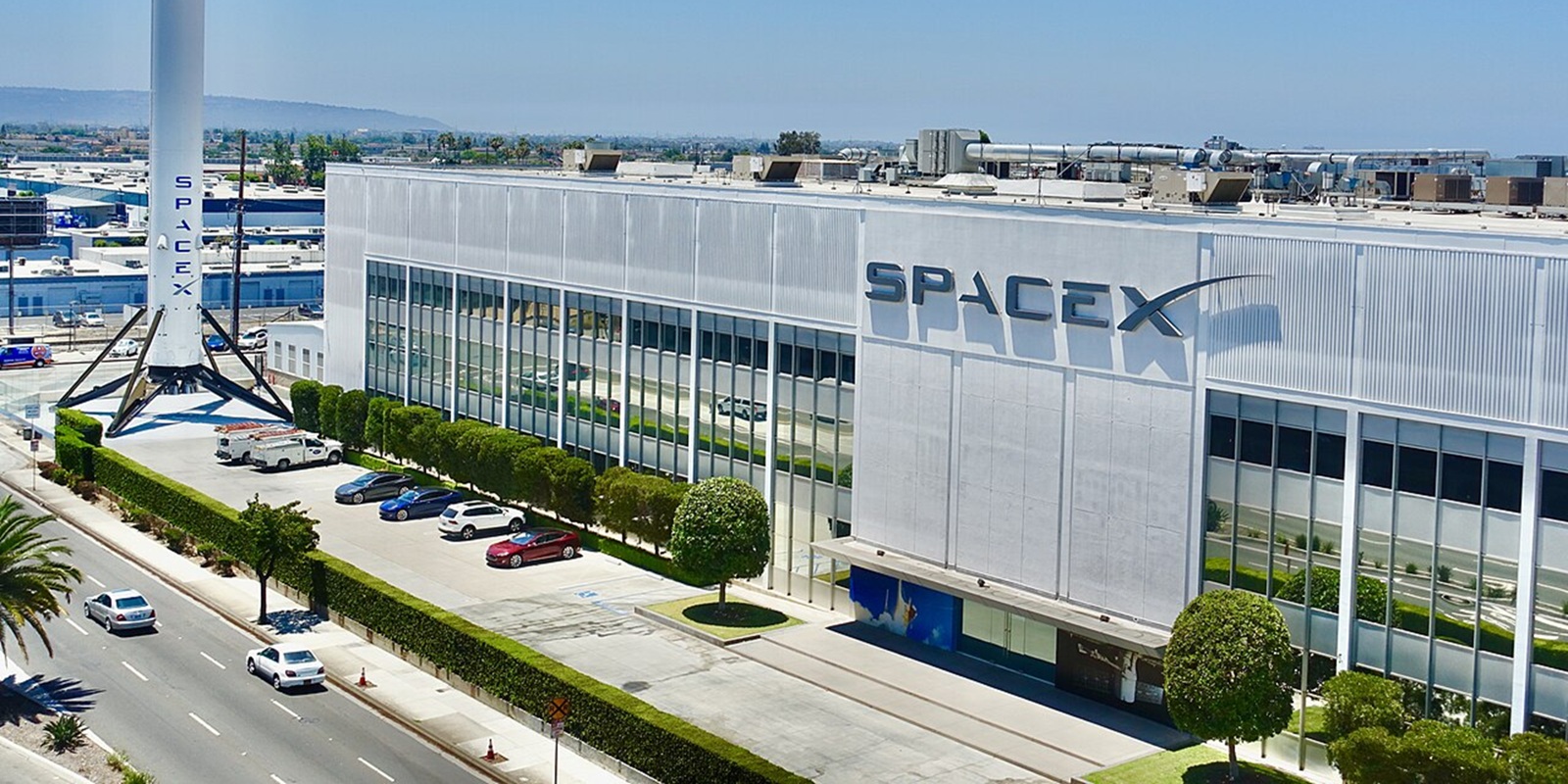
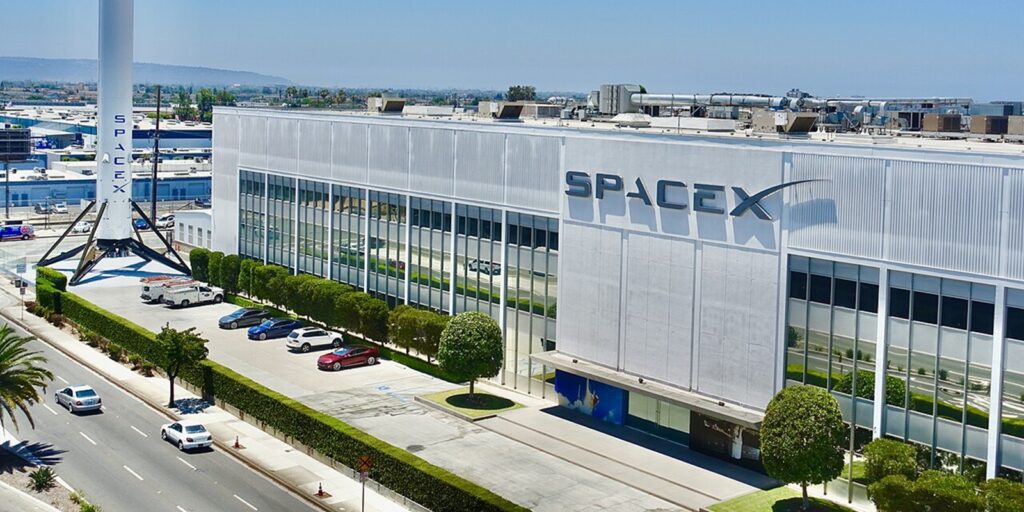
SpaceX headquarters in Hawthorne, California. The company designs its Starship and Falcon vehicles here before flight testing. Credit: Steve Jurvetson, CC BY 2.0
Space fans in October got another wild night out of Texas, when Starship roared off the pad and reminded everyone that rockets can still feel like a live show, even if they end in the ocean.
Starship is a 123-meter reusable vehicle, and it is billed as the biggest and most powerful rocket ever built.
Elon Musk watched outside for the first time, calling it more visceral, while SpaceX staff cheered as the vehicle completed its long loop and came back down far from home.
The mission mattered because it was Starship’s eleventh flight test, and it completed a full trip around Earth while releasing eight simulated satellites that stood in for Starlink hardware.
Nothing was recovered, but that was not the point; the goal was to learn fast and stack data for the next version of the rocket.
Flight 11 went global
Starship lifted off from Starbase, Texas, on Oct. 13, 2025, at 6:23 p.m. CT, and SpaceX called it the final flight of its second-generation Starship and first-generation Super Heavy booster.
The flight sent the ship roughly halfway around the planet, then back down to a planned splashdown in the Indian Ocean, which showed the vehicle could follow a tight plan for more than an hour.
After liftoff, the Super Heavy booster separated and headed for a planned splashdown zone off the coast of Texas, while the ship continued toward space and later aimed for the Indian Ocean.
Two splashdowns, one message
The booster lit all 33 Raptor engines at launch, and the mission included hot staging, meaning the ship’s engines fired as the stages separated, a tricky move meant to save time and performance.
Before it headed downrange, the booster separated cleanly and began its controlled return toward the Gulf of Mexico, matching the plan for the test flight.
Super Heavy did a boostback burn and then a landing burn experiment, hovered above the water, and splashed down, which gave engineers a look at how future boosters might return with tighter control.
On the other side of the world, Starship came in over the Indian Ocean and completed a landing flip, a landing burn, and a soft splashdown, with no recovery planned afterward.
Why NASA cared
NASA selected a Starship-based Human Landing System to land astronauts on the Moon under Artemis III, and the agency also required an uncrewed demonstration mission to the Moon before that crewed landing.
The agency later added work so SpaceX could provide a second crewed landing demonstration mission in 2027 as part of Artemis IV, which raised the stakes for every test that proves the vehicle can be guided, controlled, and trusted.
NASA has warned that returning astronauts to the Moon late in the decade depends on having Starship ready to move crews from lunar orbit down to the surface and back up again.
That lunar job is different from going to Mars, but it still needs the same basics, reliable engines, predictable reentry behavior, and the ability to handle a lot of propellant without surprises.
What SpaceX practiced
During Flight 11, Starship deployed eight Starlink simulators, then relit a Raptor engine in space, a move SpaceX described as a key capability for future deorbit burns.
The ship’s heatshield was intentionally stressed to test limits, and it also performed a dynamic banking maneuver meant to mimic how later missions could return to Starbase.
SpaceX is also preparing for future operations beyond Texas, and the company said it is modifying Cape Canaveral facilities so Starship can fly there alongside Falcon rockets that already support missions to the International Space Station.
Splashdown, then what?
Flight 11 did not end with a caught booster or a shiny ship on land, but it did finish with clean, planned splashdowns and a long list of checks marked complete.
For viewers, the big takeaway was simple: The rocket flew far, stayed under control, and did the kind of boring-in-a-good-way work that makes later missions feel less like gambling.
SpaceX now turns to the next generation of Starship and Super Heavy, aiming for orbital flights, payload missions, and propellant transfer tests, before the bigger goals, Moon landings, and eventually Mars.