
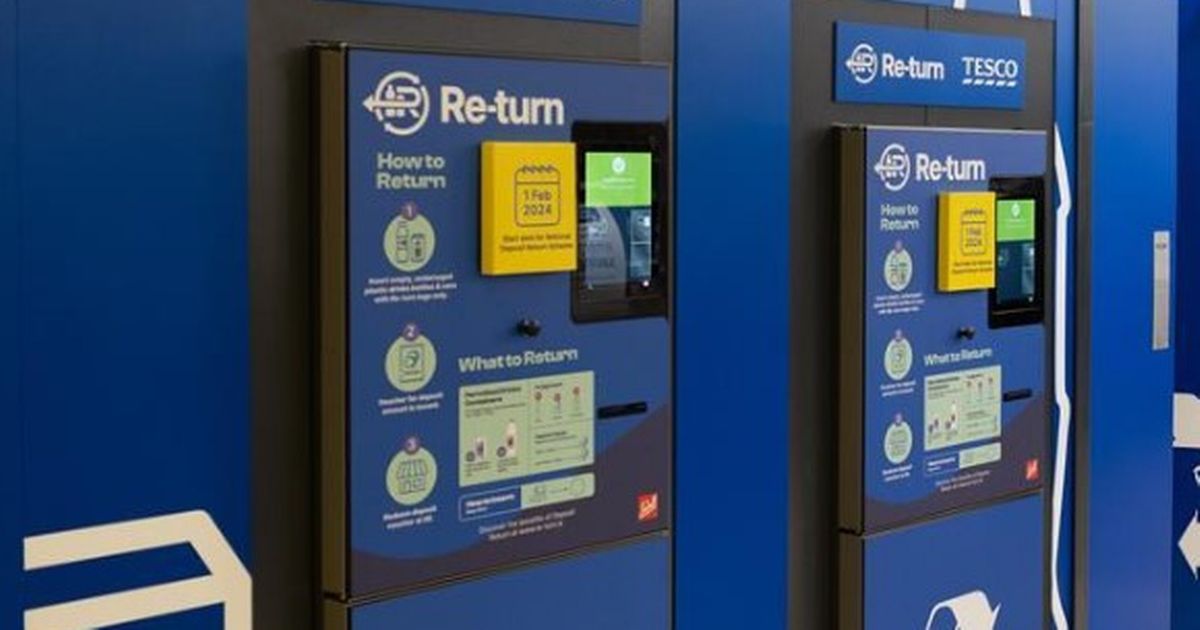
You will still have to bring bottles to machines – but payments could be direct
08:53, 30 Dec 2025Updated 08:54, 30 Dec 2025
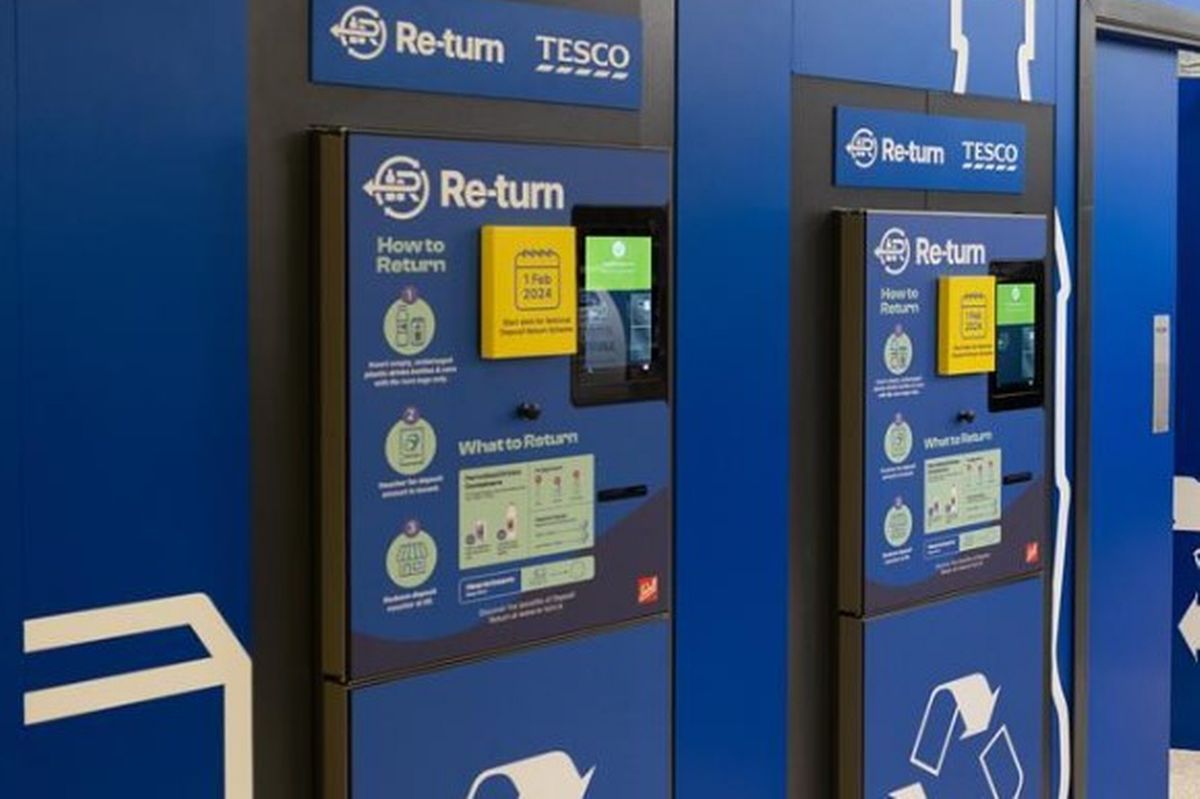 Return Machines – some can collect up to €200,000 worth of cans every week
Customers bringing plastic bottles and cans back to stores via Deposit Return machines could have a major new option in 2026 under plans currently being drawn up.
When you make a return, you should be able to transfer the money directly into your bank account, as a separate option to collecting a voucher to spend in-store on groceries.
The move would allow returners to transfer their returned 15c or 25c deposits via an app, in line with the move to an almost fully cashless society, where digital transfers directly to and from bank accounts account for 90% or more of daily transactions.
And giving people the option of direct cash-back into their accounts might encourage more to claim their deposits – in 2024, Return, the operating company of the DRS, collected €66.7m from customers failing to cash in their deposits. The organisation is planning to build a multimillion-euro recycling facility using some of the funds accumulated from these unreturned deposits.
The scheme greatly expanded across Cork in 2025 with the beginning of the installation of bigger, ‘bulk-return’ machines at locations including Carrigaline.
Almost two years after the scheme was launched, Climate Minister Darragh O’Brien spoke about its criticisms, hopes for the future and accessibility issues in a wide-ranging interview with the Irish Mirror.
The Minister also discussed Ireland’s worrying position in not meeting its greenhouse gas emissions targets by 2030, and why he thinks the country does still care about the climate despite the Greens being decimated in the last general election.
Since the DRS was launched in February 2023, all plastic bottles and aluminium cans are now subject to a refundable deposit of 15c or 25c, which can be collected by bringing empty containers to reverse vending machines located in retail stores throughout the country.
Currently, customers receive a receipt after depositing their cans and bottles which can be exchanged for cash in the shop. However, in an ever-growing cashless society, Minister O’Brien said an account system is underway. He said: “The account could be directly paid into either your bank account or a deposit return account that you could use in various shops.
“If you go to Dunnes you put it back into Dunnes or SuperValu or wherever else.” The scheme has been dogged with controversy, as customers complained that machines weren’t accepting bottles, while disabled people said it’s not accessible for them to be constantly returning plastics and cans to a shop.
Currently, up to 90% of PET plastic that is collected through the scheme is exported, as there isn’t a bottle-to-bottle facility in Ireland that can process the material needed for new drink containers. Minister O’Brien said he doesn’t have a timeframe on when the recycling facility will be operational, but he is “very supportive” of it.
He said: “We’ve hit over 2 billion [returns]. We will be able to fund the building of a recycling facility in the Republic. I have yet to receive the options paper on that, but it’s something that the DRS expect to return to me very early in the new year.
“They’ve been looking at some potentially existing facilities. It makes sense for us to be able to recycle on the island. It basically finishes the circular economy that it can be returned and recycled all within the island.”
The Minister said there is “no evidence” to suggest that it would be beneficial to extend the products recycled in the scheme, such as glass bottles. He added that he is aware that the scheme is not accessible for some disabled people, but he doesn’t envisage a collection service coming into place in the future, adding: “It’s about improving access to receptacles.
“I get that most people are not going to jump on a bus or a train with a bag. Most people, a lot of people, will be driving. So that’s something that the team are aware of, and we’ve got to look at. What I don’t envisage is getting to a collection scenario. I think that’ll be very labour-intensive.
“I know a lot of families where someone has mobility issues, like my own mom, for argument’s sake, she’s in her 80s. She’s not going up to the shop, so one of us does it for her. Where we can improve accessibility, we will, and it is something that we’re aware of.”
The Irish Fiscal Advisory Council and the Climate Change Advisory Council have estimated that Ireland risks fines of €8 billion to €26 billion euro for not hitting its greenhouse gas emissions targets. Minister O’Brien has admitted that Ireland will not reach its goal of a 51% reduction by 2030, with the Environmental Protection Agency predicting only up to a 23% reduction.
However, the Climate Minister said “no formula has been published” by the EU to back the claims of these massive fines. He said: “For the cost of compliance or fines, there isn’t a formula agreed. So the numbers that have been sort of published by both organisations are based on their own interpretation and based on their own formula, but there’s no formula in Europe.
“The figures between €8 billion and€26 billion are basically estimations based not on anything that the European Commission has said.” In terms of future fines, Minister O’Brien said the case he is currently making with the EU is that Ireland has a growing population and is investing billions in transitioning to a greener country, especially in renewable energy.
Despite The Green Party being decimated in the last general election, with now just one TD – Roderic O’Gorman – the Climate Minister said the public does still care about the environment, but the changes that people should make need to be framed more positively.
He said: “I don’t think people stopped caring at all. I think where people may have been put off, and this is not a criticism of green colleagues, but it can’t be a position where it’s us telling someone ‘you need to change it and you need to change it now because you’re damaging the environment’.
“Yes, we need to do it for the climate, but look at the advantages that are in this too, so that it’s not seen by some as an imposition. This government’s ambition in relation to climate and energy and relation to environment has not been diminished at all by the absence of The Green Party.”