

Scale-up connectivity is crucial for the performance of rack-scale AI systems, but achieving high bandwidth and low latency for such interconnections using copper wires is becoming increasingly complicated with each generation. Using optical interconnections for scale-up connectivity is a possibility, but it may be an overkill, so start-ups Point2 and AttoTude propose to use radio-based interconnections operating at millimeter-wave and terahertz frequencies over waveguides that connect to systems using standard pluggable connectors, reports IEEE Spectrum.
Point2’s implementation uses what it calls an ‘active radio cable’ built from eight ‘e-Tube’ waveguides. Each waveguide carries data using two frequencies — 90 GHz and 225 GHz — and plug-in modules at both ends convert digital signals directly into modulated millimeter-wave radio and back again. A full cable delivers 1.6 Tb/s, occupies 8.1mm, or about a half the volume of a comparable active copper cable, and can reach up to seven meters, more than enough for scale-up connectivity. Point2 says the design consumes roughly one-third the power of optical links, costs about one-third as much, and adds as little as one-thousandth the latency.
Image 1 of 7
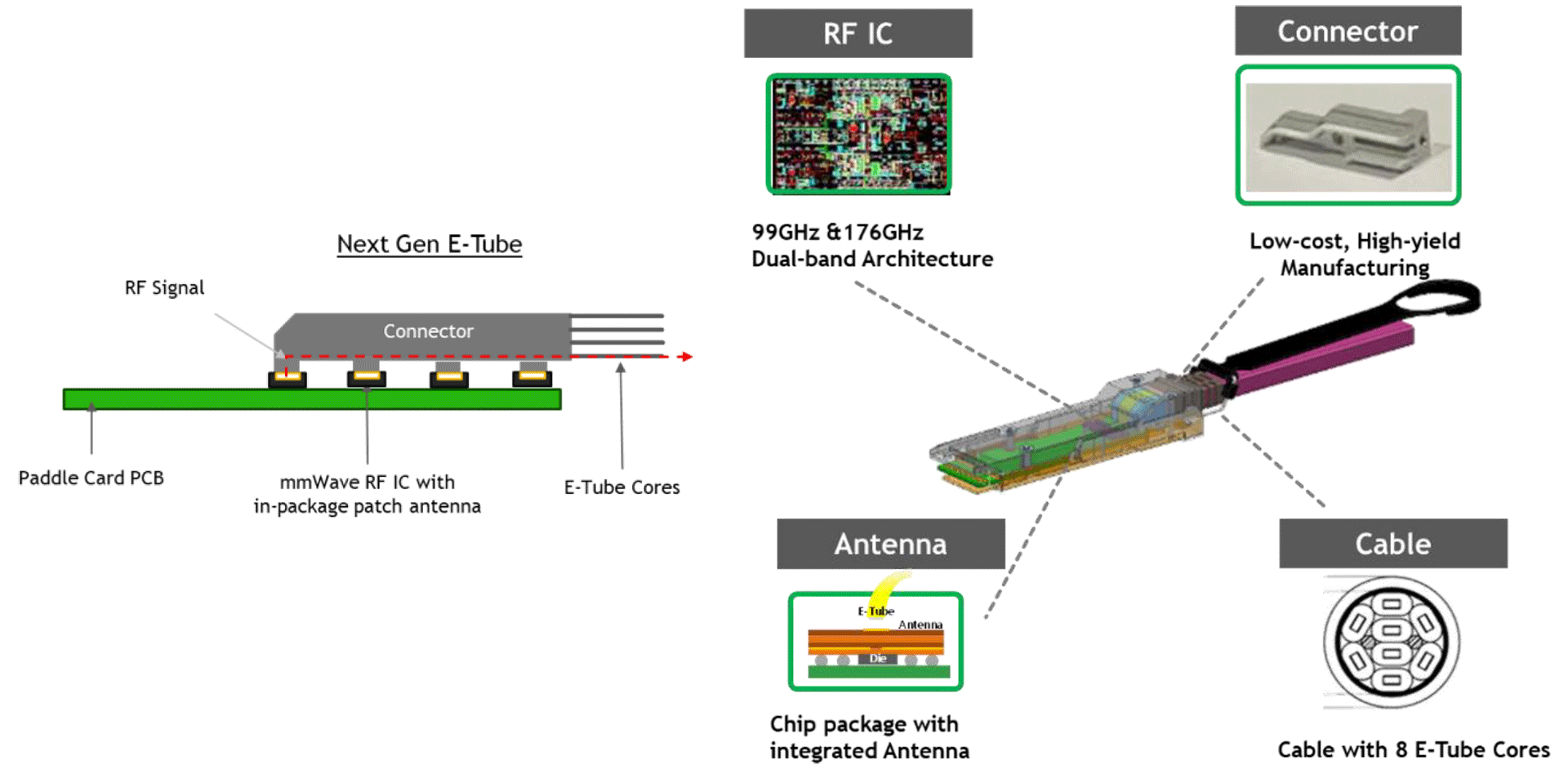 (Image credit: Point2)
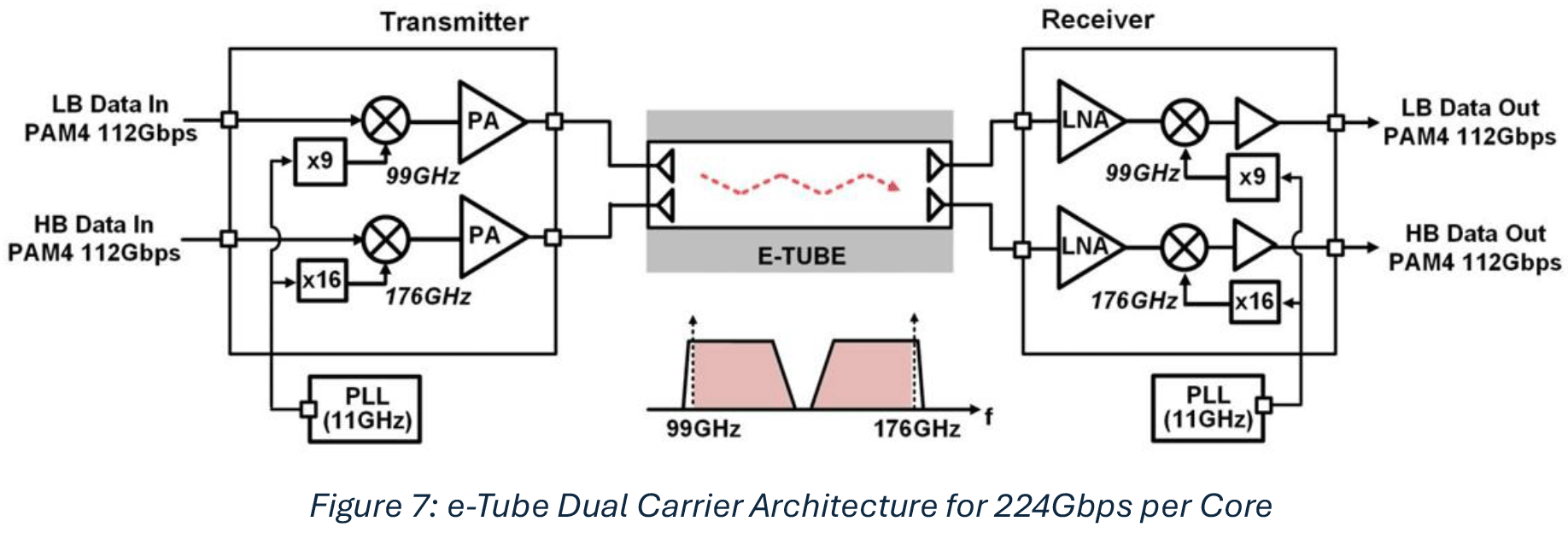 (Image credit: Point2)
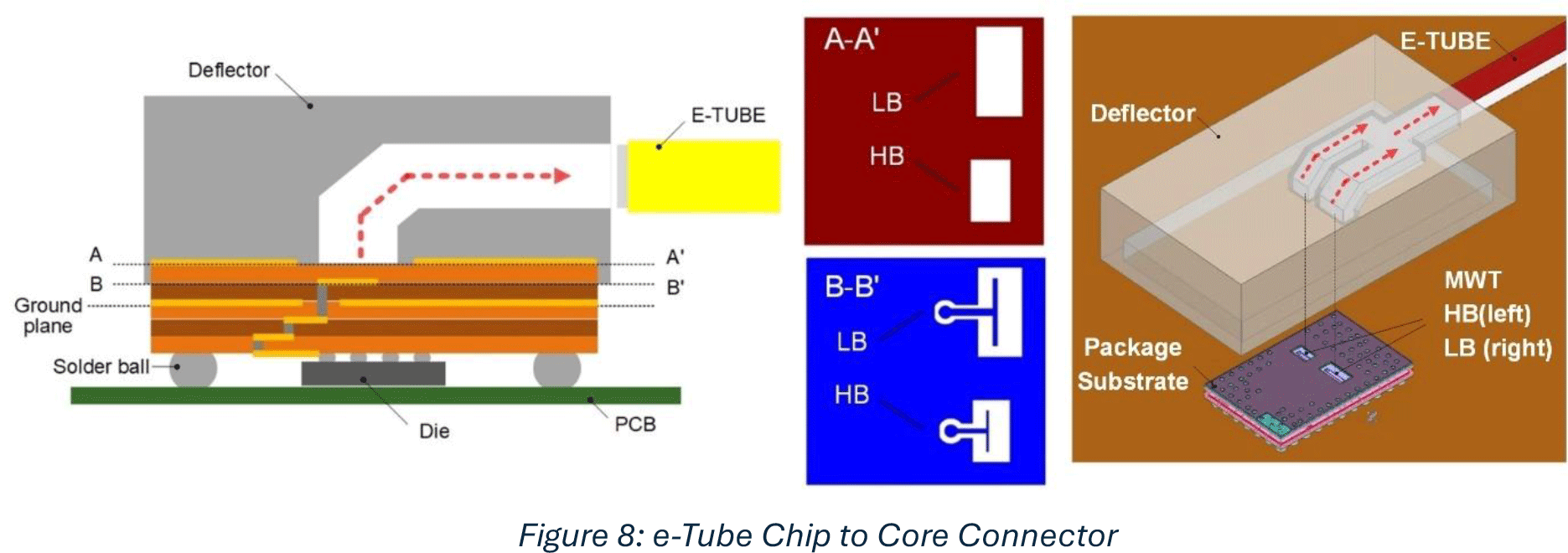 (Image credit: Point2)
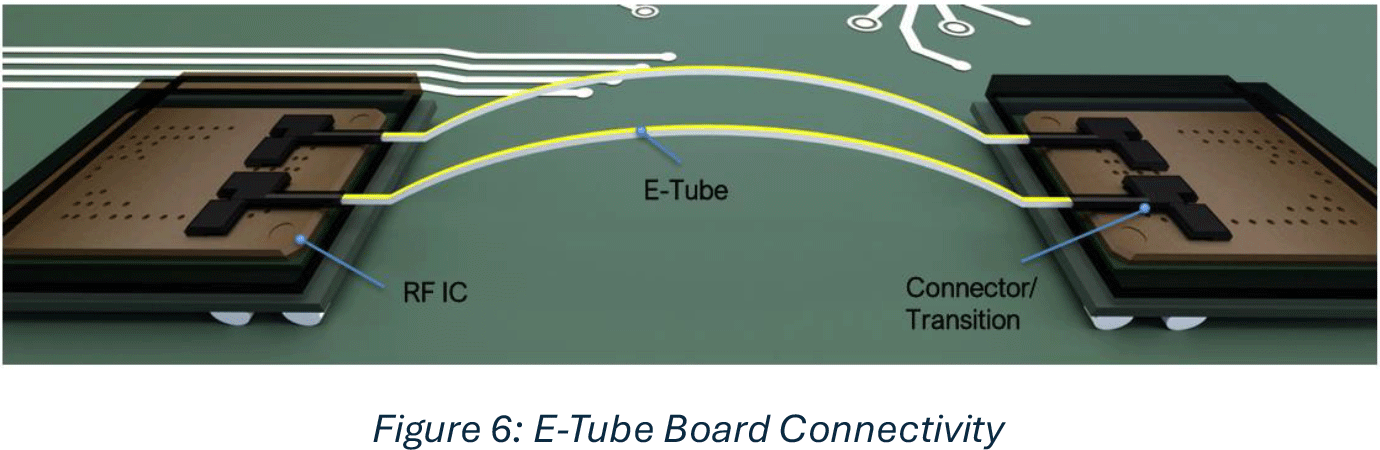 (Image credit: Point2)
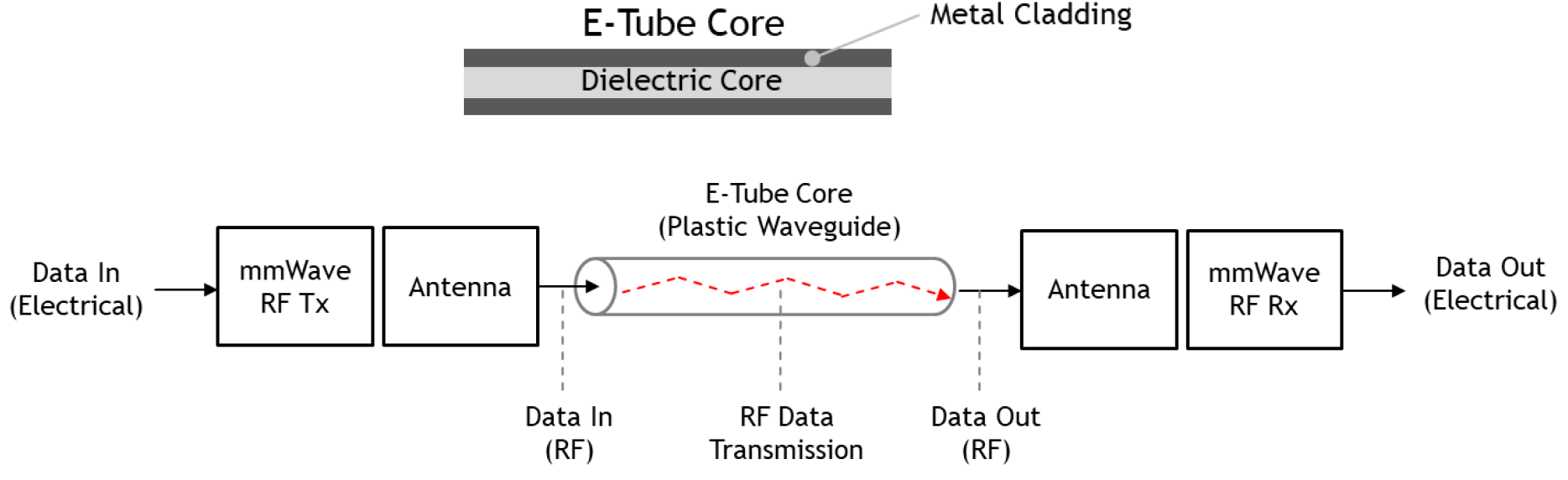 (Image credit: Point2)
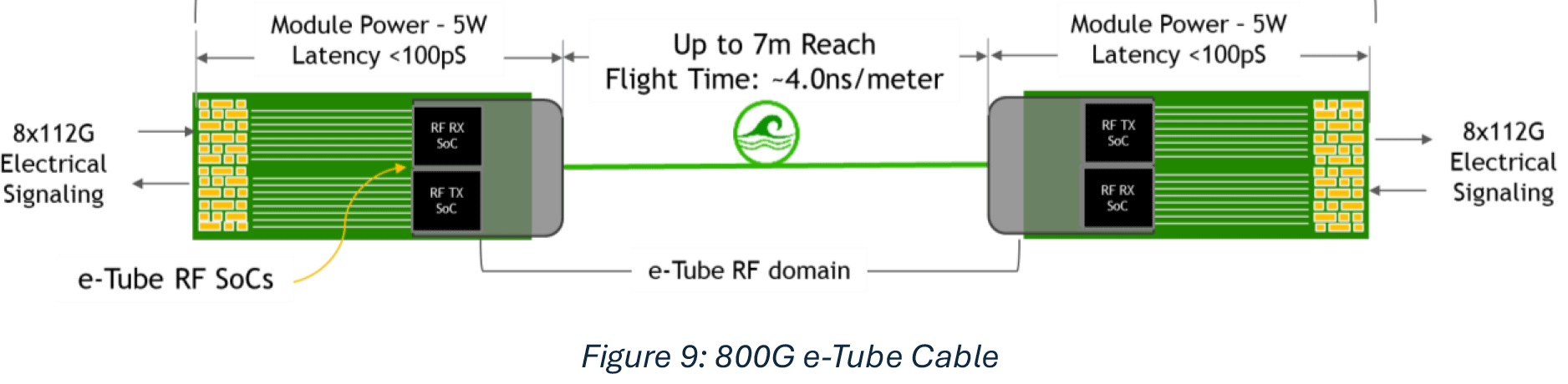 (Image credit: Point2)
 (Image credit: Point2)
A notable aspect of Point2’s approach is the relative maturity of its technology. The radio transceivers can be fabricated at standard semiconductor production facilities using well-known fabrication processes — the company has already demonstrated this approach using a 28nm chip with the Korea Advanced Institute of Science and Technology (KAIST). Also, its partners Molex and Foxconn Interconnect Technology have shown that the specialized cables can be produced on existing lines without major retooling.
You may like
AttoTude is pursuing a similar concept, but at even higher frequencies. Its system combines a digital interface, a terahertz signal generator, and a mixer that encodes data onto carriers between 300 and 3,000 GHz that feeds the signal into a narrow dielectric waveguide. Early versions used hollow copper tubes, while later generations rely on fibers measuring approximately 200 micrometers across with losses as low as 0.3 dB per meter (considerably lower than copper). The company has demonstrated 224 Gb/s transmission over four meters at 970 GHz and projects viable reaches of around 20 meters.
Both companies use waveguides instead of cables because, at millimeter-wave and terahertz frequencies cables fail. While at very high data rates copper cables can pass signals, they do so by becoming thicker, shorter, and more power-hungry. Furthermore, their losses and jitter rise so fast that the link budget collapses and breaks, so cables cannot be used for such applications. Meanwhile, waveguides are not an exotic choice, they are among a few viable option for interconnects with terabit/s-class bandwidth.

Follow Tom’s Hardware on Google News, or add us as a preferred source, to get our latest news, analysis, & reviews in your feeds.