
The payments were made by the National Museum of Ireland (NMI) as a reward for good citizenship and for handing over the artefacts to the State.
Finder rewards worth a combined €19,312 were paid out last year, up from €14,755 in 2024.
Members of the public received €45,850 in 2023 for finding ancient coins, swords, “bog butter” and crucifixes.
The NMI would only provide provincial locations for discoveries, saying it did not want to encourage treasure hunting.
Detailed information on where items were found risked creating the perception of a “financial opportunity or encouraging potentially damaging searching practices”, it said in a statement.
Other items handed over in the past five years included a brooch, shoes, burial material and arrow heads
Last year, rewards totalling €6,400 were paid out in Connacht for discoveries including coins, a blade and “vessel fragments”.
In Leinster, €7,930 was given to members of the public after they handed over items that included an axe-head, a scraper and pipe fragments.
There was a payment of €400 in Munster for an axe-head, a scoop and a ring.
Payments totalling €4,200, along with books and tote bags from the National Museum, were sent to finders in Ulster as reward for finding an axe-head and a sword.
Other items handed over to the NMI over the past five years included a brooch, shoes, burial material and arrow heads.
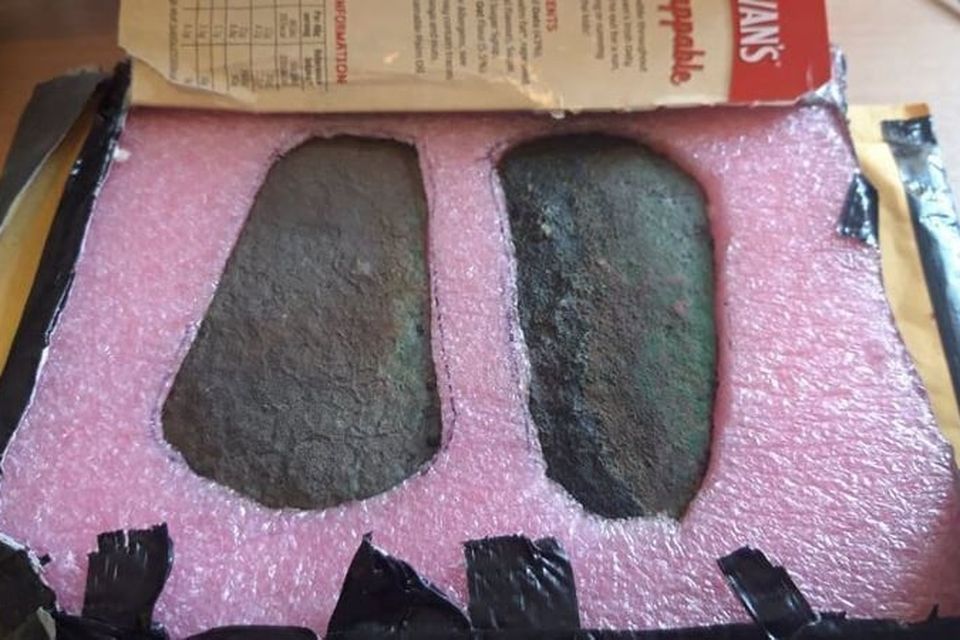
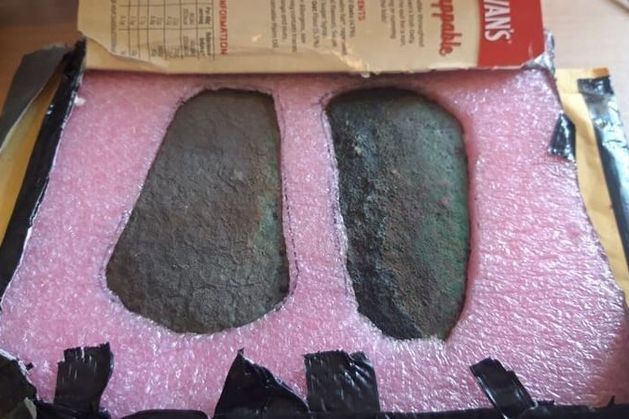
Bronze Age axe-heads sent anonymously to the National Museum of Ireland in 2024, packaged in a used Flahavan’s box. They were found in Westmeath with a metal detector
Today’s News in 90 seconds – 31st December
In 2024, two Bronze Age axe-heads were anonymously mailed to the museum.
They were packed inside a used Flahavan’s Flapjack box and accompanied by a letter saying they were discovered in the Westmeath area with the use of a metal detector.
The NMI launched an appeal to try to find the sender, having dated the axeheads to between 2150BC and 2000BC.
Overall, the data released showed that finds seemed most likely to be made in Leinster and Connacht.
The museum said rewards were paid based on the intrinsic value of the items, and their general historical and archaeological importance.
Also considered were the circumstances in which they were found and the amount of money paid previously for comparable items.
It is against the law to search for archaeological objects using a metal detector, except with written permission
A spokeswoman for the NMI said: “Finders’ rewards may be made to persons involved in the legitimate discovery or acquisition of archaeological objects.
“The provision of a finders’ reward is an ex-gratia payment and is entirely at the discretion of the State.”
She said each item was judged based on its importance to the National Collection as well as “the conduct of the persons involved with the discovery and acquisition”.
It is against the law to search for archaeological objects using a metal detector, except with written permission from the Government.
The penalty is a fine of up to €63,486 and up to three months imprisonment.
It is also illegal to be in possession of a detection device at monuments or sites protected under the National Monuments Acts.