
With the ending of its fifth and final season, Stranger Things has at last gone to the great Upside Down in the sky. It’s been an emotional journey – and an increasingly controversial one, with the shoutier corners of the internet decrying what they claim is a steep drop in quality as Netflix’s valentine to 1980s nerd culture hurtles towards its denouement.
But the new backlash against Stranger Things is part of the old story and the eternal conundrum of wrapping up a beloved show. Even the best television has an unfortunate habit of falling apart at the end. The conclusion to Game of Thrones was so awful it spoiled the previous nine seasons of gritty dark fantasy – leaving Jon Snow and the rest to melt in the harsh glare of an online hatefest.
Ditto Lost (which could have been renamed “What?”) and Seinfeld. The curse of the underwhelming finale struck down even the previously unimpeachable Derry Girls which, in its very final episode, crossed the divide between nostalgic and saccharine.
Derry Girls may have erred a little too much towards sappiness at the end. However, another Irish comedy got its big farewell exactly right. That was Father Ted, which threatened to exile Ted to California, only to pull back just before the credits. It was funny and earnest. Heartstrings were tugged without the show ever betraying its essentially silly nature.
Where does Stranger Things fit along this sliding scale from Game of Thrones to Father Ted? Without question, it’s closer to the Crilly end of the spectrum. True, series five has been bedevilled by bloat. It has floundered beneath an ever-bigger cast, overwhelming special effects, and a plot that makes little sense if you stop to think about it for longer than a nanosecond.
But for all these negatives, the finale was nonetheless deeply moving. That, at least, was true of the second half of the two-hour send-off. In part one, Millie Bobby Brown’s Eleven and friends had travelled through the Upside Down to villainous Vecna’s lair in the Abyss. Here, it was revealed that Vecna was in thrall to the Mindflayer monster of earlier seasons. The big boss fight that ensued had more in common with a blockbusting video game than with the intimate, “monster of the week” vibes of early Stranger Things.
But in its final 60 minutes, Stranger Things reverted to the show we had always loved. Vecna was defeated – beheaded, no less, by Winona Ryder’s long-suffering Joyce Byers. Eleven had, for her part, seemingly been lost in the sealing off of the Upside Down, though it was hinted strongly that she had survived and was hiding out in Iceland. Not everyone loved Eleven’s trajectory. There is some justification to complaints that Stranger Things sold the character short, packing her off with her traumas unresolved.
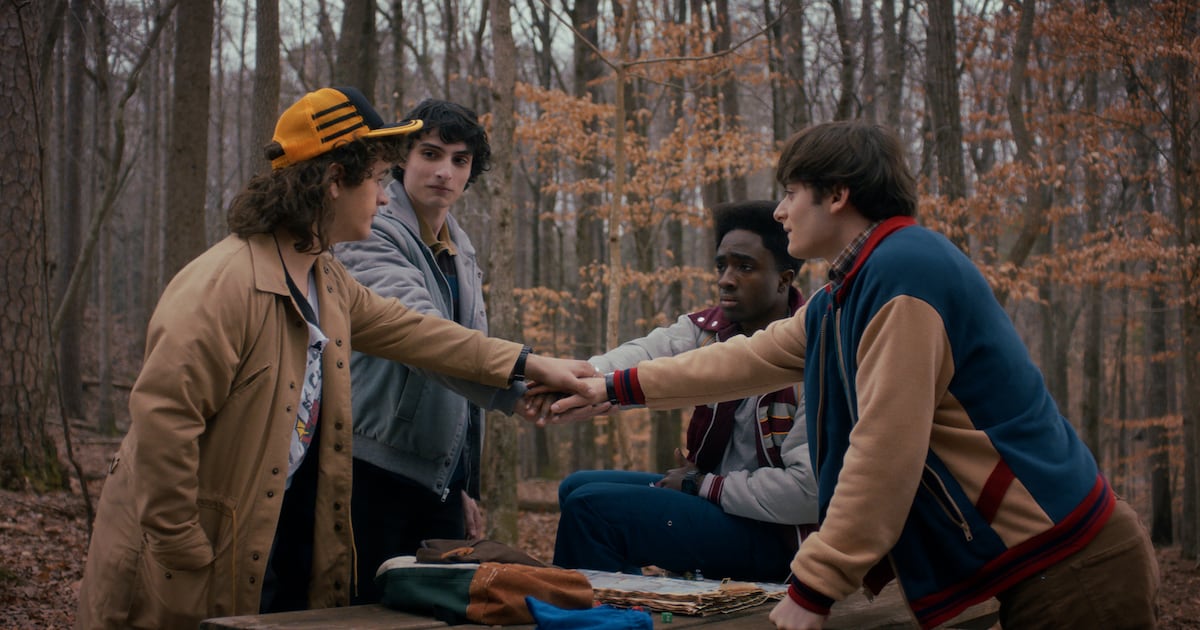
With her fate undetermined, Mike, Lucas, Dustin, and Will played Dungeons & Dragons one last time before leaving school for the big, bad, imperfect world. As someone who grew up playing D&D, the scene ripped my heart out a little. As did a sequence in which Steve, Robin, Nancy and Jonathan agreed to meet once a month, despite now living hundreds of miles apart.
All adults watching knew that, genuine though their intentions were, life would soon get in the way – leaving their small-town friendship hanging in the wind. The real destructive force at the end of Stranger Things was the pain of growing up. It was that thread of truth that gave this hugely poignant finale a bittersweet ache that lingered long after the show played itself out with David Bowie’s Heroes.