
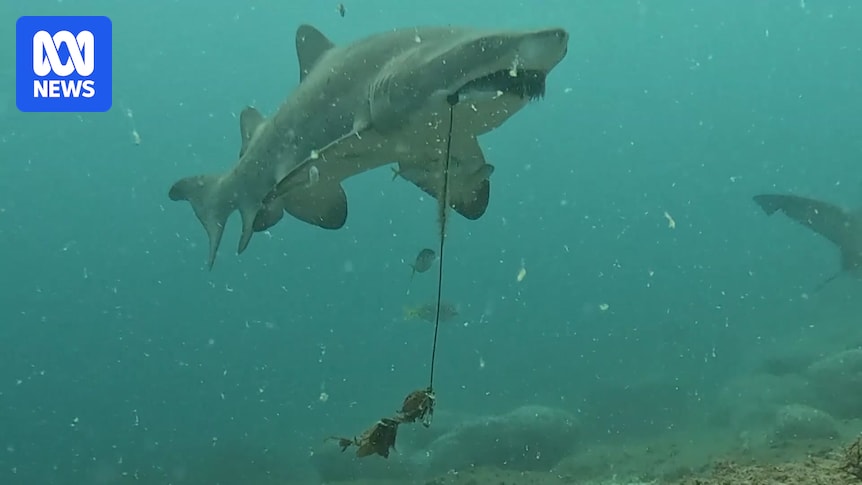
Divers like Dylan and Lara Boag from Jervis Bay on the New South Wales south coast are helping to rescue critically endangered grey nurse sharks found entangled in fishing gear.
They report sharks they see during dives with hooks, sinkers and fishing lines in their mouths to vets at Queensland’s Sea World Foundation, which runs a removal program.
The Boags, who own and run a Jervis Bay free dive company, called on the foundation last month to help save two entangled sharks.
Mr Boag said it was a “fascinating” experience, and one that gave him hope for a species he loved, which was under serious threat.
He said entanglements led to serious problems for the sharks.
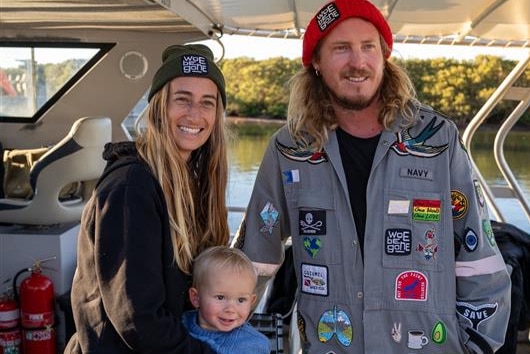
Lara and Dylan Boag from Woebegone Dive with their son Leon. (ABC supplied: Lara Boag)
“Usually, you see [the entangled grey nurse] for a year … they get skinner and skinner and then they just disappear — I am assuming they die,” he said.
“It was amazing to actually be able to help them … it gives me hope they have a chance of survival.”
Why do sharks need rescuing?
East coast grey nurse sharks are listed as critically endangered under federal government environmental laws due to slow reproduction, past overfishing and habitat destruction caused by human pollution and coastal development.
Grey nurse sharks were historically targeted for their fins, liver oil and jaws, and can become bycatch in commercial fishing.
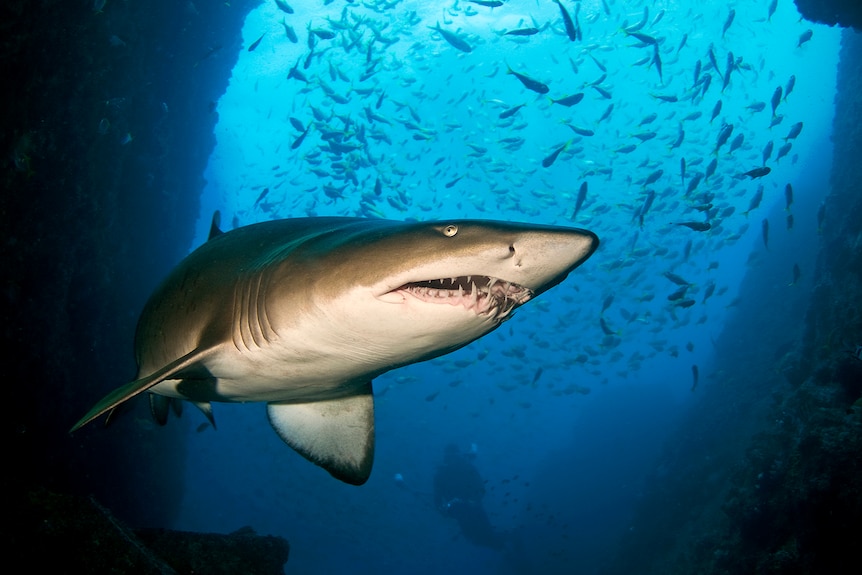
Despite their toothy grins, experts say grey nurse sharks rarely bother humans. (Supplied)
Females produce only one to two pups every couple of years, making population recovery slow.
Mr Boag said while they looked scary, they were docile creatures and posed little threat to humans.
“We’re not on the menu,” he said.
Their daytime behaviours and their popularity with divers have seen them described as the “Labradors of the sea”,
Mr Boag said shark rescue was a highly specialised skill.
“Watching how they actually lassoed the shark … they brought it up to the surface because it needs to be done carefully … so as not to damage their organs.”
Mr Boag said dozens of grey nurse sharks gathered in Jervis Bay’s warmer waters during summer.
“We have quite a healthy population, we can get up to 50 or 60 grey nurse sharks in a shiver,” he said.
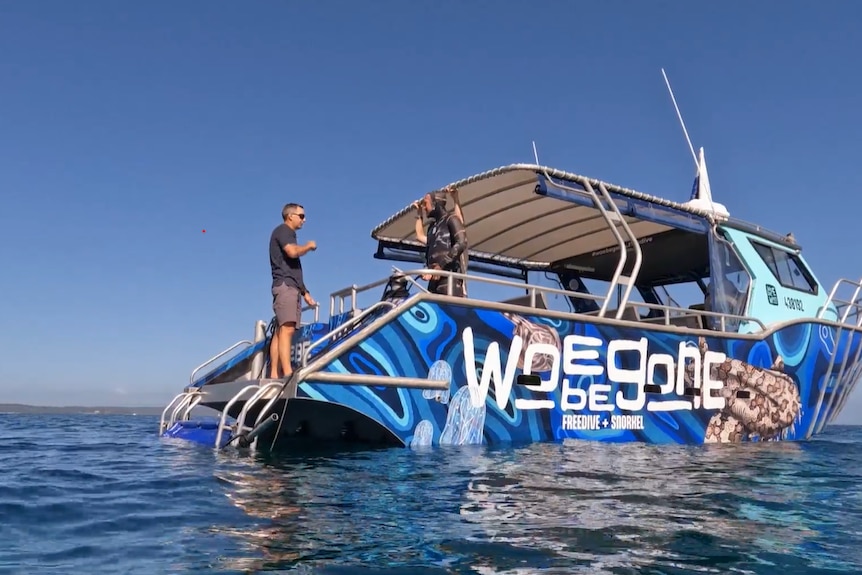
The Sea World Foundatiion spent two days in Jervis Bay with local divers from Woebegone to locate and save two entangled grey nurse sharks. (ABC supplied: Sea World Foundation)
“But there’s only a population of about 1,500 left on the east coast.”Rescue method ‘finessed’
Sea World Foundation aquarist Nikita Retsas is part of a team that rescued more than seven grey nurse sharks up and down the NSW coast in 2025.
She said the foundation had been successful at dive hotspots, including on the mid north coast, after “finessing” the catch and release method.
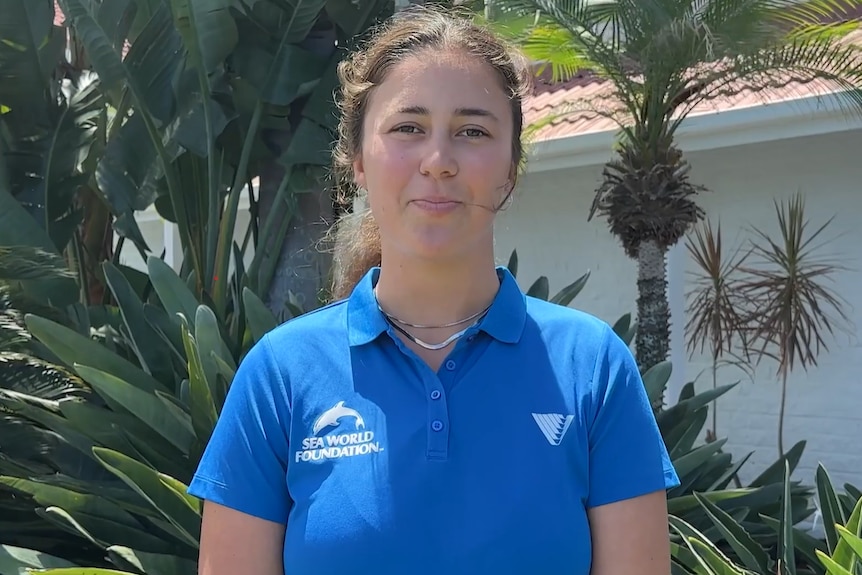
Aquarist Nikita Retsas says a record seven grey nurse sharks have been rescued. (ABC supplied: Sea World Foundation)
“We go down with a noose and put this metal hoop over [the shark’s] head and we’ll pull the rope around their neck and then that gets a nice cinch around their [pectoral] fin,” Ms Retsas said.
She said once the shark was secure, it was slowly winched up to the boat, onto a stretcher and turned on its back, which placed it in a “tonic” or a sleep state.
“And that’s when we’re able to work on getting the hooks out,” she said.
The vets then administer antibiotics and vitamins before releasing the sharks back into the ocean.
Ms Retsas said if the fishing gear was not removed, it could create a “fatal situation” for the shark.
She said people should be mindful of their impact on the environment.
“Especially, if you are a fisherman — try to be mindful of your gear, don’t leave it near the water if possible,” she said.
“And if you do see any sharks or any injured animal for that matter, give us a call.”