
As 2024 came to an end, bird flu dominated headlines. The virus, technically known as avian influenza, was being detected in raw milk, dairy farms and even children, my colleagues Susanne Rust and Melissa Gomez reported.
After federal officials confirmed the severe case of a Louisiana patient, Gov. Gavin Newsom declared a state of emergency in California and pushed to fortify the state’s response to bird flu.
You’re reading the Essential California newsletter
L.A. Times reporters guide you through the most important news, features and recommendations of the morning.
By continuing, you agree to our Terms of Service and our Privacy Policy.
In January 2025, the flu took that Louisiana patient’s life. The individual was older than 65, had preexisting health conditions and had had contact with sick and dead birds. But still, headlines wondered if it meant a new epidemic was coming.
And then the headlines slowed, and big stories like wildfires and Donald Trump’s new presidency pushed bird flu out of the public conscience. So what ended up happening with it?
The bird flu recently made a startling reappearance
The World Health Organization in November was alerted to the 71st human case of bird flu in the United States, but the first since February 2025.
The Washington state resident died later that month. Health officials in Washington did not release the patient’s name but shared that they were considered “older,” had underlying health conditions and had had contact with live infected poultry in their backyard, my colleague Susanne reported at the time.
The human cases earlier in 2025 tended to be the H5N1 strain of the virus. But November’s case was the first recorded incident of a person contracting the H5N5 strain. As the virus spreads and mutates, experts worry human-to-human transmission could become a problem.
The head of France’s Institut Pasteur respiratory infections center recently said that if the bird flu were to gain human-to-human transmission capabilities, it could cause a pandemic “potentially even more severe than the [COVID-19] pandemic we experienced.”
But until that comes to pass, bird flu is mostly a concern for those who have prolonged, unprotected exposure to infected animals, such as farm and dairy workers.
The virus’ spread through flocks is increasing
Farm animals are contracting bird flu most often from wild birds, according to University of Saskatchewan virologist Angela Rasmussen, as they can migrate and move into poultry and dairy farms with ease. Consequently, the virus has spilled over to other poultry and mammals and, in turn, spread to some humans. A recent ProPublica story also suggested that the virus may be airborne and travel in the wind.
Bird flu has been around for more than a century, but the latest widely circulating strain was first discovered in North America in 2021.
The CDC states it is utilizing its “flu surveillance systems to monitor for H5 bird flu activity in people” and says the “current public health risk is low.”
But Rasmussen is concerned that upheaval at the CDC could hamper its ability to track infections and mutations. The Trump administration has reduced its surveillance of the disease due to funding and staffing cuts.
In March, the CDC announced the cancellation of roughly $12 billion in COVID-related funding, which California uses to support the infectious-disease response during the pandemic.
“I’d say that reduced surveillance and monitoring capacity is a huge concern,” Rasmussen said.
In April, California sued the administration over the funding cuts, which affected county health departments that were handling disease outbreaks. The office of California Atty. Gen. Rob Bonta said the cuts would cause the L.A. County Department of Public Health to lose $45 million that it planned to use in part to prevent the spread of bird flu, along with measles.
If the virus takes off again, California could be hit hard
Concerns about a lack of surveillance surfaced in California at the start of last year. Times reporters Melissa and Susanne wrote about the lack of wastewater sampling in the Central Valley — where many of the reported human cases originated.
The prominence of dairy and poultry farms puts residents and workers in the area at high risk for contracting the disease. California is responsible for 38 of the 71 confirmed human cases. Dairy herds (cattle) are the main source of exposure, and dairy and poultry workers accounted for almost all of the confirmed cases.
In February, state Sen. Melissa Hurtado (D-Sanger) introduced the Wastewater Surveillance Act, which proposed a requirement of at least one wastewater monitoring site in every California county. Newsom vetoed the bill on Oct. 6, saying it would “result in ongoing General Fund cost pressures” not accounted for in the 2025 Budget Act.
He later tapped the CDC’s former director and former chief medical officer to lead a state health initiative that will work to enable faster disease surveillance.
The point is this: In this very newsletter, we predicted (and feared) that bird flu might be one of the defining stories of 2025. It wasn’t. But for 2026, it’s not totally out of the question.
“I feel pretty confident that there’s a ton of bird flu around in birds and wild animals,” but we haven’t heard much about it, Rasmussen told me. “How much of it is because it’s not happening, versus how much of it is because it’s not being reported, versus how much of it is because the government is not reporting it to us?”
Today’s top stories 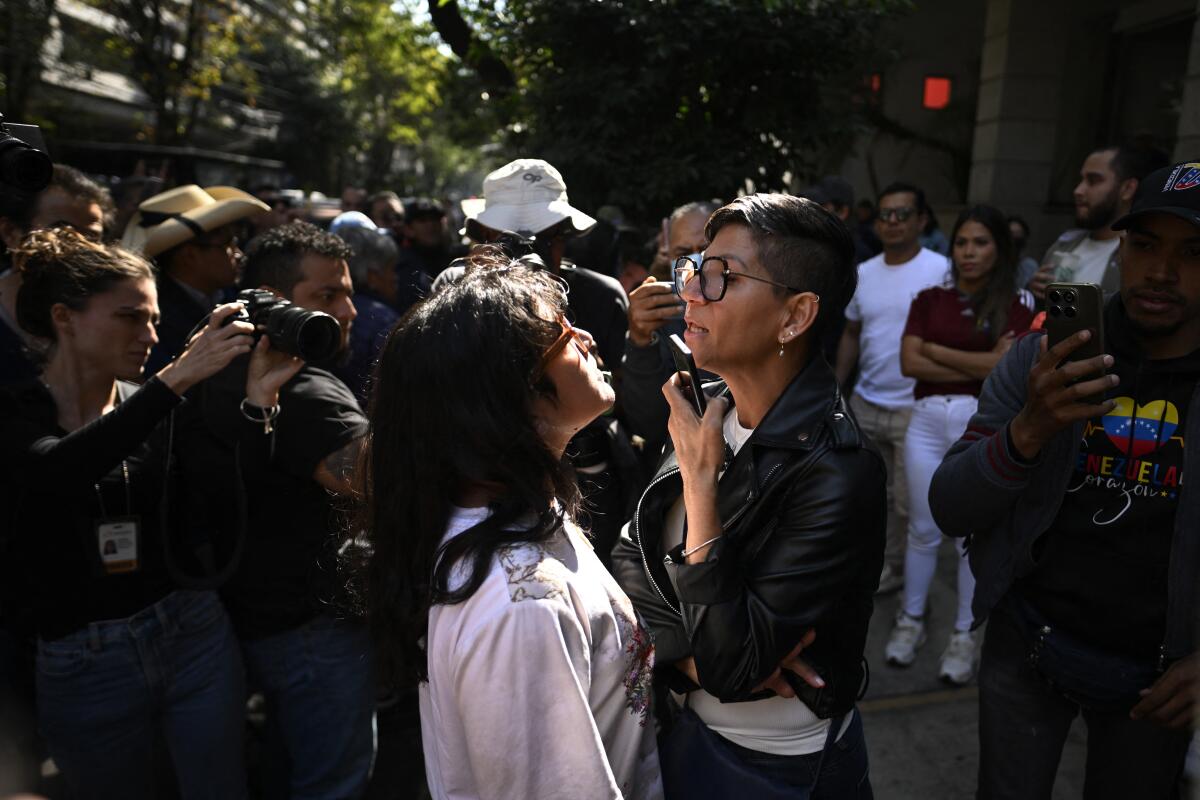
A Mexican supporter of Venezuelan President Nicolás Maduro argues with a Venezuelan living in Mexico in front of the U.S. Embassy in Mexico City on Saturday.
(Alfredo Estrella / AFP via Getty Images)
The U.S. attack on VenezuelaSoCal stormsImmigration raidsMore big storiesCommentary and opinionsAre you unhappy with the choices for California governor? Columnist Mark Z. Barabak has a suggestion for you: Get real. Columnist Gustavo Arellano dubs Marco Rubio the biggest sellout.This morning’s must readOther great readsFor your downtime 
Hikers Evelyn Torres and Emanuel Leon soak at Montecito Hot Springs.
(Christopher Reynolds / Los Angeles Times)
Going outStaying inAnd finally … the photo of the day 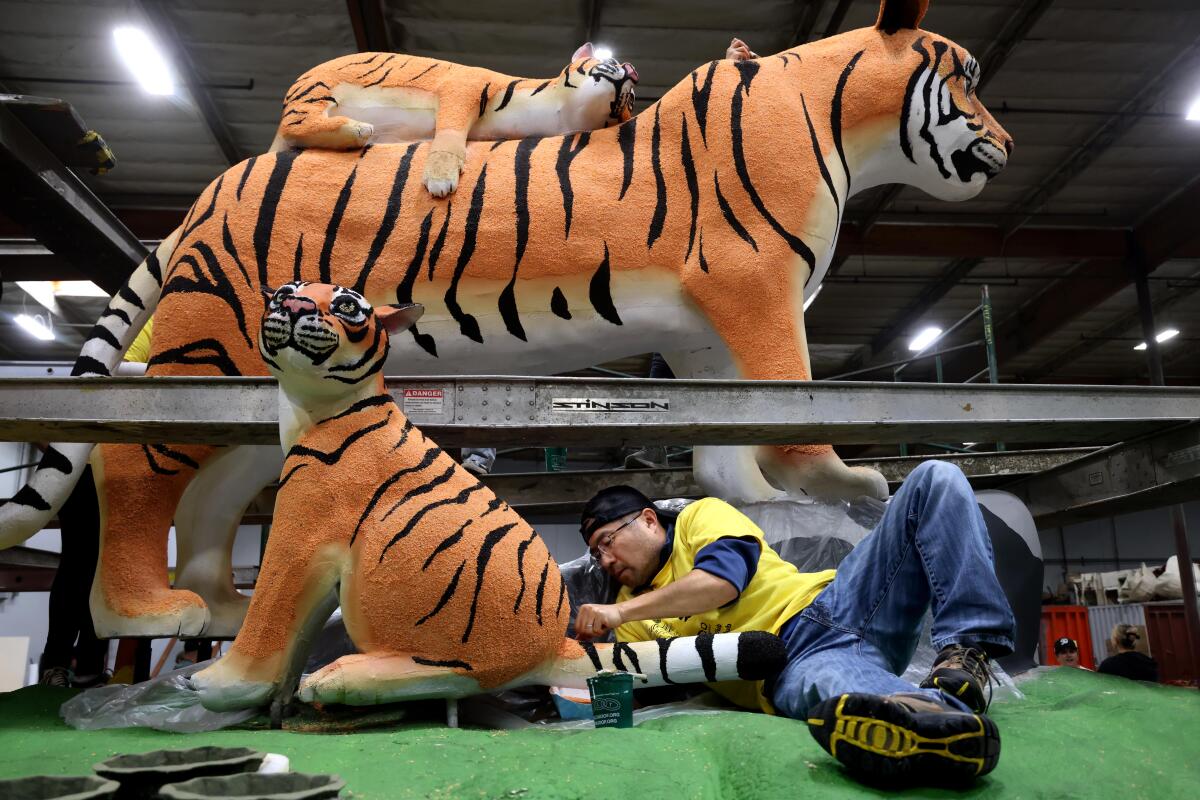
(Genaro Molina / Los Angeles Times)
Volunteer Jeff Okayasu, 48, works on the Rotary International float, “Unite for Good,” as crews prepared for the Tournament of Roses on New Year’s Day. See Christina House and Genaro Molina’s full photo essay on the float preparations prior to Thursday’s Rose Parade.
Have a great day, from the Essential California team
Jim Rainey, staff reporter
Hugo Martín, assistant editor, Fast Break desk
Kevinisha Walker, multiplatform editor
Andrew J. Campa, weekend writer
Karim Doumar, head of newsletters
How can we make this newsletter more useful? Send comments to essentialcalifornia@latimes.com.