
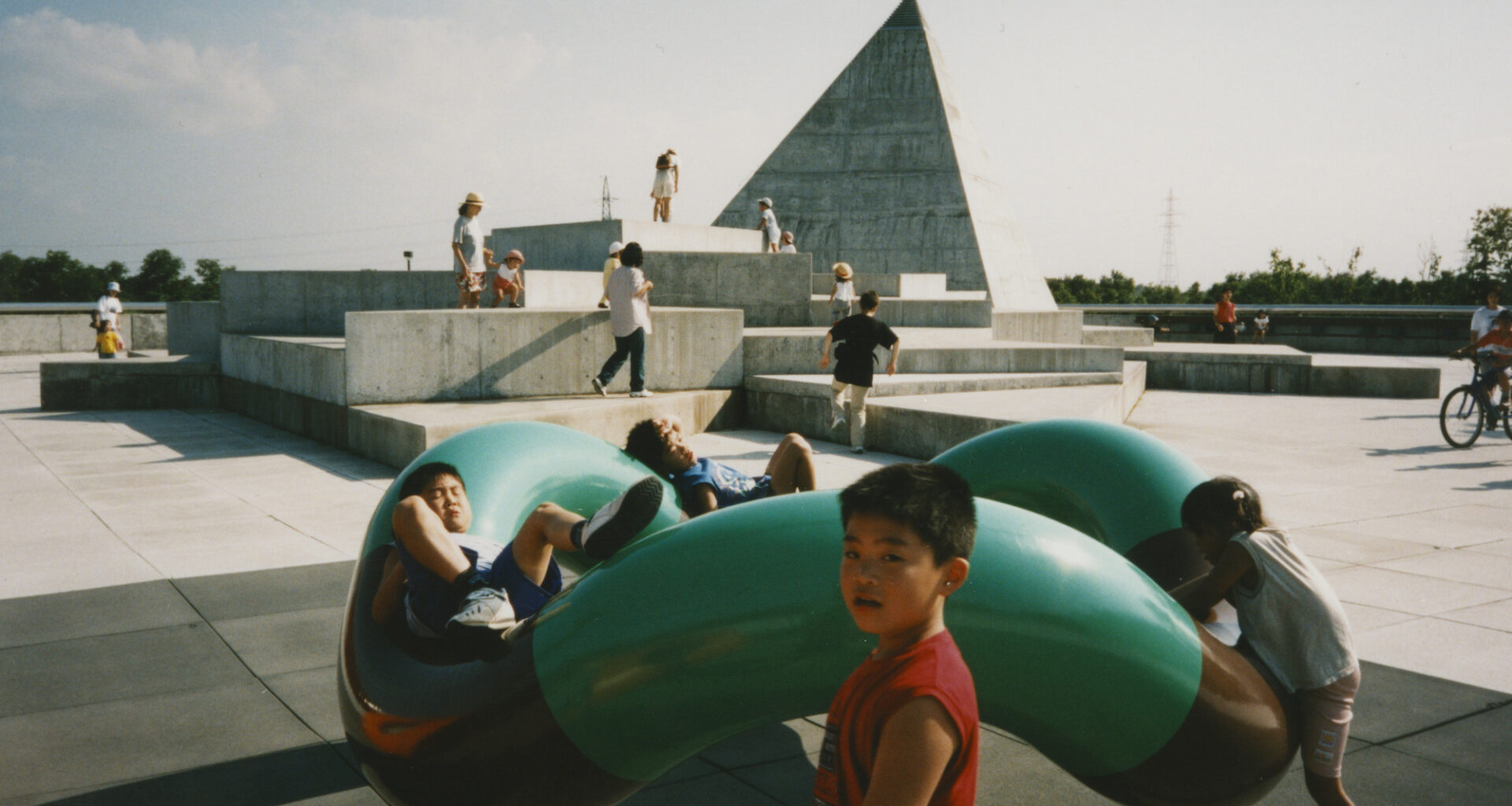
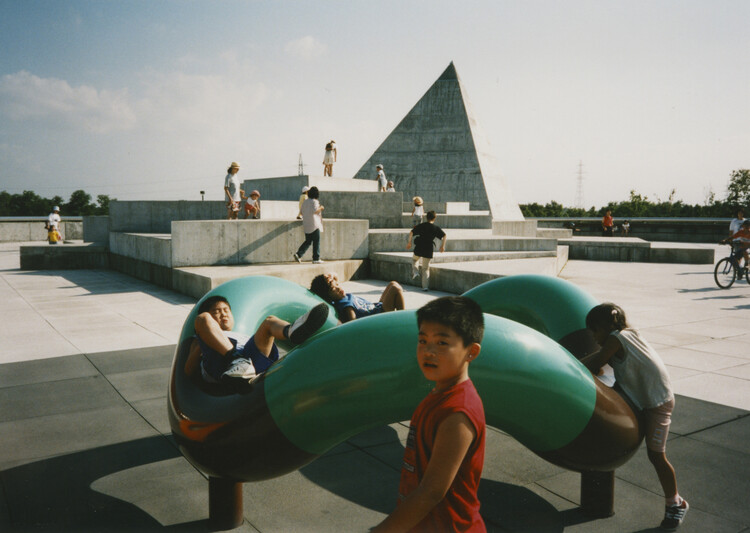
 Isamu Noguchi (design) with Shoji Sadao (architect), Play Equipment at Moerenuma Koen, 1988-2004, Sapporo, Japan. Image © 2025 The Isamu Noguchi Foundation and Garden Museum, New York / Artists Rights Society (ARS), New York
Share
Or
https://www.archdaily.com/1037483/high-museum-of-art-announces-touring-exhibition-on-isamu-noguchis-design-work
The High Museum of Art in Atlanta will present Isamu Noguchi: “I am not a designer” from April 10 to August 2, 2026. The exhibition examines the design work of Isamu Noguchi (1904–1988) across sculpture, furniture, lighting, landscape, and stage design, marking his first major design-focused retrospective in nearly 25 years. Following its presentation in Atlanta, the exhibition will travel to the Peabody Essex Museum in Salem, Massachusetts, from September 19, 2026, to January 3, 2027, and to the Memorial Art Gallery of the University of Rochester in spring 2027.
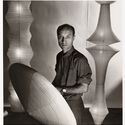
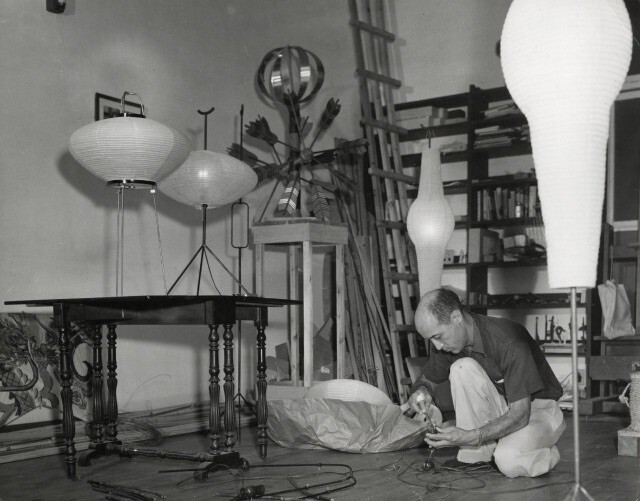 Isamu Noguchi working on Akari prototypes in Japan, ca. 1951. The Noguchi Museum Archives. Image © 2025 The Isamu Noguchi Foundation and Garden Museum, New York / Artists Rights Society (ARS), New York
Noguchi‘s work consistently operated at the intersection of sculpture, architecture, and landscape. Born in Los Angeles in 1904 and raised between the United States and Japan, his bicultural background informed an approach that moved fluidly between artistic disciplines and geographic contexts. Over the course of his career, Noguchi produced projects that extended beyond discrete objects to include gardens, playgrounds, plazas, stage environments, and architectural interiors. These works often addressed questions of public use, material expression, and the relationship between built form and natural space.
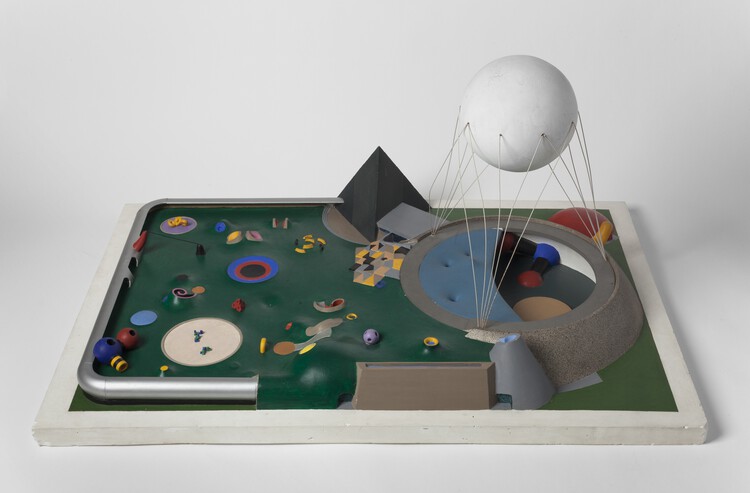 Isamu Noguchi (American, 1904–1988) with Pavilion Associates: Peter Floyd (American, 1922–2015) and Shoji Sadao (American, 1927–2019), architects; and John McHale (British, born Scotland, 1922–1978), exhibition designer, Model for US Pavilion Expo ’70, 1968, plaster, wire, and paint, The Isamu Noguchi Foundation and Garden Museum, New York. The Noguchi Museum Archives. Photo: Kevin Noble. Image © 2025 The Isamu Noguchi Foundation and Garden Museum, New York / Artists Rights Society (ARS), New York
The exhibition positions design as an integral and sustained component of Noguchi‘s practice, rather than a secondary activity separate from his sculptural work. Organized thematically, it foregrounds how architectural thinking, such as spatial organization, structural elements, and human interaction, informed projects across scales. The exhibition is co-curated by Monica Obniski, Curator of Decorative Arts and Design at the High Museum of Art, and independent curator and sculpture scholar Marin R. Sullivan, and brings together nearly 200 objects from international institutional and private collections.
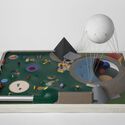
Related Article “Coming Together” Exhibition in Washington Explores Post-Pandemic Transformations of Community and Public Spaces 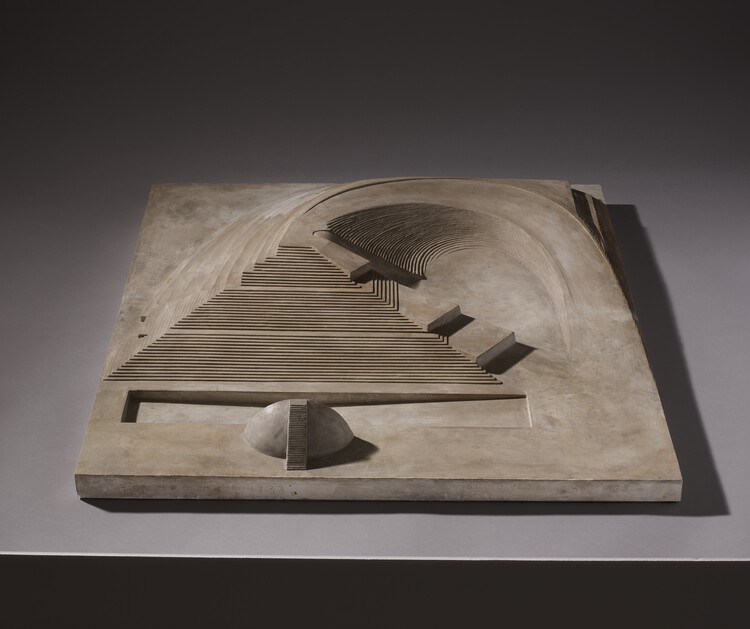 Isamu Noguchi (American, 1904–1988), Model for Play Mountain [unrealized], 1933, plaster, High Museum of Art, Atlanta, purchase with funds from the Decorative Arts Acquisition Endowment, 2024.. Image © 2025 The Isamu Noguchi Foundation and Garden Museum, New York / Artists Rights Society (ARS), New York
An introductory gallery presents works that establish the breadth and chronology of Noguchi‘s spatial investigations. These include the plaster model for Play Mountain (1933), a proposal to transform a New York City block into an abstract playground composed of topographic and architectural elements. Recently acquired by the High, the model has not been publicly displayed since the 1930s. Also included is Wounded Rock (1981), a late stone sculpture that reflects Noguchi’s continued exploration of form, material, and landscape. The section titled Making Multiples examines Noguchi‘s engagement with industrial production and modular design, situating furniture and lighting within broader architectural contexts. Works include early design projects as well as well-known pieces such as the IN-50 coffee table for Herman Miller (1944) and rocking stools produced by Knoll in the mid-1950s. Archival materials document collaborations with figures including R. Buckminster Fuller and Kenzō Tange, situating these objects within Noguchi‘s wider architectural and spatial thinking.
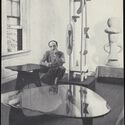
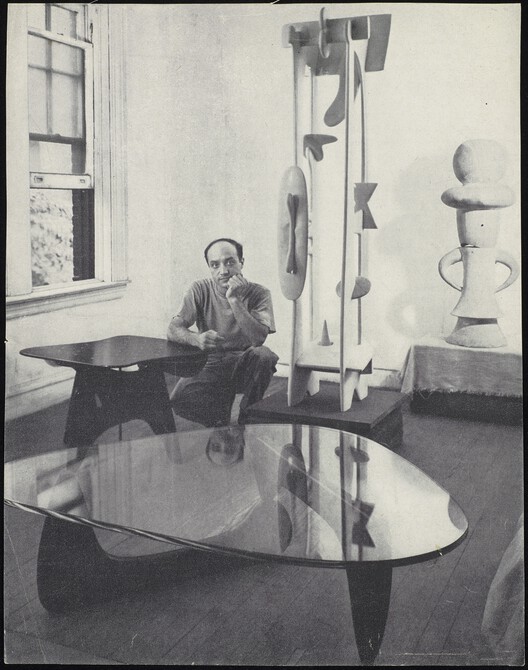 Isamu Noguchi with a Chess Table (IN-61), Coffee Table (IN-50), Statue, and The Queen in his MacDougal Alley studio, New York, from “Sculptor Noguchi Designs Free-Form Tables,” House & Garden, January 1948. The Noguchi Museum Archives, 143954. Photo: Geoffrey Baker. Image © 2025 The Isamu Noguchi Foundation and Garden Museum, New York / Artists Rights Society (ARS), New York
Elements of Architecture focuses on Noguchi‘s engagement with architectural principles through lighting, interiors, and stage design. Maquettes, models, and sketches illustrate his interest in columns, walls, ceilings, and enclosures, as well as projects developed in Japan. The section also includes the stage set for Martha Graham’s Seraphic Dialogue (1955), which has not been exhibited since the 1960s. The final section, Shaping Spaces, addresses Noguchi‘s work in landscape and public architecture. Models, drawings, and visual materials document playgrounds conceived from the 1930s onward, including Playscapes (1976) in Atlanta’s Piedmont Park. Additional materials examine landscape projects, such as the Jardin Japonais at UNESCO headquarters in Paris (1956–1958) and large-scale civic works, along Detroit‘s riverfront. A film by the architecture studio Spirit of Space documents selected garden and public projects, emphasizing their spatial and environmental qualities.
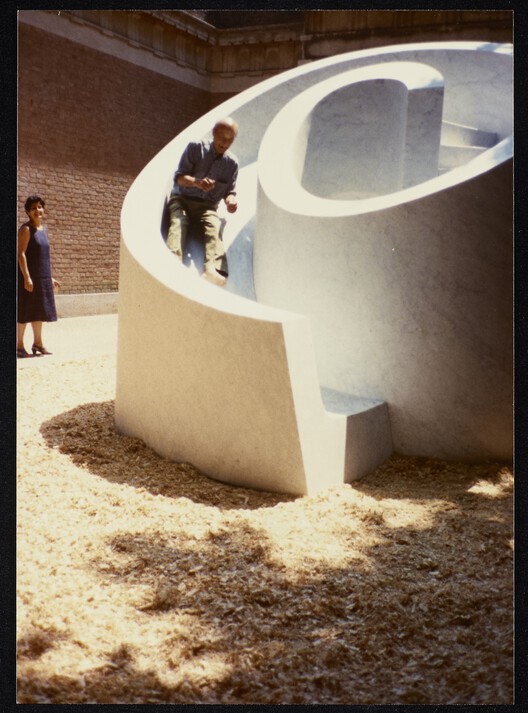 Isamu Noguchi testing his Slide Mantra as part of Isamu Noguchi: What is Sculpture? at the 1986 Venice Biennale, 1986. The Noguchi Museum Archives. Image © 2025 The Isamu Noguchi Foundation and Garden Museum, New York / Artists Rights Society (ARS), New York
In other exhibition news, Coming Together: Reimagining America’s Downtowns at the National Building Museum in Washington, D.C., examines current transformations in U.S. downtowns, focusing on community-led approaches to alternative urban futures. In Shenzhen, Architecture of Possibility: Zaha Hadid Architects, on view at the Museum of Contemporary Art and Urban Planning (MOCAUP) until April 10, 2026, presents a chronological and thematic overview of the studio’s work, emphasizing its multidisciplinary research and design processes. Meanwhile, the Canadian Centre for Architecture has initiated a new research project with M+ in Hong Kong titled How Modern: Biographies of Architecture in China 1949–1979, unfolding through an exhibition at the CCA’s Main Galleries until April 5, 2026.