
Government tax receipts surged by almost 9 per cent to a record €106 billion last year despite the uncertainty caused by US tariffs.
The year-end exchequer returns, published by the Department of Finance on Tuesday, showed the Government collected €34.7 billion in corporation tax in 2025, €4.4 billion down on the previous year.
However, the 2024 total was inflated by almost €11 billion from the Apple tax case. Stripping this out, underlying corporate tax rose by 17 per cent to €32.9 billion in 2025.
Despite warnings about the increasingly concentrated nature of Ireland’s business tax base, corporate tax receipts are expected to rise again in 2026 as a new 15 per cent minimum tax rate for big multinationals kicks in. Until now, companies have paid corporation tax at 12.5 per cent.
Income tax, traditionally the Government’s biggest tax channel, rose by 4.3 per cent to €36.6 billion, broadly in line with official forecasts.
VAT receipts rose 5.1 per cent last year to €22.9 billion, reflecting the strength of consumer spending, while excise duties increased by 3 per cent to €6.5 billion.
Total tax receipts, which included €1.8 billion of the Apple tax money, amounted to €107.4 billion last year. Excluding once-off tax revenues, total receipts were €105.7 billion, up by €8.6 billion (8.9 per cent) on the previous year and in line with department forecasts.
The Government recorded an underlying exchequer surplus of €3.8 billion for 2025, an improvement of €2 billion on the 2024 figure.
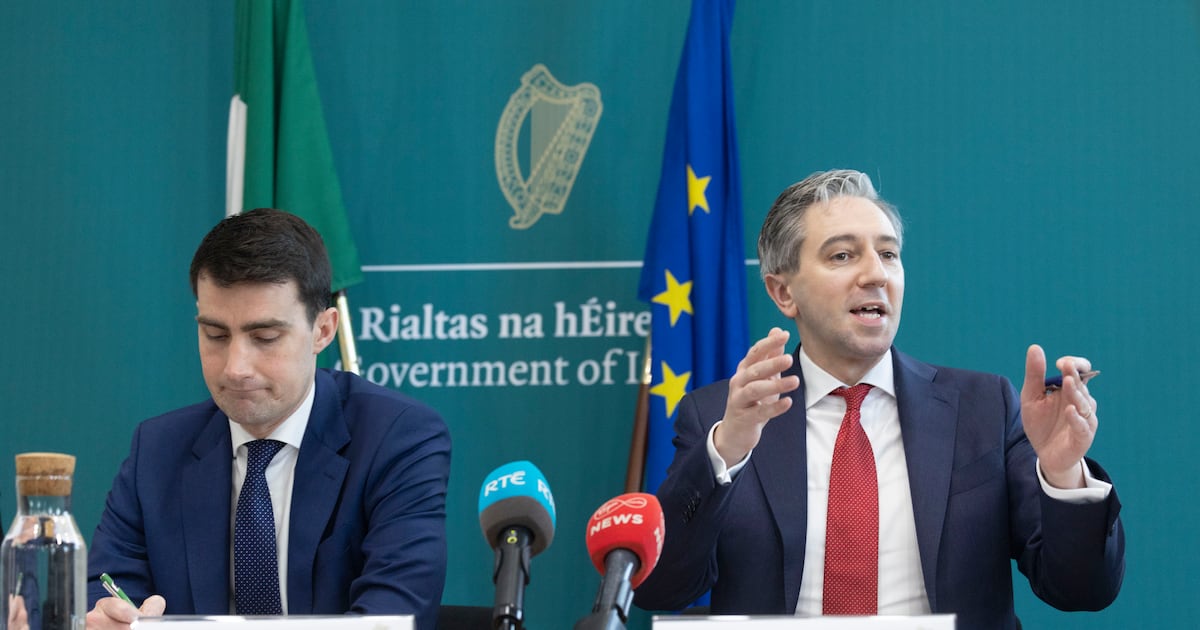
“The exchequer figures for 2025 are a reflection of the fundamental strength of our economy: income tax and VAT receipts, the clearest indicators of our economic performance, are continuing to perform well, while most other revenue streams are in line with expectations,” Tánaiste and Minister for Finance Simon Harris said.
The latest figures indicated that gross voted expenditure amounted to €109.4 billion last year, which was €5.7 billion (5.5 per cent) ahead of 2024.
The Government has come in for sharp criticism from the Irish Fiscal Advisory Council (Ifac) for failing to adhere to its spending plans.
Spending for last year was €4 billion higher than what was set out in Budget 2025.
Minister for Public Expenditure Jack Chambers said: “The uplift we saw in public spending last year delivered on the key areas of importance we set out in Budget 2025: targeted investment in public services and infrastructure.”
The Government’s Medium Term Fiscal and Structural Plan, published last month, pledges to keep the annual increase in net spending over the next five years to 6 per cent.
Responding to the figures, PeterVale, tax partner at Grant Thornton Ireland, said: “The profitability of MNCs (multinational corporations) operating in the pharma and technology sectors underpin the exceptional figures”.
“2025 corporation tax receipts are triple 2019 returns, which is an incredible statistic,” he said.