

Camille worked for a number of years in the same architect firm as killer Graham Dwyer Camille O’Sullivan
Cork musician Camille O’Sullivan has opened up on her experience with killer Graham Dwyer.
The singer, born in London to Cork man Denis O’Sullivan and French artist Marie-José, grew up in Passage West – and went on to work in an architect’s office with evil thug Graham Dwyer. The Cork native is currently serving a life sentence for the murder of Elaine O’Hara in 2012.
Camille, who grew up in Passage West, said she was horrified to learn the truth of her former colleague’s vicious crime. Speaking to the Irish Mirror, about her memories of the killer, she said she was “shocked” when the details were uncovered.
O’Sullivan, who rose to fame for her dramatic covers of musical greats ranging from Nick Cave and Tom Waits to David Bowie and Sinead O’Connor, worked for a number of years as an architect in an office alongside Graham Dwyer, years before he was nabbed for the murder of vulnerable childcare worker Elaine O’Hara in Dublin.
There is no calling six degrees of separation here from an association that would make outsiders blood run cold – channel that, up front, alone, on stage. And yet O’Sullivan, once known as ‘the singing architecht’ is the first to admit she had no idea. She said: “No, I didn’t know, certainly not with regard to him, only later. I mean if you’re touring on the road with musicians or you’re touring with a circus show, you’re not going to necessarily meet evil but you’ll meet a lot of darkness because a lot of people live it like that.
“Tom Waits uses the phrase ‘World of the ‘Carney’, I think maybe Nick Cave through, you know, living a life of excess, losing his father so young, drugs, whatever, you’re going to meet people like Shane [MacGowan] with ideas about the main drag, the dregs of society, the underbelly.
“There are all those writers that write about that and when I walk around Dublin, those are the people that interest me, the sort of the poor fellow on the street – those are the colours of the city and they are not easy.”
A city she notes that has warmed to such themes, one that had had Bernelle, Gavin Friday, Phil Chevron bring the Irish echo to Brecht and Kurt Weill. She said: “I don’t know but I’d say the Brecht/Weill thing happened very close to Weimar when they were trying to write about the rise of evil and that was possibly the beginnings of our looking at what is happening around us.”
“But with Graham, I would have never have known. Now when I discovered it, that really shocked me. He could be the person who I would have left my child with [she was childless at the time] so it really freaked me out that when I actually did go close to evil, I didn’t see it.
“We all talked with each other, and never mind me, people he went to college with, so here was somebody who was excellent at what he did. Like I was kind of working with him, sitting beside me for two years, dinners together, driving together to places, and very courteous, brilliant at 3D design which at that stage, he was the main person.”
Yet don’t confuse the singer with the song. “I have no clue what’s good or bad, it’s a song, I play that role, I cannot say you don’t play it on stage because what you’re channelling, and I’d like to think Nick Cave is channelling it, because when you’re going through a song, you’ve got to really just throw everything out of yourself.
“It is you in the end of the day to be honest, you’re getting to the worst part of yourself and the best part of yourself and you don’t want to fake it.
“But I would say for a year or two I was looking at everybody going is that nice person really a nice person because Graham was the nicest person – I’d go ‘it could be that person too!’
“It shocked me, threw me, because it was covered, almost schizophrenic, almost removed. You look at people and maybe think ‘they look evil’ – funnily enough there’s a few people in my life who he reminds me of and now I’m looking at them going…”
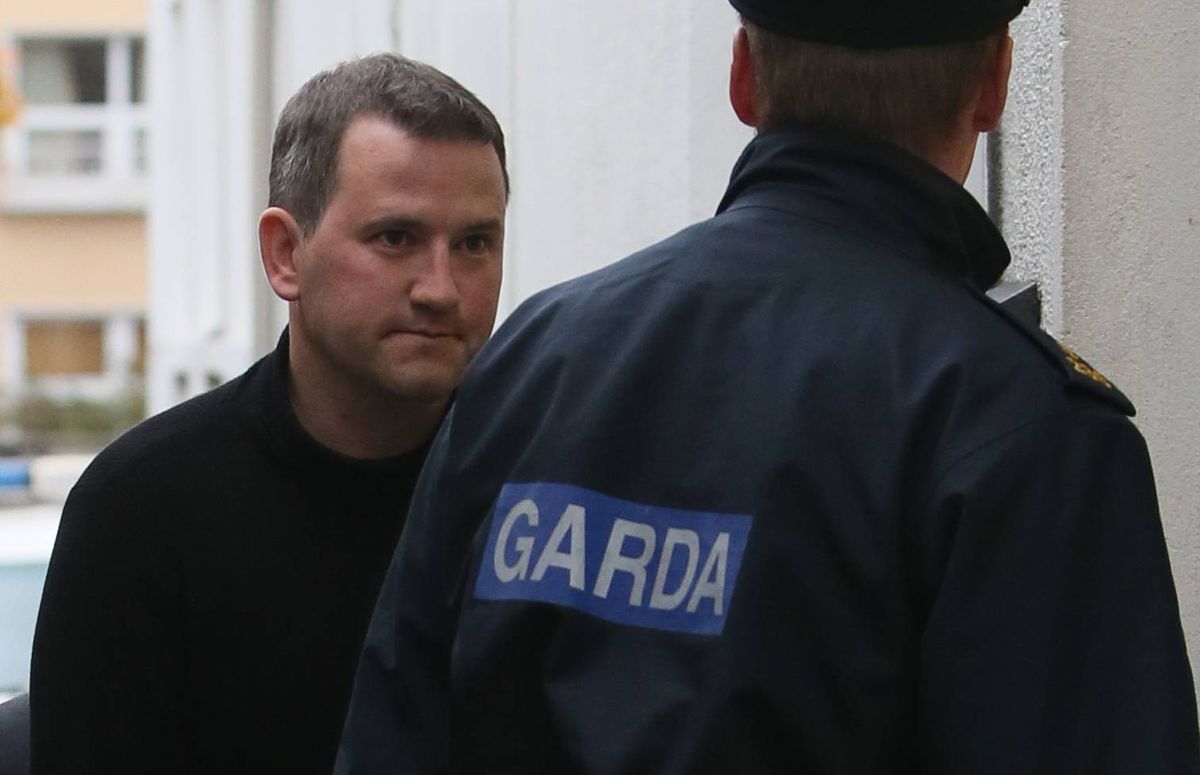 Graham Dwyer(Image: PA Archive/PA Images)
That’s not to say O’Sullivan’s act is all dredge, all tubing down and down. Certainly it’s not Doris Day but there is room for delicious sweet twists such as Kirstie MacColl (Not in These Shoes) or Cave (Into My Arms) where a softer side takes in more Amy Winehouse, Sharon Jones and The Dap Kings or Ruby Velle and The Soulphonics who pock-marked the Ray Donovan showtime series
“Nick Cave also has the most beautiful love songs ever written, I do The Ship Song all the time. What’s interesting is how you change through the years and you might have the same song through a whole 20 years of singing and it changes because you can’t keep on singing the same song the same way every night.
“The darkness is a thing like Stagger Lee, like Jesus Christ it’s on my CD but sometimes I need to tell the audience when I’m singing it, don’t play that for your grandmother because it’s so dark.
“We did it in the Pepper Canister church when Covid was finished, that’s a beautiful church but I was told some of the congregation were very upset because I sang all the thing of it so the next two nights I had to just try not say the F word every second – and I did it and it was quite funny in the end because people were laughing, going, you are never like this, you couldn’t make it up.
“I’ve actually sung in a few churches and it’s fascinating and it looks for some crazy reason like the most demonic, evil thing you could ever sing but for some reason it’s why actors and the audience enjoy that stuff, I dunno why.
“You would think that people go ‘Christ, I don’t need to listen to that stuff, because life is hard enough’ but there is a fascination.
“I’m fascinated at the moment watching the more toned down murder mysteries of Poirot and stuff online but people are fascinated by the dark side of crime, life and how it exists hand in hand almost with our own world.” Sure it is easy to brush off a close existence to one of the most calculating, cold blooded murderers in the history of the state, or is it?
“It made me think that there’s some people who totally live a hidden life, how many of those are around us? How many people who come to my gig? Is it 10 percent of an audience who could do something as awful?
“Because it makes you go ‘If I worked for two years with somebody and hung out with them every day and went for dinners and would have let them mind my child, and I thought I’m a good person at judging character. I was totally off the mark.
“I was told you think you’re a good judge but in the end of the day, they can really hide it. I’d say when Brecht typically or in America which is a really fascinating place, which is Bible Belt plus people who are very clever, and then a side of you goes I don’t understand why they think this [bad] way.
“A lot of the Kurt Weill and the Brecht was changed to suit the American audience, the original versions were made for Germany but as time went on it became sugared and coated.
“Nobody would know what they’re singing, nobody would know the back story, that’s what’s so funny and then if you get anybody to sing it for you they’d want you to sing the second version and go ‘I’m really sorry but that’s not my interest.”
But that’s part of O’Sullivan’s carry-on, a parcel of songs that, frankly, have been almost uniquely men’s property, sung by a Irish woman with a Bjork-like nature – not that she sings like the Icelandic elf but conversations are often dotted with It’s Oh So Quiet bursts of mayhem.