
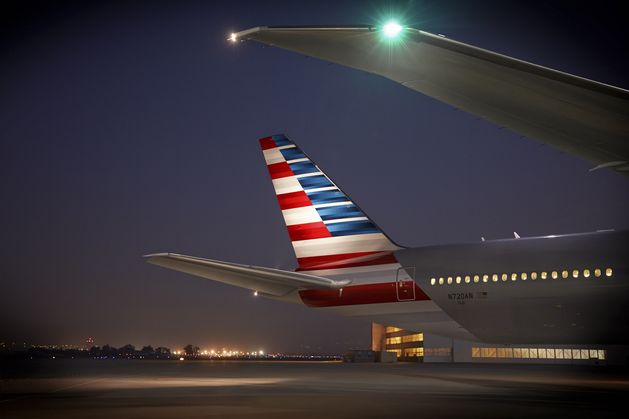
Airlines for America (A4A) has made a formal complaint to the US Department of Transport
Such a move would hit Aer Lingus the hardest, as it operates a significant transatlantic network out of Ireland to the US.
Airlines for America (A4A) has made a formal complaint to its country’s Department of Transport, saying the Irish government is restricting the number of passengers that can use Dublin Airport.
It wants the Irish government to pass emergency legislation by February 1, or otherwise suspend the cap. Failing that, A4A has called for action against Irish airlines providing services to the US.
The lobby group previously warned that the passenger cap issue could be escalated to the White House.
The complaint was filed just as Transport Minister Darragh O’Brien accused senior civil servants of blocking efforts to have the cap removed.
Dublin Airport is subject to a limit of handling 32 million passengers a year under a planning condition attached in 2007 to the construction of Terminal 2.
It is currently suspended, as matters related to it have been referred to the Court of Justice of the European Union. An opinion in that case is due to be filed by one of the court’s advocate generals next month. A final decision from the court will come some months later.
Fingal County Council issued an enforcement action against the DAA last year for breaching the cap, and gave them two years to comply.
“A4A is compelled to file this complaint because Ireland continues to violate EU regulations and the United States-European Union Air Transport Agreement (US-EU ATA),” the complaint filed on Tuesday says.
“Specifically, the Irish government seeks to impose a local infrastructure planning condition restricting the number of passengers at Dublin International Airport to 32 million passengers per annum, which will result in the withdrawing of US carrier historic slots at Dublin Airport.”
It claims that the only reason US carriers have not yet lost historic slots at Dublin Airport is because A4A, along with Aer Lingus and Ryanair, are challenging the passenger cap in the High Court and successfully obtained a stay while the case continues.
“A4A urgently requests expedited action by the US Department of Transportation that should address a broader scope of US carrier interests, including the adherence of Ireland its obligations as a party to the US-EU ATA,” it adds.
The lobby group, which represents airlines including American Airlines, Delta and United, has warned that a decision by the EU court that says the cap is in compliance with take-off and landing slots regulations “will be used to immediately and unilaterally limit operations at Dublin Airport”.
It claims this would contravene the United States-European Union Air Transport Agreement.
“Such a decision would also result in unjustifiable or unreasonable discriminatory, predatory, and anticompetitive practices against US carriers,” the lobby group has claimed.
It adds that if the DAA is eventually enforced to comply with the Fingal County Council enforcement order, it will have serious consequences for Dublin Airport.
“This would require an approximately 11pc reduction from 2025 levels and would necessitate cuts in services at Dublin Airport beginning as early as winter 2026, including reductions in historical slot availability for US carriers,” A4A warns.
“Immediate action by the Irish Government is therefore critical to prevent the enforcement outcome from triggering avoidable losses of long-standing US airline access at Dublin Airport,” it says in its complaint.
Airlines for America told the Irish Independent that it has pushed ahead with the complaint to the US Department of Transportation because of a continued lack of action around the Dublin Airport passenger cap.
“By constraining market access rather than allowing airlines to compete freely based on demand, the cap undermines the open, non-discriminatory operating environment required under the U.S.–EU Open Skies Agreement. This decision is an unfortunate—though necessary—step to maintain the integrity of the U.S. – EU Open Skies Agreement,” they said.