
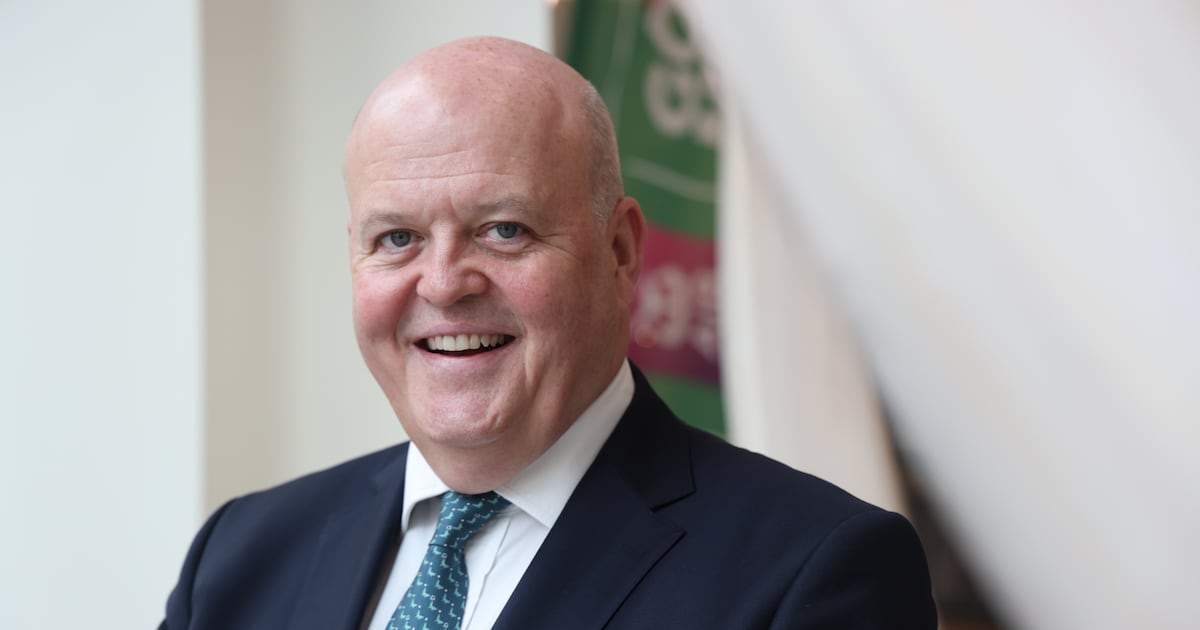
For Colin Hunt, the Lego-loving chief executive of AIB, the State’s exit as investor in 2025 marked a satisfying milestone, with a big final piece of the bank’s painstaking rebuild clicking into place.
“It was an important moment from a morale perspective, but it hasn’t led to any change in strategy or operations, because, in fairness, the State always acted as a rational investor and had a clear desire to exit the share register at a point in time,” said Hunt in an interview with The Irish Times.
But some things have changed permanently since taxpayers were forced to commit €20.8 billion to prevent the bank’s collapse during the global financial crisis (GFC), he said.
“AIB’s a very different organisation now. I think we’re far more externally oriented than we would have been pre-crisis. And I think AIB’s a less siloed, less hierarchical organisation than it was,” he said.
“Banking globally is a very, very procyclical industry and, traditionally, banks would have overlent at the top of [economic] cycles and underlent at the bottom. Our approach now is very much that we take a medium term, acyclical approach and lend through the cycle.”
The regulatory environment has changed utterly, too, with banks on both sides of the Atlantic required to hold higher levels of capital reserves and have ‘living wills’ in place to bail-in creditors if regulators deem a lender is likely to fail.
The Central Bank of Ireland has gone further, introducing some of the strictest mortgage lending restrictions in Europe, higher fines for wrongdoing, and a regime to make it easier to find senior executives responsible for failings under their watch.
“We’re very aware that without the support of Irish taxpayers, this bank would have ceased to exist,” said Hunt. “However, that would have been extraordinarily detrimental to the Irish economy and to our society.”
At the end of October, AIB bought back stock warrants that the Government continued to hold in the bank after selling its remaining shares in the lender during the summer. It brought the total that the State has recovered from the bank’s rescue to almost €20.2 billion – leaving a shortfall of a little over €600 million.
Yet it was far from certain that taxpayers would recoup so much from Ireland’s costliest bailout of a surviving lender – particularly when AIB shares were trading below €1 each during the Covid-19 pandemic in 2020, just a seventh of the price at which the final shares were sold last June.
However, the crisis led to two key developments that have fuelled the bank’s turnaround: a surge in inflation – further stoked by the Ukraine war – that triggered aggressive central bank rate hikes; and the purchase of two large loan books from Ulster Bank, as it exited the market. Ulster’s owner, NatWest, had highlighted the impact of Covid-19 when it confirmed in late 2020 that it was carrying out a strategic review of the bank.
AIB – among the most rates-sensitive banks across the sector in Europe – couldn’t help but make record profits in recent years.
Indeed, when the European Central Bank’s (ECB) deposit rate peaked at 4 per cent early 2024, AIB was making more money out of parking €32 billion of surplus deposits with the Central Bank than it was from its €35.7 billion Irish mortgage book.
But Hunt, who took charge of the bank in 2019, said that measures undertaken by the bank have also underpinned earnings, including the use of financial derivatives – known as interest rate swaps – to protect the bank as the benchmark ECB rate fell by half in 13 months to last June.
“That’s an insurance policy that’s working very well,” he said. AIB forecast in November that net interest income would decline only about 10 per cent last year from a record €4.13 billion in 2024.
There is a strong preference for instant access on the part of depositors in Ireland and I think that is to do with the psychological scarring from the financial crisis
AIB has seen its underlying loan book grow over the past four years, even after stripping out acquired Ulster loans. It follows a series of false dawns for when Irish bank balance sheets would grow again, after contracting dramatically after the financial crash.
Hunt has also set up AIB for “a big opportunity” with decisions to repurchase Goodbody Stockbrokers, where he previously served as chief economist, in 2021 and get the bank back into life and pensions after a decade out of this business, by setting up a joint venture, AIB Life, with Canada’s Great-West Lifeco in 2023.
Ageing populations are one of three “huge megatrends” (along with artificial intelligence, or AI, and electrification) that Hunt reckons will change the banking sector over the long term.
The Republic’s old-age dependency ratio – the percentage of the population aged over 65 relative to those between 15 and 64 – will more than double to about 50 per cent in 2057.
“There is inevitably going to be an increase in demand for savings, investment and pensions and it is incumbent on us to make sure that we have AIB-branded products available to our customers,” said Hunt. “And we now have that.”
Still, it has a distance to go to catch up with its biggest rival on that front.
[ ‘Down to the wire’: ECB’s digital euro project faces decisive vote in 2026Opens in new window ]
Bank of Ireland managed to convince the European Commission in 2013 not to force a sale of its New Ireland arm under a restructuring plan tied to its taxpayer bailout. It also repurchased its former Davy unit in 2022, after the firm was plunged into crisis in the wake of a regulatory fine.
RBC Capital Markets analysts estimated in a report last month that AIB had €17 billion of assets under management (AUM) at the end of 2025, with Goodbody accounting for 85 per cent and AIB Life the remainder. Bank of Ireland’s AUM stands at €58 billion, with a little over half of this in Davy.
While Irish households have grown their wealth by an average of 7 per cent a year over the past decade – more than twice the European rate – they still hold only 12 per cent of their net worth in financial products, including life and investment products and direct shareholdings in companies, the RBC report said. This compares to 19 per cent in France and 16 per cent in Italy and Germany.
With 85 per cent of the €172 billion of Irish household deposits sitting in current and on-demand deposit accounts earning little or nothing, according to the latest Central Bank data, RBC said AIB, with the greatest share of Irish deposits, has the best opportunity to nudge customers towards savings and investment products. Goodbody is also known to be in advanced talks to buy BCP Asset Management, which has about €3 billion of AUM.
The relationship between AIB and Goodbody is “fundamentally different” from the one that existed when he left the stockbroking firm in 2004, said Hunt. AIB went on to sell the company in 2011 under an EU restructuring plan tied to its bailout.
“There were tensions in that relationship that are absent now,” he said. “There is real collaboration and engagement. The AIB that Goodbody came back to is a fundamentally different beast from the one it left.”
[ Don’t be fooled — everything has changed for the global economyOpens in new window ]
Goodbody now provides investment, pension, and financial planning services for AIB Private Banking clients, whereas under the previous ownership, they competed against each other.
Convincing households to put idle money on deposit to potentially better use may be difficult.
“There is a strong preference for instant access on the part of depositors in Ireland and I think that is to do with the psychological scarring from the financial crisis,” said Hunt, who was surprised by how reluctant households were to move money to higher-earning term deposits that banks started to offer when ECB rates spiked.
The residual trauma has played out in other ways, with debt across households and small businesses at a fraction of where they stood before the crisis, relative to income.
“Leverage was completely overinflated in 2007. But, for me, one of the great mysteries in the past 10 years is that while we have had a marked recovery in Irish economic activity, we haven’t seen an increase in credit demand,” he said. “And the best explanation from what I’ve seen is that it’s down to the psychological damage done by the GFC and the collapse of the Irish economy.”
AIB disappointed the stock market in early August when it reported that its loan book grew by only 1 per cent in the first half of the year to €71.6 billion, and downgraded its full-year growth forecast to 3 per cent from 5 per cent. This was mainly down to weakness in its international climate capital business, the smallest, but fastest-growing division in recent years, which specialises in large renewable and infrastructure projects across Ireland, Britain, Europe and North America, and caution among small Irish businesses.
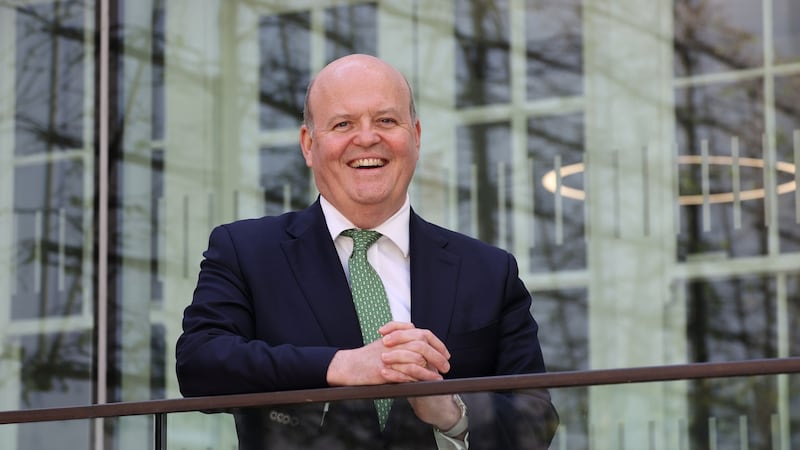 Colin Hunt: ‘There is significantly less talk about the green transition than there was a few years ago. But it’s still happening.’ Photograph: Nick Bradshaw
There was a notable slowdown in green energy investments in the US when Donald Trump took office as president in early 2025.
“I think that decisions might have been paused initially,” said Hunt. “There is significantly less talk about the green transition than there was a few years ago. But it’s still happening.”
Global spending on green energy investment rose almost 5 per cent to $2.2 trillion last year, double what was allocated to fossil fuels, according to International Energy Agency estimates.
“We’ve had greenwashing in the past. The new phenomenon at work now is greenhushing. Investments are being made, projects are being built, but people aren’t talking about it,” he said.
“I’ve been of the view for a very long time that capital will need to be deployed [for the green transition] at a scale and pace that we have never seen in the history of global banking. So, it’s an absolutely enormous opportunity – and it requires a certain skill set to safely, prudently deploy capital in this space. We have built that skill set over time.”
When Hunt set up a capital climate unit after joining AIB in 2016 from Macquarie to run what was then the group’s wholesale, institutional and corporate banking division, it had four people. It now has about 110. “They do amazing work. They have a really strong reputation.” The team tends to be the lead arranger on many of the multi-banked deals in which it is involved – giving it the opportunity to shape transactions and secure higher fees.
The pace at which AI-enabled products and services is evolving is just incredible. It’s going to change our operating environment in ways that we probably can’t even currently envision or imagine
On the retail side of the house, close to 60 per cent of the mortgage business written last year was for green loans – where the property has a building energy rating (Ber) between A1 and B3.
All told, AIB exited 2025 “with good momentum” on the lending side, Hunt said, adding that he is “comfortable with the medium-term expectation that our loan book will grow by 5 per cent” on a compound annual growth rate basis.
Hunt has insisted AIB will bring its running costs, which breached €2 billion last year, back below that level in 2026 – despite its commitment to increase salaries and ongoing inflation – as it continues a policy of not replacing most of the staff who are retiring or quitting naturally. Some analysts say the target will be a tough ask. Total headcount fell by 3 per cent in the 12 months to September – to about 10,350.
AIB has become the early front-runner among the domestic banks in warming to AI. It introduced a conversational assistant, called Abi, to customers in 2024 to help with everyday banking questions across its phone and online banking systems. It also rolled out Microsoft Copilot, an AI assistant that helps users write, summarise, analyse data and complete everyday tasks, across the organisation last year.
“The pace at which AI-enabled products and services is evolving is just incredible,” he said. “It’s going to change our operating environment in ways that we probably can’t even currently envision or imagine.”
Asked if he sees the increased adoption of AI ultimately leading to AIB targeting a much lower workforce, Hunt said: “We’re looking at AI now in terms of cyber [security], fraud detection, our IT resilience, and coding. And I do think you will see it become ever more present in all aspects of the business in the next number of years. Do I have numbers in my head about how this is going to impact our cost base? No. Do I think we’re going to be very significantly reducing our headcount? No.”
Hunt said he sees AIB reducing its total workforce by 2-3 per cent a year, through ongoing natural attrition, “in the years ahead”.
[ OTC Markets targets Irish companies as listing alternative in New YorkOpens in new window ]
The chief executive, meanwhile, has pressed ahead with a plan for staff to work from one of its offices for a minimum of three days a week from the start of the year, even after the Financial Services Union (FSU) said members in the bank had voted “overwhelmingly” to reject the blueprint. The bank is continuing talks this month with the union under the guidance of a mediator on concerns and issues around the new hybrid working model.
This year will see Hunt and his team work on the bank’s next three-year strategic plan, which will be presented to the board in November, and will run from 2027.
“I’m not letting too many cats out of the bag at this stage by saying I don’t think that our strategic priorities are going to change,” he said.
Of big interest to investors will be guidance on how the bank plans to distribute excess capital over the period. RBC estimates AIB has the capacity to fork out €5.7 billion to shareholders over three years by way of dividends and share buy-backs.
AIB is also planning the launch of a mobile app in the second half of the year. “I’m really pleased with the shape it’s taking,” said Hunt. “It’s going to be far more intuitive and far easier to use, and it’s going to be more encompassing of all aspects of a person’s financial life.”
In the near term, investors will learn how AIB plans to remunerate Hunt, after the Government lifted a bailout-era €500,000 executive pay cap last summer after selling its remaining shares in the bank.
“It’s not a matter that I have any influence over. That is decided upon by the remuneration committee of the board, and ultimately by the board itself,” he said, adding that any changes will be revealed at the time of the annual results release, in early March.
Name: Colin Hunt
Age: 55
Home: Blackrock, Co Dublin
Family: Married to Nuala, with three daughters
Something about him you might expect: He has a PhD in economics from Trinity College Dublin, having written his doctoral thesis under the supervision of Philip Lane, now chief economist of the ECB
Something about him that might surprise: He is an avid Lego builder, and has a self-assembled model of a Millennium Falcon Star Wars starship in his office