
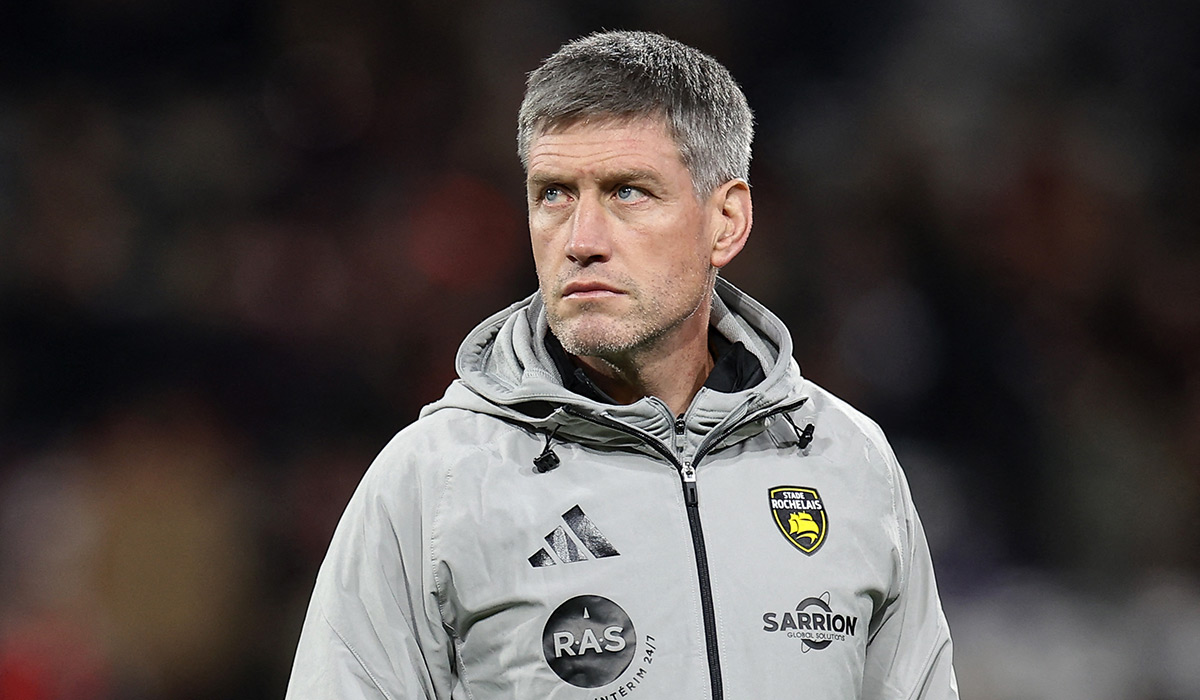
As the most globally successful figure in Ireland’s rugby history, Ronan O’Gara still finds himself constrained by old parochial prejudices.
Stade Rochelais’ visit to Aviva Stadium tomorrow has been dutifully presented as, in part, the return of this fiercest of Munstermen to Leinster’s temporary lair.
O’Gara is himself happy to acknowledge the immovable place that his home province will always have in his heart, but he also comes to Dublin as one of the most successful coaches in the modern club game, a two time European champion whose last success in this competition came in Dublin 4, reeling in Leinster with a second-half performance for the ages.
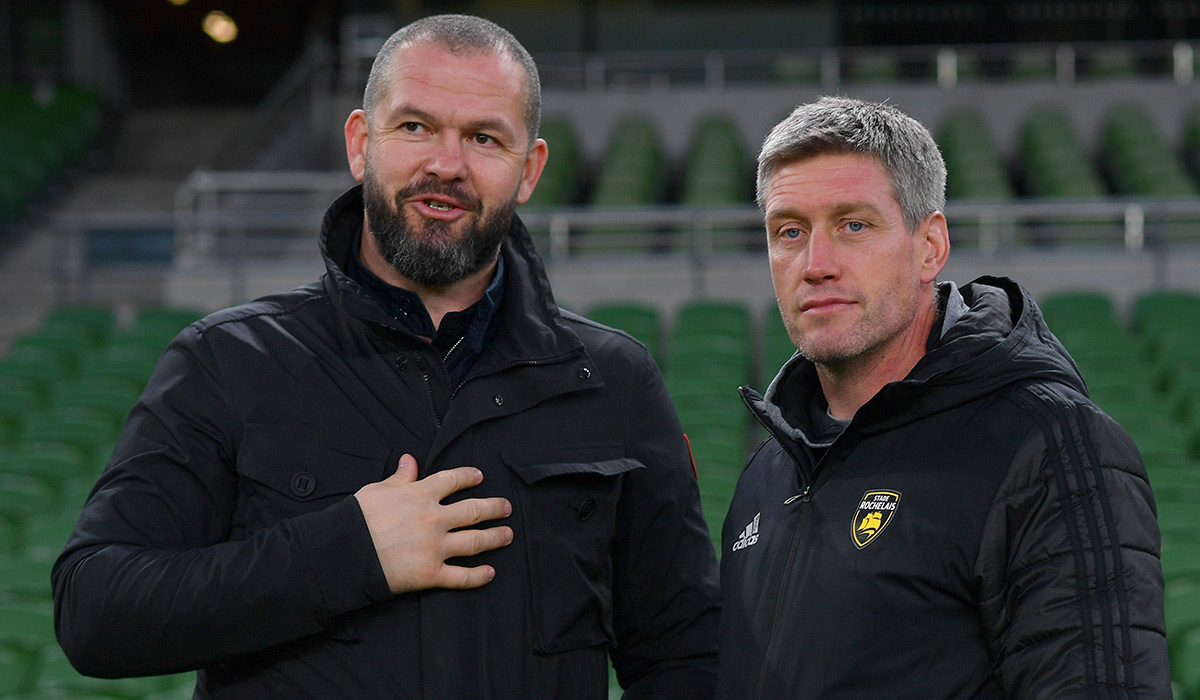 Ireland Head Coach Andy Farrell and Ronan O’Gara. Pic: Ramsey Cardy/Sportsfile
But if he remains forever defined for many by the red No10 jersey that he wore so well for so long, O’Gara is entitled to see himself in more expansive terms. He’s earned that right.
This is a man who has spent every hour of his professional coaching life out of the safe space provided by the IRFU, who impressed in Paris and at the Crusaders, who turned La Rochelle into heavyweight winners, and who has been seriously linked to the England job and later the Australia one, too.
He has also made it very clear that he has no desire to return to Munster to continue his coaching career.
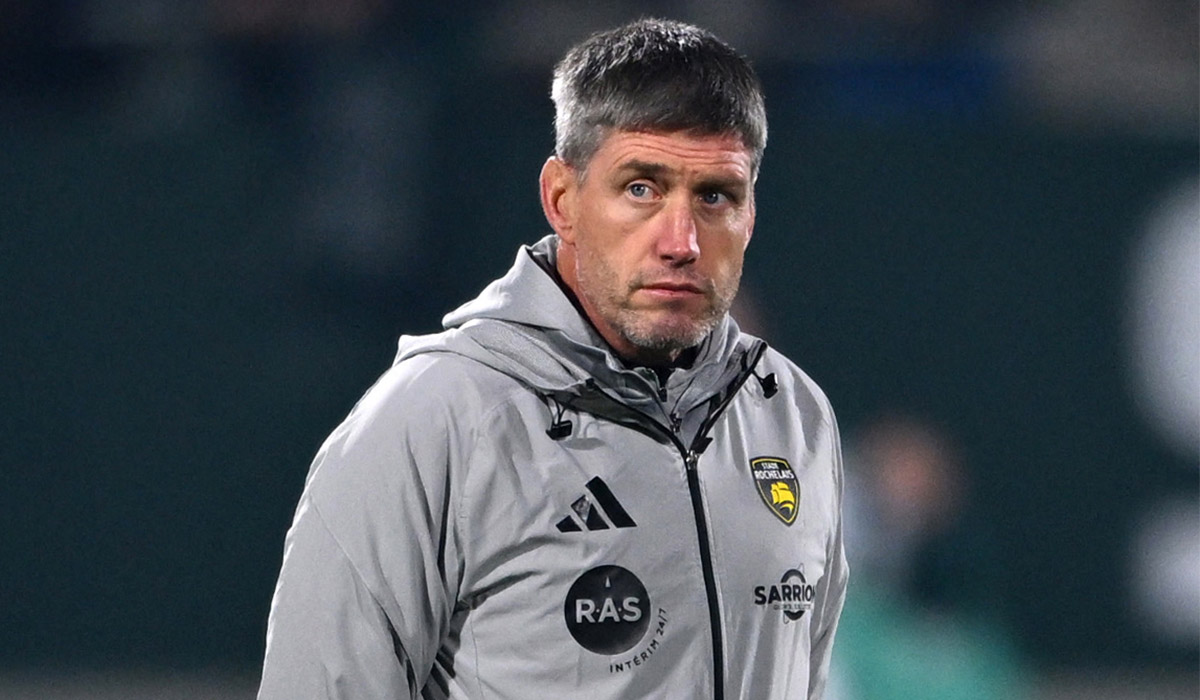 Ronan O’Gara. Pic: Gaizka Iroz/AFP via Getty Images
‘The greatest days of my rugby life were in that Munster top, but I’m not interested in the Munster head coach role. Not now and hardly in the future,’ he wrote in his Examiner column after the departure of Graham Rowntree in 2024.
‘Munster is in my heart but not my head now. Besides, I would hope my next coaching move is into the Test arena.’
And that’s where the real intrigue lies on the weekend he comes back to Ireland, and to a stadium a two-minute walk away from the headquarters of the IRFU.
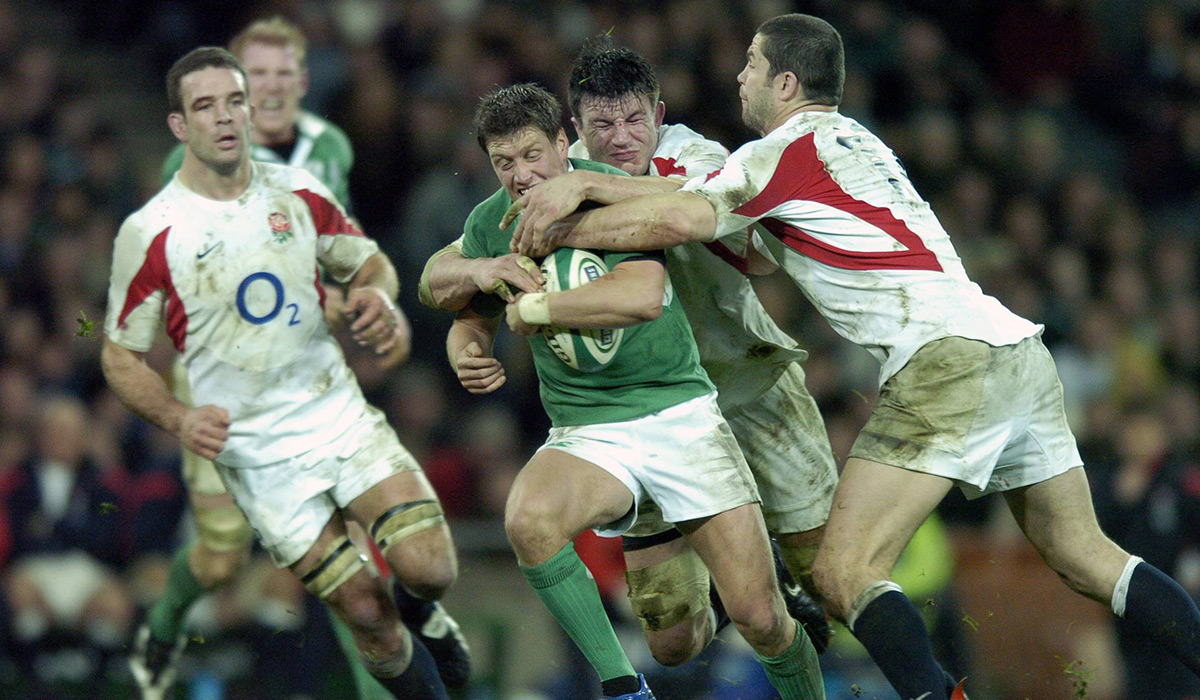 Ronan O’Gara tackled by Martin Corry and Andy Farrell Pic: Brendan Moran / SPORTSFILE
His stated desire to coach at the Test level makes him the obvious choice to eventually succeed Andy Farrell.
There have been those links to other countries, with the England one strong after the departure of Eddie Jones, while there has also been talk of France, as well as rumours of a reunion with Scott Robertson, who he worked with at the Crusaders, at the All Blacks.
But the Ireland job holds an obvious and potent appeal. Just as the Munster role would cause an ambitious returning hero to think twice because of the uncertain talent flow, the relatively modest financial pulling power and the years of stasis, coaching
Ireland offers the opposite in all cases: proven player pathways, comparatively strong resources, and an established culture of winning.
This, though, will come down to timing. Ronan O’Gara was a masterful manipulator of the clock in his playing pomp, but time could be against him now.
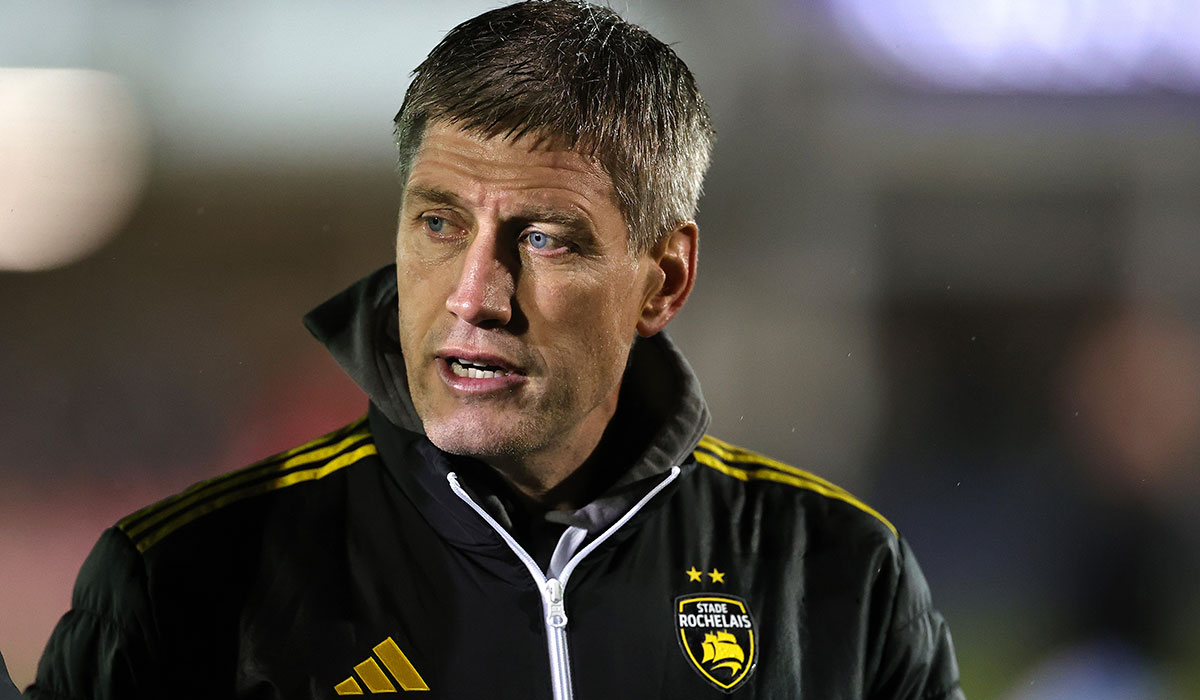 Ronan O’Gara. Pic: David Rogers/Getty Images
That’s because while there’s a case to be made that he has done his best work at La Rochelle and might be minded to start looking for the next opportunity, there is no vacancy at Ireland – and no real prospect of it, yet.
O’Gara is adored in the well-appointed corner of France’s Atlantic coast where he and his family have made their home, but the past two seasons have been difficult. He is trying to rebuild the side, using what can be salvaged from the mighty group that did the European double, and integrating new signings and internal prospects.
The results have been mixed – not helped this season by a wretched injury record that shows little signs of abating.
But it’s only the extreme manifestation of a difficulty that has been apparent for over two years now.
Less than a month after they beat Leinster in the Aviva to win the 2023 Champions Cup, Stade Rochelais lost a gripping Top 14 title to Toulouse by three points, undone by a heartbreaking late try.
Winning a first title has been the aim since they broke Europe, and they sought solace in that desperately cruel outcome by convincing themselves they were within touching distance of enjoying within France the glory they delivered in Europe.
Instead, it’s been rapidly downhill since that Toulouse defeat.
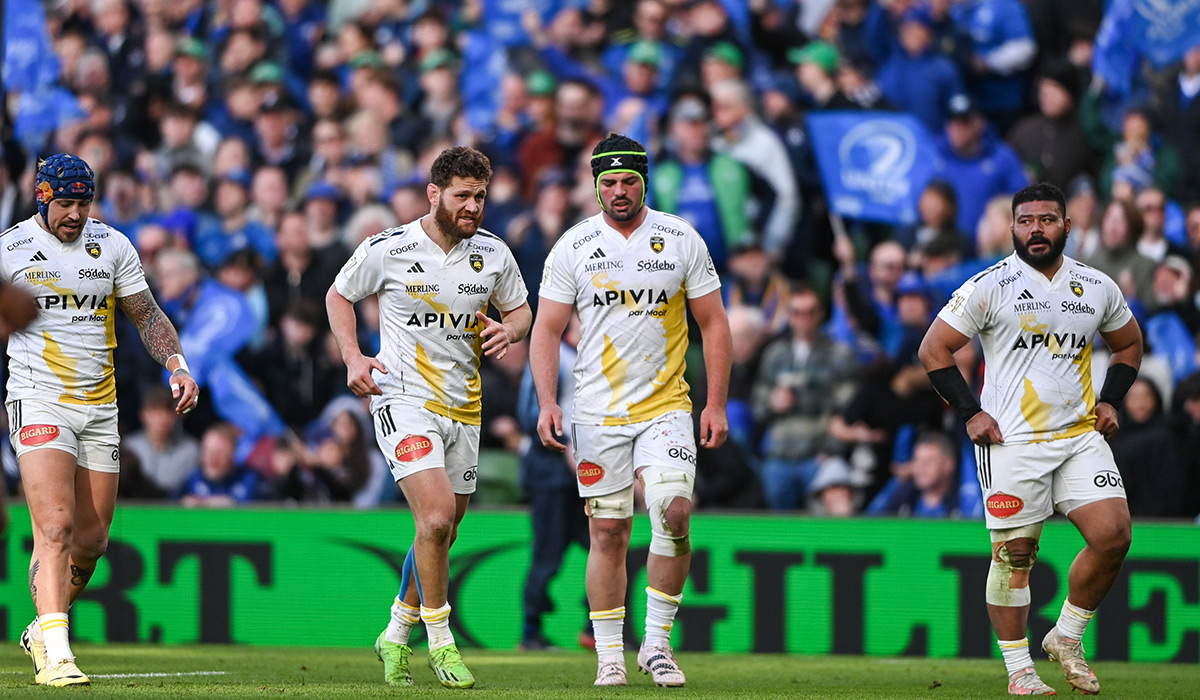 Pic: Sam Barnes/Sportsfile
They made the play-offs two seasons ago but were well beaten by Toulouse in the semi-finals. Last season they didn’t make the play-off cut at all, finishing seventh and a point outside the necessary sixth-place finish.
Their season was erratic from beginning to end, as they won 13 and lost 12 domestically.
It’s been a similar endurance for O’Gara and his players in Europe over the last two seasons. Since that dramatic second title, they have played 13 matches, winning seven and losing six.
They were hammered by Leinster in the last eight in 2024, and then Munster stunned them in the round of 16 last term.
‘The reality in France and the Top 14 is that had I not won a couple of European Cups already at La Rochelle, I would probably be out of work now, or certainly no longer in the employ of this great club,’ he said in his column before the start of this, his fifth season in charge. ‘With the way results went for us between January and April, any other coach would have been sacked, that’s the reality.’
He said in the same piece he was ‘fairly sure’ players were getting sick of his voice, but his determination to return the team to the force of old has been repeatedly undermined by inconsistency.
They are seventh in the league so far this season, winning seven and losing seven. The defeats included a humiliation away to Toulouse at the end of December, when they were beaten 60-14. Then last week, they beat a second-string Toulon 66-0.
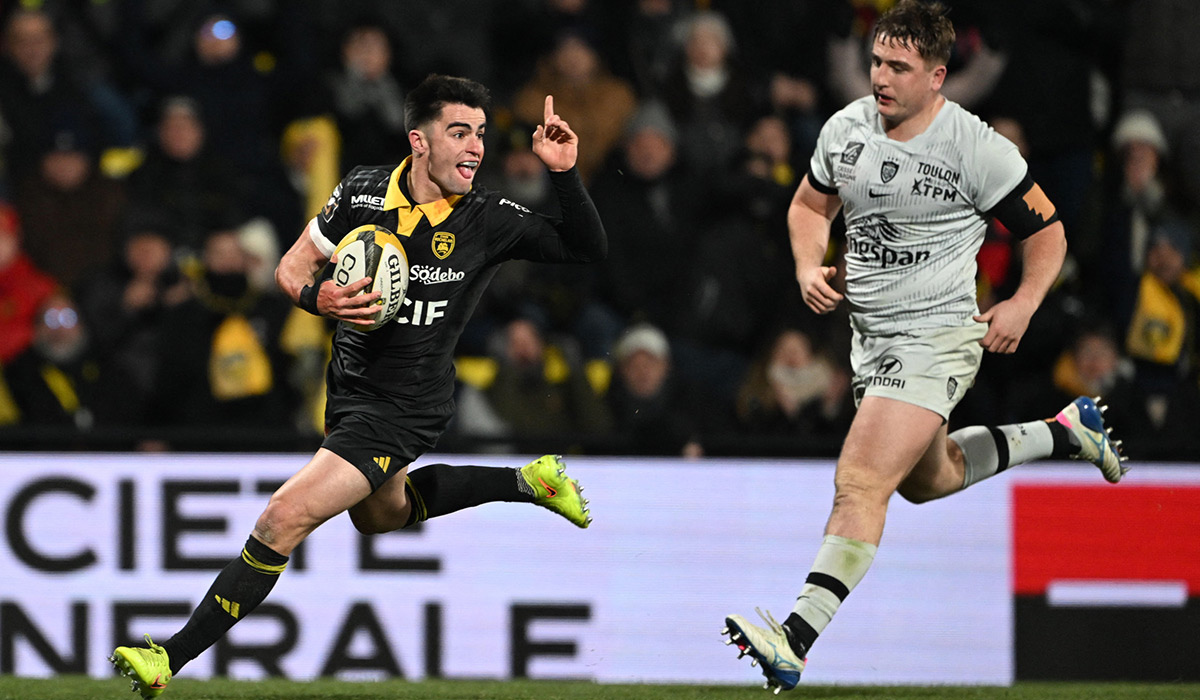 La Rochelle scrum-half Nolann Le Garrec. Pic: XAVIER LEOTY / AFP via Getty Images
Little wonder if Leinster are hopelessly second-guessing what team O’Gara will send to Dublin. They battered Leicester in their European opener, before losing heavily away to the Stormers with a rotated side.
He could experiment against Leinster, too, given their final pool match looks a gimme, as they host hapless Harlequins.
Picking your battles is a staple of the French game, where away matches are regularly written off in favour of concentrating on home wins.
If his time at La Rochelle does conclude at the end of this season, O’Gara will be in credit, both with the club’s supporters but also with any prospective employers.
It’s difficult to see that including the IRFU just yet, but with Farrell contracted through to the end of the 2027 World Cup, the union’s top brass should be starting to think about what comes after that.
Farrell has been coy about his plans post-2027, but the union can’t afford to be. It would take a significant deterioration in Ireland’s already uninspiring form to put Farrell’s position under scrutiny before the World Cup.
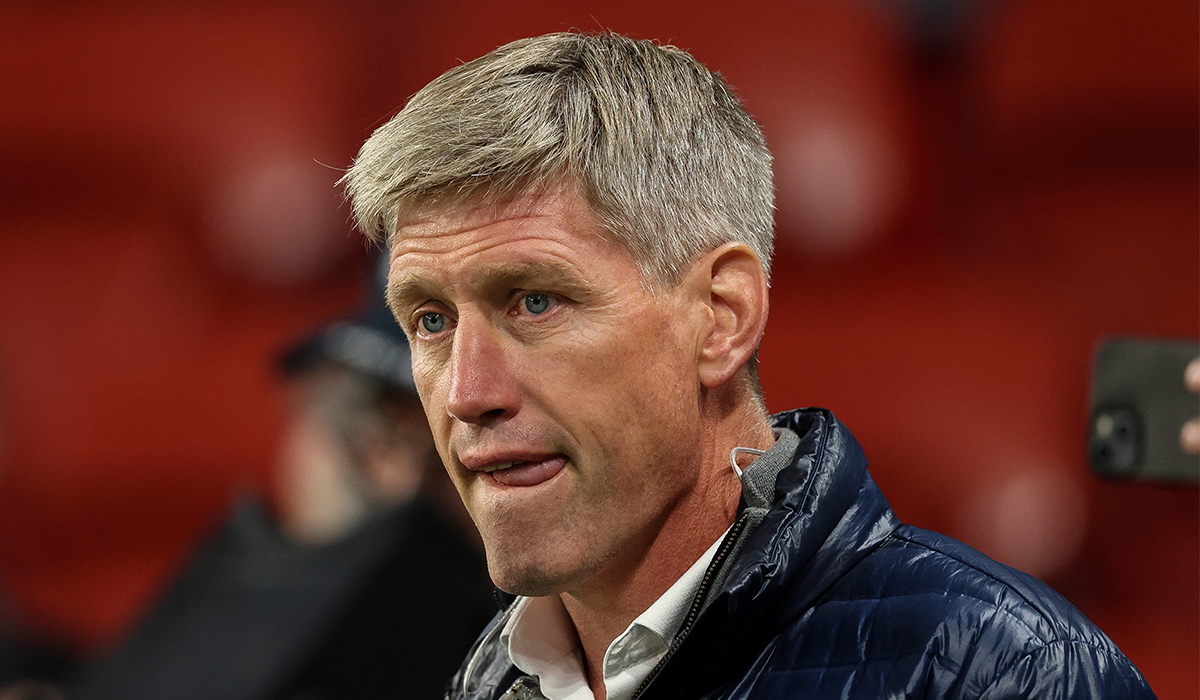 Ronan O’Gara. Pic: INPHO/Billy Stickland
But if the Six Nations was to be a difficult one — and that looks a live possibility with trips to Paris and London — then it must deepen fears that the coach is struggling badly to reinvent the team that went to the 2023 tournament with such high hopes.
Even then, there seems little prospect of him being jettisoned, but it would make planning for the post-Farrell world, from 2028 onwards, a priority.
O’Gara would be central to those discussions, but any move to the green tracksuit looks at least 22 months away. The notion that he has to prove himself in the Irish system before getting the big job is not convincing.
And in the time between now and the World Cup in Australia, he could well have assembled a new La Rochelle, ready to lay waste domestically and to conquer Europe again.
But if his glorious French adventure is to conclude at the end of this season, it leaves him open to lucrative offers from around the world — and once more slipping the clutches of an Irish game that he would immeasurably improve.