
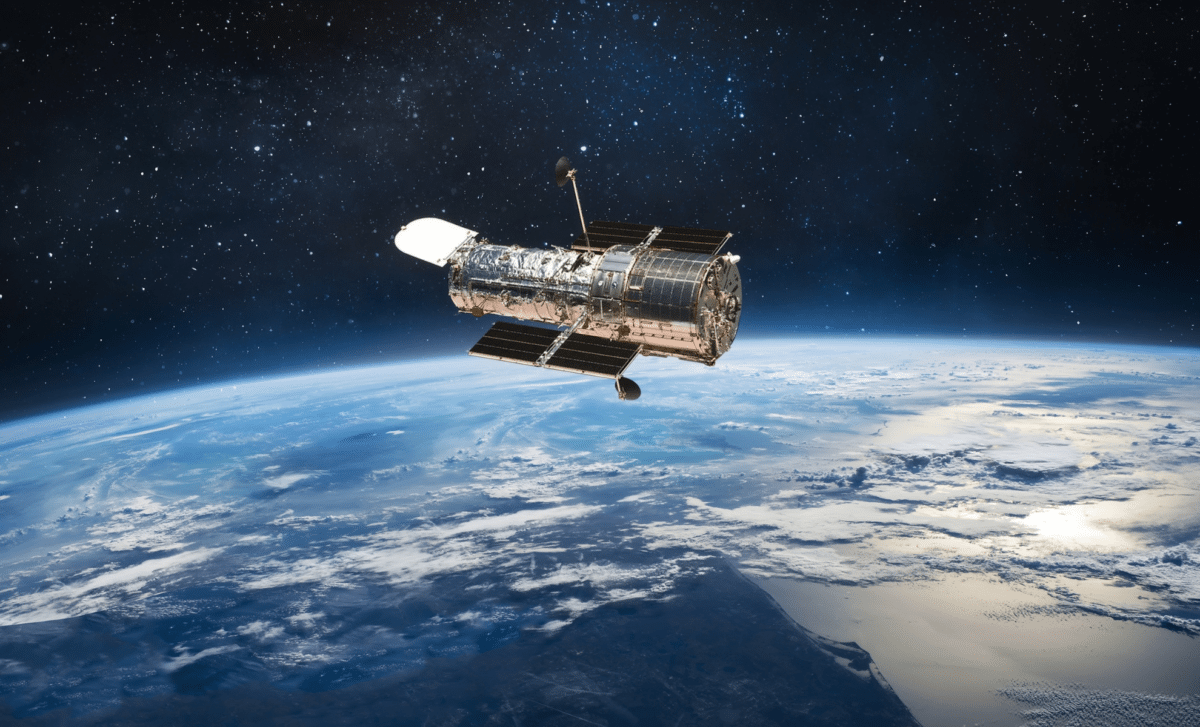
The Hubble Space Telescope has long been a cornerstone of our understanding of the universe, unveiling awe-inspiring images and groundbreaking data about galaxies, black holes, and the origins of cosmic structures. However, the clock is ticking on this iconic observatory, as recent studies suggest that Hubble could be on the verge of its final years.
The End of an Era: Hubble’s Declining Orbit
Since its launch in 1990, the Hubble Space Telescope has reshaped our understanding of the cosmos, capturing stunning images of distant galaxies, nebulae, and planets. Its contribution to astronomy cannot be overstated. Yet, all good things must come to an end, and as the years pass, Hubble’s aging infrastructure has led to its gradual decline. One of the most pressing concerns for scientists today is the deterioration of the telescope’s orbit. While Hubble was initially launched into low Earth orbit at an altitude of around 360 miles, it has since descended to approximately 326 miles, and it continues to fall.
In a recent update from the Hubble Reentry Tracker, researchers have estimated that Hubble could reenter Earth’s atmosphere as soon as 2029, with a worst-case scenario indicating a reentry date as early as 2029. “The solar flux levels are currently longer in duration and more elevated than previously anticipated, resulting in an earlier reentry forecast for the Hubble Space Telescope if no reboost mission is conducted,” says the Hubble Reentry Tracker.
NASA’s Attempts to Revive Hubble: Can It Be Saved?
NASA has made multiple attempts to extend Hubble’s lifespan by using various “reboost” missions designed to adjust its orbit and delay its inevitable reentry. Most notably, NASA partnered with SpaceX in 2022 to explore the feasibility of raising Hubble to its original altitude of 373 miles. Such an adjustment would have bought Hubble a few more years in orbit. However, the future of this plan remains uncertain, as NASA has not made any official announcements to move forward with it.
The study from the Hubble Reentry Tracker suggests that solar activity has significantly impacted the rate at which Hubble is descending. Solar flux levels, which determine atmospheric drag, have increased in recent years, accelerating the telescope’s decline. This change in solar behavior means that the possibility of Hubble reentering Earth’s atmosphere in the next five to six years is quite high if no corrective action is taken. Once Hubble reaches an altitude of 248 miles, it is expected that it will have less than a year before reentry.
What Would Hubble’s Retirement Mean for Science?
The potential end of Hubble raises critical questions about the future of space-based observation. Since its inception, Hubble has provided scientists with an unprecedented view of the universe, leading to discoveries about the expansion of the cosmos, dark energy, and the evolution of galaxies. Some of its most iconic images, like the Pillars of Creation in the Eagle Nebula and the Hubble Deep Field, have become synonymous with the public’s imagination about space exploration.
Without Hubble, scientists may face a significant gap in our ability to observe distant galaxies and other celestial phenomena with the same level of detail. While ground-based telescopes have made impressive advances, the absence of a replacement for Hubble’s unique position in low Earth orbit will leave a noticeable void in space exploration.
“We sit on decades of technological developments since Hubble,” says Arpita Roy, lead of the Astrophysics & Space Institute at Schmidt Sciences, in a statement to Ars Technica. “Lazuli is a very modern take on Hubble, with a larger mirror, swifter response, and different instruments.”
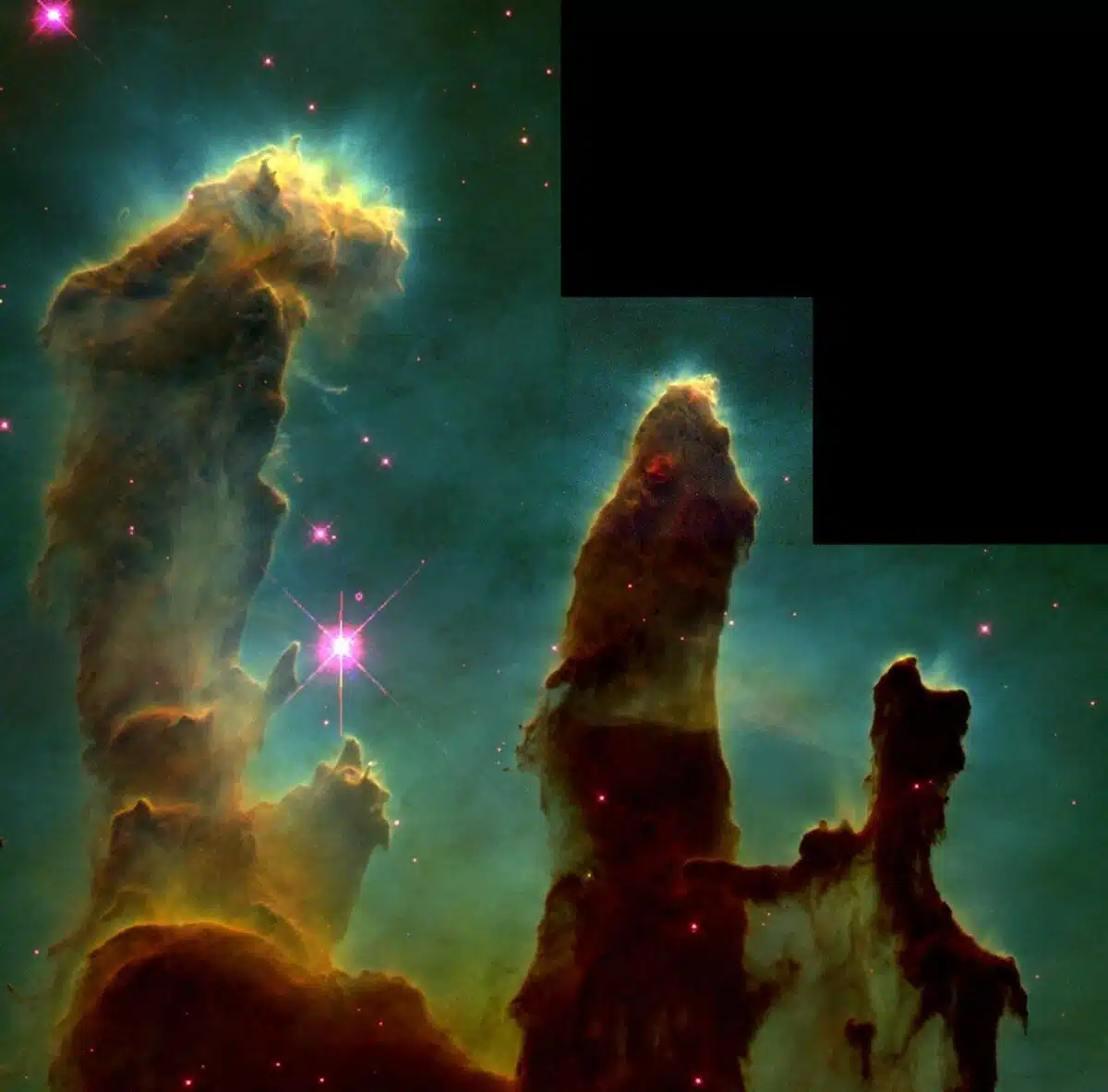 Gas Pillars in the Eagle Nebula (M16): Pillars of Creation in a Star-Forming Region
Credit: NASA, ESA, STScI, J. Hester and P. Scowen (Arizona State University)
A New Hope: Lazuli and the Future of Space Telescopes
While Hubble’s end may be near, there is a promising new project on the horizon: Lazuli, a privately-funded space telescope funded by former Google CEO Eric Schmidt. Lazuli aims to become the first privately-funded space telescope, and it could be the successor Hubble enthusiasts have been hoping for. Schmidt Sciences, the organization behind the telescope, plans to launch Lazuli by 2028, providing a more modern alternative to Hubble with a larger mirror and enhanced capabilities. The telescope’s proposed design includes a 94-inch-wide mirror, which is a significant upgrade from Hubble’s 94.5-inch mirror, and will feature updated instruments to capture more detailed data than ever before.
With the rapid advancements in technology, Lazuli promises to offer faster responses and improved capabilities, positioning it as the next generation of space telescopes. While it will not be an exact replacement for Hubble, its technological improvements and enhanced design may allow it to fill the gap that will be left once Hubble reenters Earth’s atmosphere.